Pop-up campers occupy a sweet spot in the RV world that most people don’t immediately consider: more comfortable than tent camping, lighter and cheaper than a traditional travel trailer, and small enough to tow behind a regular car or SUV. If you’re new to RVing and not sure a full-size rig is right for you, or if you want something that can go places larger trailers can’t, a pop-up camper is worth a serious look.
Pop-Up Campers At A Glance
| Spec | Details |
| Length (packed) | 8–16 feet |
| Length (popped up) | 16–32 feet |
| Weight | 700–3,000 lbs |
| Sleeping Capacity | 2–8 adults |
| Price (new) | $7,000–$25,000+ |
| Tow vehicle required | Car, SUV, or light truck depending on model |
| Common amenities | AC, kitchenette, water tank, bathroom, propane furnace |
What Is a Pop-Up Camper?
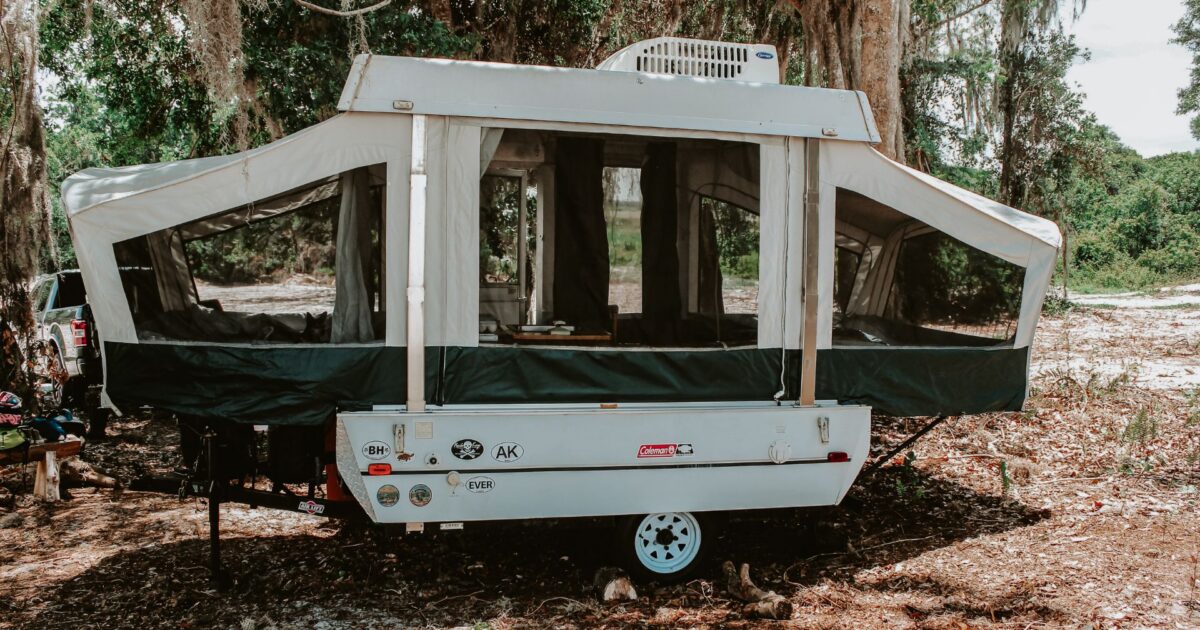
A pop-up camper — also called a tent trailer or fold-down camper — is a towable RV that collapses into a low-profile box for towing and expands into a full living space at camp. The “pop-up” refers to the roof and canvas walls that extend upward when you set up, creating sleeping areas that slide out from the front and rear of the trailer.
The terms “tent trailer” and “pop-up camper” refer to the same type of unit — just different names for the same thing.
Types of Pop-Up Campers
Not all pop-ups are the same. The category covers several distinct styles:
- Soft-sided pop-ups are the classic design — canvas walls that fold out to form the sleeping areas. Lightweight, affordable, and the most common type on the used market.
- Hard-sided pop-ups use rigid panels instead of canvas, providing better insulation, weather protection, and security. They cost more but feel closer to a hard-sided trailer in terms of comfort.
- A-frame pop-ups fold flat in an A-shape rather than collapsing into a box. They’re some of the lowest-profile options available, making them easier to store and more aerodynamic to tow.
- High-wall pop-ups have taller box sides that provide more interior headroom and storage space when closed. A good middle ground between a traditional soft-sided pop-up and a hard-sided trailer.
- Toy hauler pop-ups include a ramp or cargo area for ATVs, dirt bikes, or other gear — all in a lightweight pop-up.
Pop-Up Camper Features and Amenities
The diversity of pop-up campers is one of their biggest strengths. Depending on the model, a pop-up can include:
- Air conditioning (usually requiring a hard top to support the unit)
- A full kitchenette with a stovetop and refrigerator
- Onboard water tanks and a plumbing system
- A bathroom with a toilet
- An interior or exterior shower
- A propane furnace for cold-weather camping
- An onboard generator
Higher-end pop-ups can have the amenities of an entry-level travel trailer, while basic models are closer to a comfortable tent. The hard top serves double duty — supporting the AC unit and providing a flat surface to store gear like kayaks, bikes, or skis while in the road.
Pros and Cons of Pop-Up Campers
There are advantages and disadvantages to traveling with a pop-up. Here are some of the things to know:
What pop-ups do well
Pop-ups are significantly easier to tow than traditional travel trailers. Most models can be pulled by a standard car, crossover, or light SUV — no one-ton truck required. Their low profile when packed also reduces aerodynamic drag, so the hit to your tow vehicle’s fuel economy is minimal. Many owners report losing only about 1 MPG when towing a lightweight pop-up.
Their compact size also means you can use camping destinations that larger rigs can’t reach. Narrow forest roads, dispersed camping areas, and tight campground loops are all more navigable in a pop-up than in a full-size trailer. And at $7,000–$25,000 new — significantly less than most travel trailers — they’re one of the most affordable ways to get into RVing.
Where pop-ups fall short
Living space is the obvious tradeoff. Canvas sides offer less insulation than hard walls, which can make extreme temperatures a challenge even with a furnace or AC. Privacy and security are also more limited than in a hard-sided trailer. And if your group is large or you’re packing a lot of gear, you’ll feel the squeeze quickly.
Pop-Up Camper Manufacturers
When you’re first looking for an RV, the array of brands and manufacturers can feel daunting. Here, we’ll list a few of the most popular manufacturers and makers of new pop-up campers. Many of these brands are also well-known for their motorhomes and full-sized travel trailers as well.
Dutchmen/Coleman
Dutchmen — part of Thor Industries — makes the Coleman-branded line of pop-up campers, one of the most widely recognized names in the category. Modern Coleman pop-ups have evolved well beyond traditional soft-sided fold-outs: current models feature hard sides, slide-outs, and a full range of amenities that rival entry-level travel trailers. Used Coleman campers are widely available on RVTrader and other RV classifieds, making them a popular used-market option as well.
Jayco
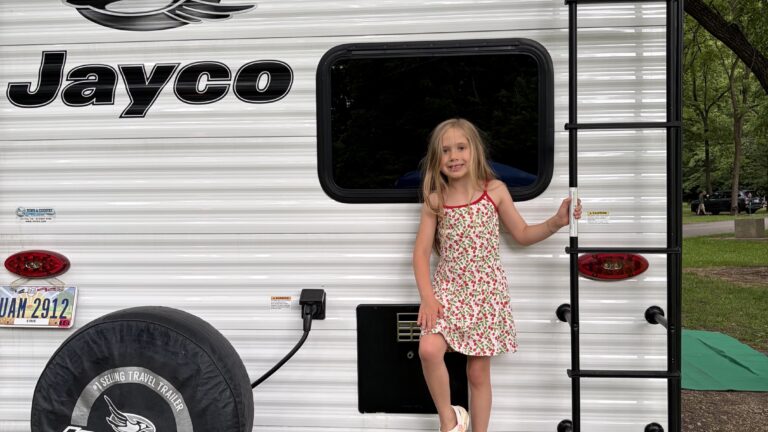
Jayco is one of the most respected names in RV manufacturing. The company produces pop-up campers alongside its extensive lineup of travel trailers and motorhomes. All Jayco products are backed by the industry’s best warranty coverage: a 2-year limited warranty plus a 3-year structural warranty — twice the general coverage of most competing brands. Jayco pop-ups are known for their build consistency and strong resale value.
Starcraft
Starcraft has been manufacturing RVs since 1964, when it entered the pop-up camper market with its first folding camping trailers. The company’s early pop-ups featured the first hard top and crank-up lifter system in the industry. It’s a mechanism invented in 1963 by Lloyd Bontrager while he was working for Starcraft. Bontrager later went on to found Jayco. The crank-up lifter transformed the pop-up setup process and became a foundational feature across the entire segment.
Today, Starcraft — now part of Jayco under Thor Industries — makes pop-up campers alongside travel trailers, toy haulers, and fifth wheels, with a consistent focus on keeping weight low across its product lineup.
All Terrain Pop-Up Campers
All Terrain Campers specializes in expandable hard-shell camper tops designed to fit standard truck beds — a more rugged and off-road-capable approach than conventional trailer pop-ups. Their tagline is “built to survive,” and the product line is aimed squarely at overlanders and backcountry travelers who want a camp setup that can handle rough terrain. If you’re planning serious off-grid travel and already have a capable truck, their catalog is worth a look.
You can also check out our more complete listing of RV manufacturers and the different types and styles of travel trailers and motorhomes they produce.
Renting a Pop-Up Camper
The best way to figure out whether a pop-up camper suits your travel style is to spend a few nights in one before committing to a purchase. RVshare lists pop-up campers for rent across the country — you can try different brands and layouts without the financial risk of buying the wrong one. The average nightly rate for booking a pop-up camper on RVshare is about $112, making it one of the more affordable rental options.
Because pop-ups are lightweight, there’s a good chance your current vehicle can tow one. And if not, many RVshare owners offer delivery and setup for an additional fee — the camper arrives at your campsite ready to go.
Tips for Traveling in a Pop-Up Camper
Traveling in a pop-up camper is a different experience than taking to the highway in a Class A motorhome, or even a modestly-sized trailer. If you’re traveling with a large family, or are simply new to the experience of living in such a small space, you may find pop-up trailers a little challenging at first. Here are a few tips.
Stay organized
The ability to travel with more stuff is one of the things that brings people to the RVing world in the first place. But with a pop-up camper, you won’t have the same amount of space you might with a larger RV. Because these little rigs fold down into super-portable boxes, you won’t get tons of extra room to stow your stuff while you’re in transit.
But there is one serious saving grace: your pop-up camper’s hard top. This can be used as a flat surface to store adventure gear like bicycles, kayaks, or skis. You’ll often see pop-ups cruising down the road carting all sorts of goodies to help their drivers go exploring once they reach their destinations.
Once you set up camp, you’ll have access to a bit more storage, like under-bed cabinets and kitchen drawers. Even so, staying organized is important if you want to avoid crowding yourself out with your own stuff! Check out these clever ways to get your camper organized, as well as these space-saving kitchen accessories. We’ve also written about items you should not add to your to-bring list.
Start simple
For your first pop-up camping trip, you may want to keep things simple. Stay at a campsite close to home. Arrive with plenty of daylight left to set everything up while you can still see easily. Don’t plan elaborate meals or activities. Just like any skill, camping gets better with practice! Also, if you choose a place near home and it doesn’t go well, you can always pack it in and try again another time.
Prep meals at home
Your space is limited, and you may want to do any prep work for meals at home. You can even cook entire dishes so that they simply need to be reheated when you are camping. Take any food items that are packaged in large containers and put smaller amounts into smaller packaging to take up less room.
Move things outside
Pop-up campers aren’t very large. Any activities you can move outdoors will give you more room in your camper for sleeping. Set up camp chairs outside your camper. Bring a camp stove or plan to cook over the campfire. Store any large items, like paper towels, in a waterproof bin outside (but make sure they don’t smell or attract animals!). Try to clear as much room inside your camper as you can.
Consider gas mileage
These light campers aren’t going to affect your gas mileage as much as a large Class A motorhome or a big fifth-wheel trailer. But they may cause your vehicle to get slightly lower gas mileage than when it’s not towing. Some campers report that towing a pop-up trailer causes them to lose about a mile per gallon on their gas mileage when they travel.
Pop-up campers require a little ingenuity to make the most of their small space. But their lightweight construction means they can travel to a lot of exciting out-of-the-way places, and they can be towed by just about any vehicle. They’re a great choice for solo travelers, couples, and smaller families that want more comfortable amenities than tent camping without going into full glamping mode.
Key Takeaways
- Pop up campers offer a convenient, lightweight alternative to traditional RVs, bridging comfort and affordability.
- They come in various styles such as soft-sided, hard-sided, A-frame, high-wall, and toy hauler, catering to different needs.
- Key features may include amenities like air conditioning, kitchenettes, and bathrooms, depending on the model.
- Pop up campers are easy to tow and access narrow camping locations, but they sacrifice space and privacy compared to larger RVs.
- Renting a pop up camper allows new users to trial different models and learn effective camping strategies before purchasing.
FAQs About Pop Up Campers
A pop-up camper and a tent trailer are the same thing — just different names for the same style of RV. Both terms refer to a towable trailer that folds flat for transport and expands into a larger living space at camp using a lift mechanism and canvas or hard-panel walls.
Most lightweight pop-up campers (under 2,000 lbs) can be towed by a standard car, crossover SUV, or light truck. Heavier models with more amenities may require a half-ton pickup. Always check the specific trailer’s tongue weight and GVWR against your vehicle’s tow rating before hooking up.
New pop-up campers range from around $7,000 for a basic model to $25,000+ for a fully equipped unit with a bathroom, AC, and slide-outs. Used models are widely available, often for considerably less. Buying a 2–to 3-year-old pop-up is one of the best ways to get a great value in the RV world.
Soft-sided pop-ups are not ideal for extreme cold — canvas walls provide minimal insulation. Hard-sided and high-wall models with a propane furnace handle cooler temperatures better. For serious four-season use, a hard-sided travel trailer is generally a better fit.
Yes, you can definitely rent a pop-up camper to try before buying one. RVshare has pop-up camper listings across the country. Renting lets you test a specific brand or floor plan in real conditions before committing to a purchase — and many owners offer delivery and setup if your tow vehicle isn’t rated for the rental.
Ready to try camping in a pop-up camper? You can browse pop-up camper rentals on RVshare and find the right rig for your next adventure. Most models don’t require an upgrade of your tow vehicle.