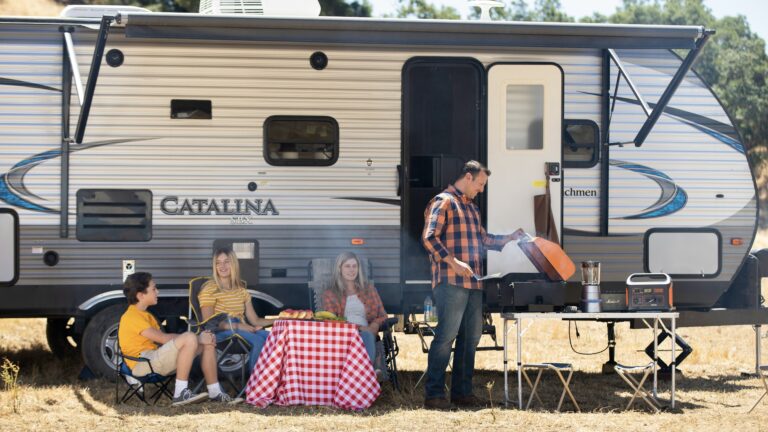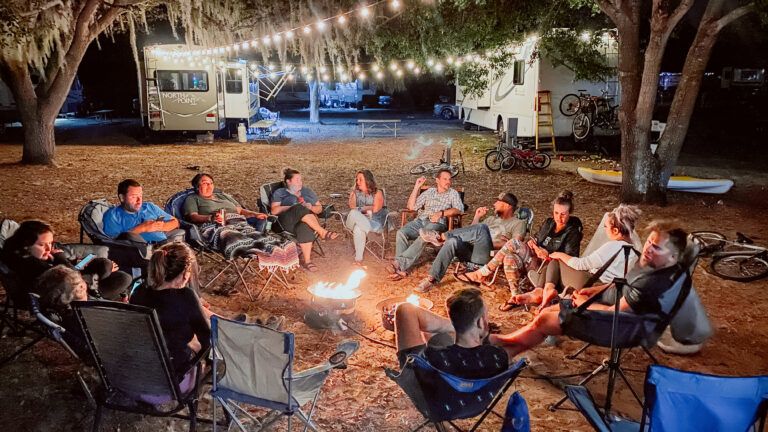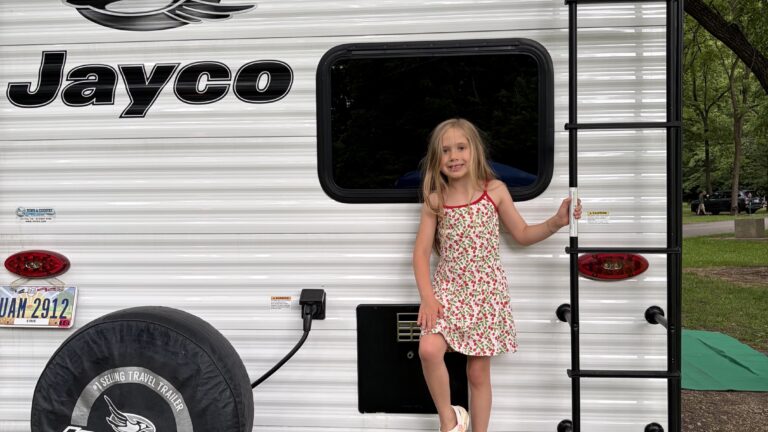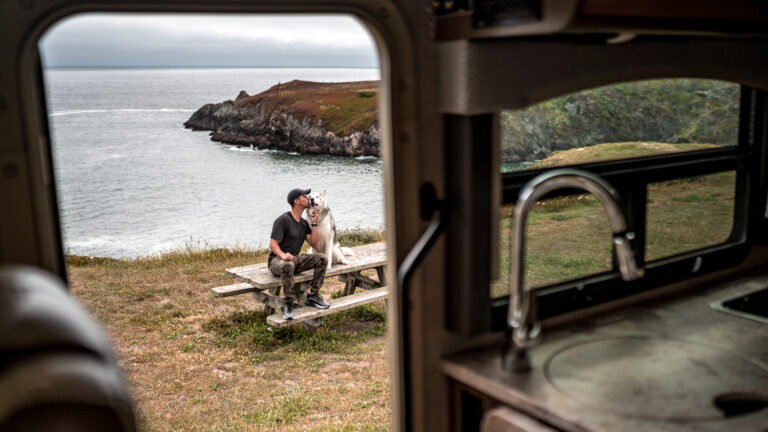
What do first-time RV renters need to know before their trip? Before renting an RV, you’ll need to choose the right size for your group, understand your license and insurance requirements, learn the basics of campground hookups, and know what’s expected of you at return. Most first-time renters find the process much easier than expected once they know what questions to ask — this guide answers the ones that come up most.
Key Takeaways
- Most first-time renters do well with a Class C motorhome or travel trailer, which strike a balance between space and ease of driving.
- You do not need a CDL to rent and drive an RV through RVshare, regardless of the RV’s size.
- Every RVshare rental requires RVshare Insurance and Protection, with the Essential Package included by default.
- Campground hookups are more approachable than most beginners expect, especially with an owner walkthrough before departure.
- RVshare rentals are allowed throughout the U.S. and Canada, but not Mexico.
What Size RV Should I Rent?
The first step in choosing an RV rental is figuring out how many people will be staying in it — every RVshare listing states its sleeping capacity.
RVs come in a few main types:
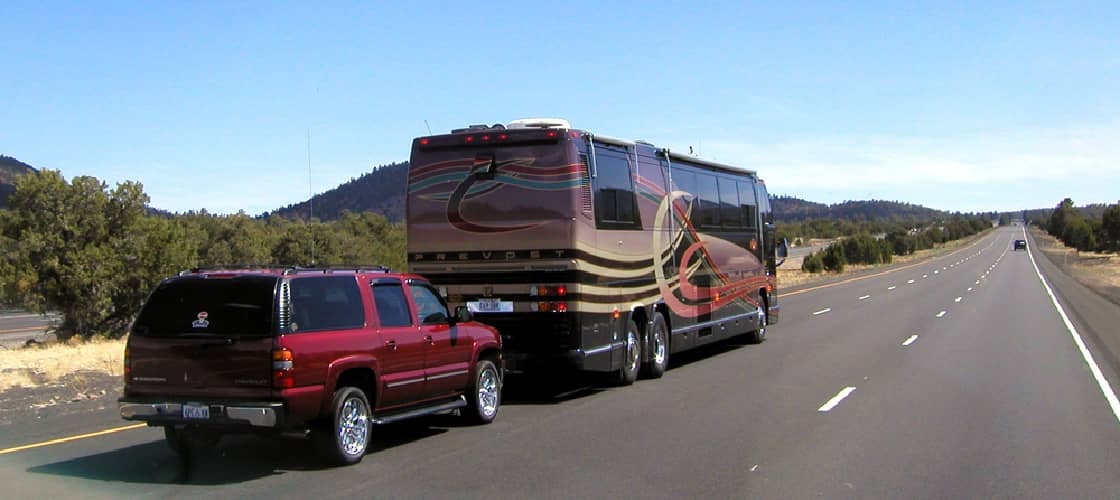
- Class A motorhome: The largest, bus-style RVs. Class A motorhomes have the most space, but they’re also the most intimidating to drive.
- Class B campervan: These are the smallest motorized option, and typically sleep 1–4 people. Thanks to their size, they’re also among the easiest to drive and can go places larger RVs may not be able to.
- Class C motorhome: Class C campers are recognizable by the overhang above the cab. They fall between Class As and Bs in size, and are a common choice for families.
- Travel trailer: These are towed behind your own vehicle. They let you set up camp, detach your tow vehicle, and drive around without breaking down the whole rig.
- Toy hauler: A trailer with built-in cargo space for gear like kayaks, ATVs, or motorcycles
RV Class Comparison
| Type | Best For | Typical Cost | Ease of Driving |
| Class B | Couples, solo travelers | $$ | Easy |
| Class C | Families | $$$ | Easy-Moderate |
| Class A | Large Groups | $$$$ | Moderate |
| Travel Trailer | Groups with a capable tow vehicle | $$ | Moderate (towing skill required) |
How Much Cargo Weight Can My RV Rental Carry?
Every newer RV has a Cargo Carrying Capacity (CCC) listed on its identification label, usually found inside a cabinet or closet. On RVshare, this figure may also appear in the listing description — if it doesn’t, ask the owner directly. You can also get an exact total weight, cargo included, by visiting a weigh station.
Do I Need a Special Driver’s License to Rent an RV?
No, you do not need a Commercial Driver’s License (CDL) to rent and drive an RV through RVshare, regardless of the RV’s size. Federal law exempts non-commercial recreational use from CDL requirements, and RVshare’s own rental terms confirm no CDL is required for any of its listings.
However, licensing rules for personally owned RVs vary by state. A small number of states require a special non-commercial license class, which is not a true CDL, for personally owned motorhomes above roughly 26,000 lbs GVWR or 40 feet in length. This mostly affects RV owners registering their own rig in those states; it’s not something first-time renters booking through RVshare typically need to worry about. If you’re ever unsure, your state’s DMV can tell you for certain.
What is the Fuel Efficiency of the RV?
The fuel efficiency of your RV depends heavily on the size of the rig:
- Class A motorhomes: roughly 6–8 miles per gallon
- Class C motorhomes: roughly 10–13 miles per gallon
- Class B campervans: roughly 15–18 miles per gallon
- Towing a travel trailer will reduce your tow vehicle’s normal fuel economy
AAA’s gas cost calculator can help you estimate fuel costs for your route.
How Much Does Mileage Overage Cost?
Many RV rentals include a set number of free miles per day, and overages are charged incrementally. Overage fees typically range from $0.25–$0.50 per mile, though some premium or luxury listings may charge up to $1.00 per mile beyond the included allowance. Mileage terms are listed on each RV’s listing details page, so always check before booking if you’re planning a longer trip.
What Should I Expect the First Time I Drive an RV?
Driving a Class A motorhome, or even one of the smaller RVs, can be an intimidating idea if you haven’t done it before. It is certainly possible for you to learn to drive one, but you’ll want to keep a few things in mind when you do:
- Ask lots of questions: When you pick up your RV, do a thorough walk-through with the owner. Have them demonstrate how to drive, and ask any questions you have. Find out how to contact them if you have more questions when you actually drive the rig.
- Take time to practice: Practice driving around an empty parking lot to get an idea of the turn radius, braking time, and other idiosyncracies of driving a large vehicle.
- Take things slow: A large RV won’t drive like a small sedan. Plan on driving much slower than you would in your regular vehicle, and plan your mileage each day to be less than that of a smaller vehicle.
- Take a break, if needed: If you’re feeling strain or stress after driving for a while, pull into a parking lot and take a break. Stretch out your legs. Reset. Maybe even have your partner drive for a bit. Driving a large vehicle can be tiring, especially if you’re somewhat nervous.
What’s Included in an RV Rental?
Check the listing details page for a full breakdown of what’s included. Items like kitchen supplies, linens, chairs, and outdoor gear vary by owner. If something isn’t listed, ask the owner directly before booking whether it’s included.
How Do I Operate the RV’s Systems?
RVshare owners should give renters a complete walk-through of the vehicle before it changes hands. They should show you how to operate all of the RV’s systems including the heating, air conditioning, slideouts, appliances, and any other systems. Owners can explain how to hook the RV up to sewer, water, and electric hookups if those are available. They can also explain how to dump the tanks and anything else you’ll need to know to operate the RV you’re renting.
RVshare owners should also have an owner’s manual available for you to refer back to during your trip. You can also find many owners’ manuals available online.
What Kind of Insurance Do I Need to Rent an RV?
Every RVshare renter is required to have RVshare Insurance and Protection for the full length of the trip, whether you’re driving the RV yourself or having it delivered and set up at your destination.
The Essential Package is included automatically in your quote. You can upgrade to a different coverage tier at checkout if you want more protection.
Trustpilot Review: “RVing made simple. I have always wanted to do an RV trip but was not sure if I would like it or not. I got my feet wet by having it dropped off and picked up by the owner and loved the experience.”
What’s RVshare’s Cancellation Policy?
RVshare owners choose from three cancellation policies, listed on the RV’s booking page.
- Flexible Policy: Gives renters a full refund minus the RVshare service fee, for cancellations made at least 30 days before the rental start date. If the renter cancels less than 30 days before the scheduled rental, they get 50% of their fees refunded, minus the RVshare service fee.
- Standard Policy: The renter gets a full refund, minus the RVshare service fee, for any cancellations made at least 30 days before the rental start date. They get 50% of their money back, minus the RVshare service fee, for any cancellations between 29 and 14 days before their rental start date. If the rental is canceled within 14 days of the start date, fees are non-refundable.
- Strict Policy: Gives renters a full refund minus the RVshare service fee for any cancellations made at least 30 days before the start of the rental. Any cancellations within the 30-day window before the rental start date are non-refundable.
RV Camping
Along with driving the RV, as a first-time RV renter, you may have questions about how to hook up an RV at a campground, plus some other camping-related questions.
Can I Park the RV Anywhere Overnight?
No, you can’t park an RV anywhere overnight. Some parking lots, garages, and neighborhoods restrict overnight RV parking. Options that generally do work:
- A paid campground reservation
- Certain free camping areas, often limited to one night
- Many Bureau of Land Management (BLM) areas, often allowing up to 14 days
- Moochdocking on private property, as long as local HOA rules or ordinances don’t prohibit it
How Do RV Campground Hookups Work?
Campgrounds range from no hookups at all to full hookups with water, sewer, and power. Generally, the more amenities a campground offers, the more it costs. If your RV’s plug doesn’t match the campsite’s electrical pedestal, you’ll need an adapter — ask the owner whether you’re likely to need one and whether they can provide it.
How Do I Connect My RV at a Campsite?
- Confirm your power supply matches the pedestal
Using an adapter if needed, plug in to the power source.
- Connect your water hose to the spigot
A water pressure regulator can help protect your RV’s plumbing during this step.
- Attach your sewer hose
Connect the hose between the RV’s outlet and the campground’s sewer connection. Make sure both ends are secure.
- Connect cable
If the campground offers cable TV, connect that as your final step.
How do I Properly Dispose of Wastewater?
If your site doesn’t have a sewer hookup, you can empty your gray and black water tanks at a dump station — either at the campground or a nearby public dump station. RVshare doesn’t require you to use a specific dump station; any station works.
What Apps Help with RV Travel?
There are plenty of helpful apps for RV travelers. Here are some of the best RV apps for road trips, covering how to find cheap gas, how to get to your destination, how to find camping, and more.
- Google Maps: The best free GPS app to get you where you’re going. Keep in mind that Google Maps wasn’t made with RV travelers in mind, so you may want to check narrow roads and other obstacles. RV Life GPS is one of the best paid navigational apps, and was made specifically for RV travelers.
- Allstays: This app searches for campsites and helps you book them. You can also find dump stations, rest areas, and even information on road grades.
- Gas Buddy: This app helps you find the cheapest gas along your route. It’s definitely useful for trying to keep RV fuel costs down as you travel!
Are Pets Allowed in RV Rentals?
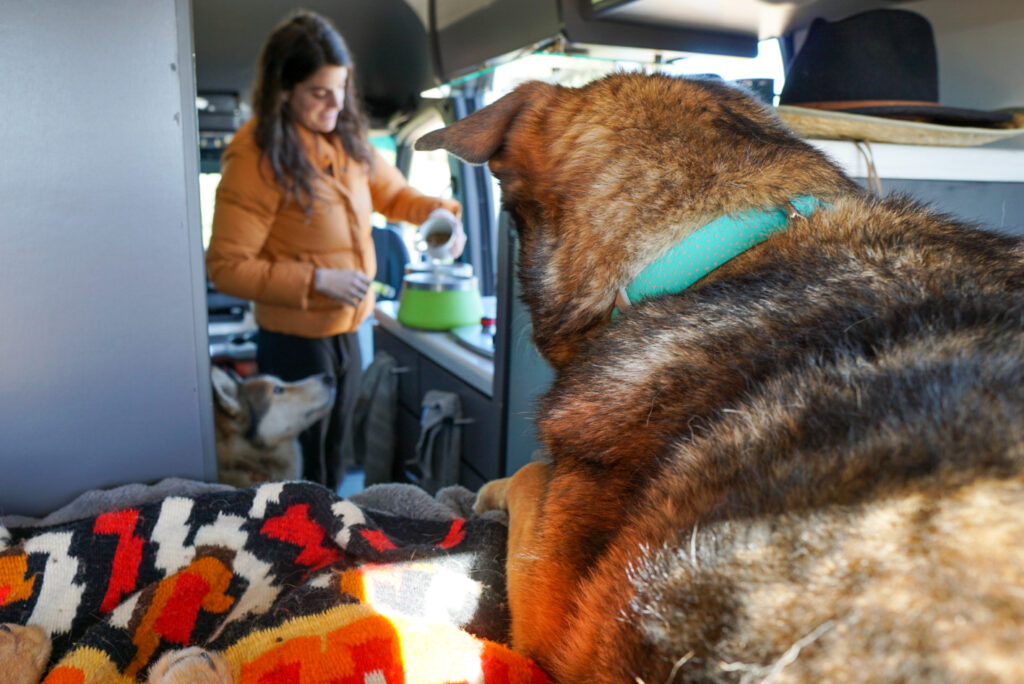
Many RVshare listings allow pets. When you’re searching, you can filter by “Allows Pets” to see where you can bring your furry friend. Owners often charge an extra fee or deposit, so confirm pet policies directly with the owner before booking.
What if My RV Rental Breaks Down?
RVshare’s roadside assistance program is available 24/7 for issues like running out of gas, flat tires, or mechanical problems, with a nationwide network of service providers.
Common Mistakes First-Time Renters Make
Here are some of the most common mistakes that first-time renters make when they begin RVing.
- Forgetting to check state-specific parking and camping restrictions before arriving
- Underestimating how much slower RV driving is compared to a car, and overestimating the daily mileage plan
- Not confirming mileage allowances before a long road trip
- Skipping the pre-departure walkthrough with the owner
RV Rental Restrictions
While RVing is a great way to take a free and easy road trip, there are some limitations.
Are There Restrictions on Where I Can Drive an RV Rental?
RVshare has some limits on where you can take an RV, and owners may also impose limits. RVshare rentals are permitted throughout the United States and Canada, but not Mexico. Individual owners may add their own restrictions on distance or terrain, so confirm your planned route with the owner ahead of time. Length, weight, or height can also rule out certain roads — an app like RV Life Trip Wizard helps you route around low bridges and other RV-unfriendly obstacles.
What’s the Process for Returning an RV Rental?
Before returning the RV:
- Remove all personal items
- Complete any owner-specified return requirements like refueling, refilling propane, dumping tanks, and cleaning according to owner instructions
- Photograph the RV’s condition and report any damage that occurred during your trip
After the return, you’ll receive a feedback request by email. Owners have up to 72 hours to complete their return inspection, after which you’ll be notified about your security deposit release or any additional charges.
More Frequently Asked Questions From New Renters
No, you do not need RV driving experience to rent one. In fact, most RVshare renters are first-timers. Owners provide a full walkthrough and operating instructions before you leave with their rig.
No, you don’t need a CDL to drive a rental RV. RVshare does not require a CDL for any of its rentals, regardless of size.
RVshare Insurance and Protection is required on every rental, with the Essential Package included by default. You can upgrade at checkout.
Many listings do allow pets. Filter by “Allows Pets” when searching for RV rentals and confirm any fees directly with the owner.
No, you can’t drive an RVshare rental into Mexico. RVshare rentals are permitted in the U.S. and Canada only.
Report any damage to the RV to the owner immediately and document it with photos. The owner has up to 72 hours after your return to complete their inspection and communicate any charges against your security deposit.
Typically, mile overages cost $0.25–$0.50 per mile beyond your included daily allowance, though some listings charge up to $1.00 per mile. Always check the specific listing.
Most first-time renters do well with a Class C motorhome or a travel trailer. Both offer a manageable driving experience with enough space for a family.
Ready to find your first RV rental? Browse RVshare rentals by size and start planning your trip.