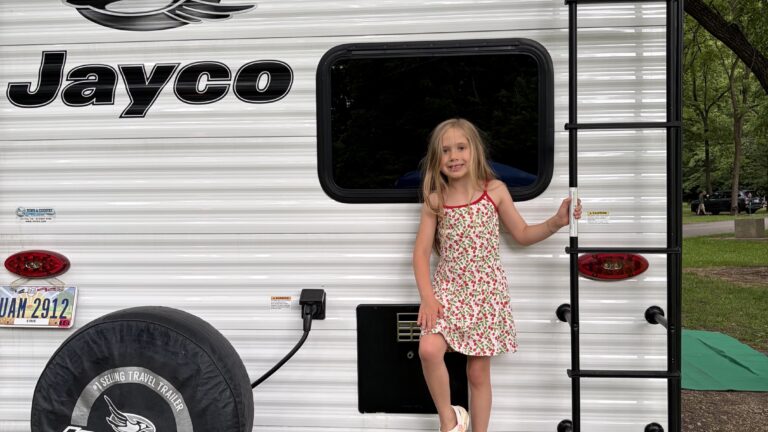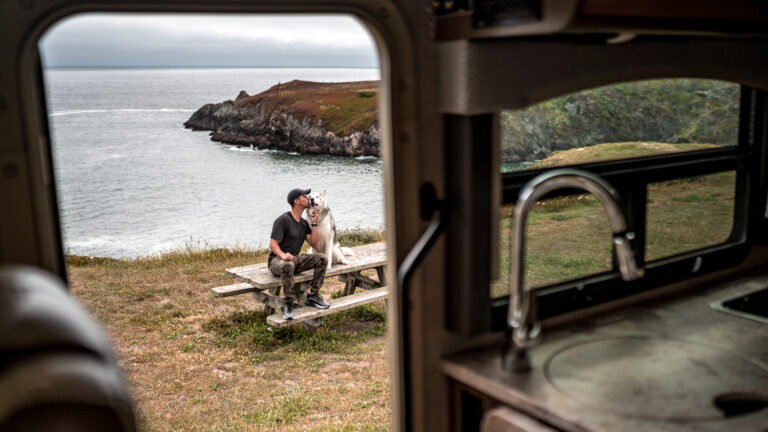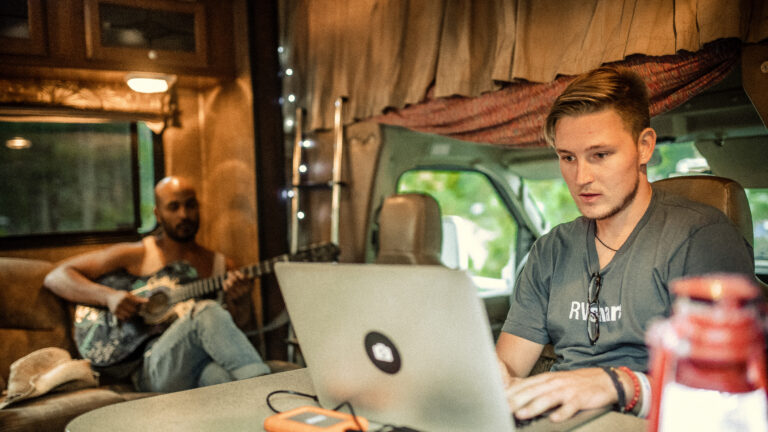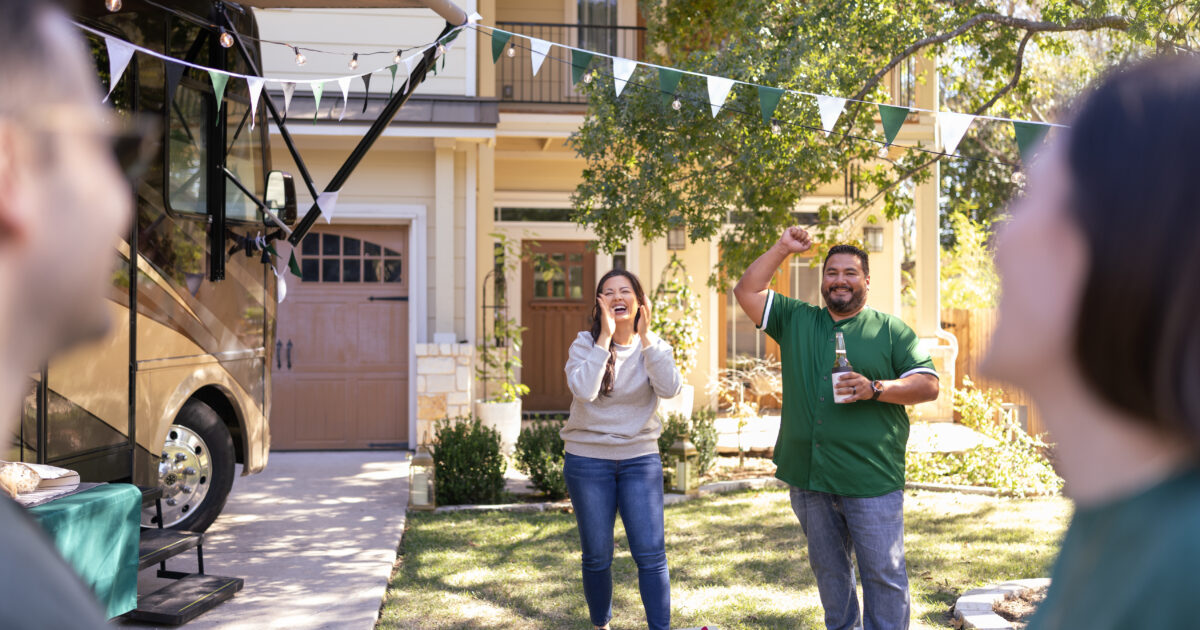
What is moochdocking, and how do you do it well? Moochdocking means parking your RV in a friend or family member’s driveway, or elsewhere on their property, instead of staying at a campground or hotel. Sometimes you’ll even get access to their power and water. It’s a budget-friendly way to visit loved ones while still having your own space. Done right, it benefits both guest and host; done without planning, it can strain a relationship or even a driveway.
Key Takeaways
- Moochdocking means staying in your RV on a friend or family member’s property, sometimes using their power and water.
- It’s not the same as boondocking — moochdocking can include hookups, while boondocking means no services at all.
- Always confirm HOA rules and local parking ordinances before you arrive, since some neighborhoods restrict overnight RV parking.
- It gives guests privacy and hosts breathing room, without sacrificing time together.
- It works well for holidays, graduations, new babies, or any large family gathering where space is tight.
What is Moochdocking?
Moochdocking is bringing your RV or trailer to a friend or family member’s house and staying in their driveway or on their property. Sometimes it includes using their power, and possibly their water, while you’re there. In other words, mooching off of them. It’s a convenient way to stay close to someone when you’re visiting … but not too close.
What Should I Look for in an RV for a Moochdocking Trip?
Before booking a rental for a moochdocking trip, think through a few practical details:
RV Features to Consider
| Category | What to Check |
| Size & Floor Plan | Sleeping capacity, storage space, ground clearance for uneven driveways |
| Power & Energy | Solar panels or generator, inverter system, battery capacity, backup power |
| Water Management | Freshwater tank size, gray/black tank size, water pump, refill and dump plan |
| Fuel | Tank size, fuel efficiency, extra fuel storage |
| Heating & Cooling | Insulation, propane/electric heat, roof fan or A/C |
| Storage | Space for food, clothes, and outdoor gear like chairs and bikes |
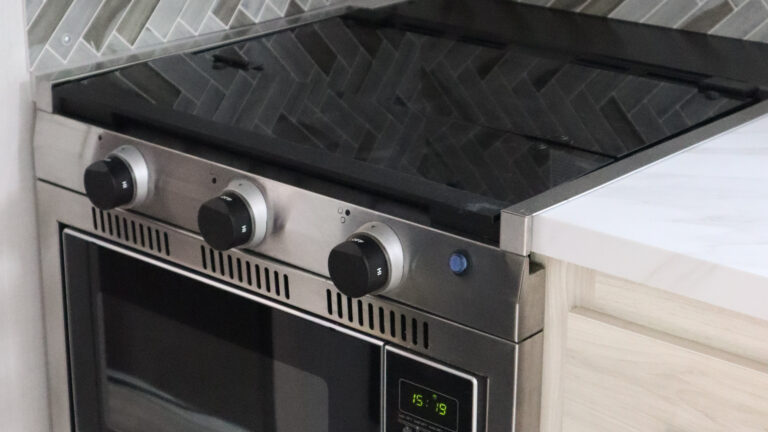
| Cooking | Propane vs. electric cooking, fridge/freezer capacity, pantry space |
| Safety & Navigation | Fire extinguisher, first aid kit, GPS or offline maps, spare tire |
| Connectivity | Signal booster, satellite dish, or Wi-Fi hotspot needs |
If this is your first time renting an RV, check out our guide for more tips. If your goal is simply to visit family without the drive, you can also book delivery — the owner sets the RV up at your destination and it’s ready when you arrive.
What Are the Rules of Moochdocking?
There’s no official rulebook for moochdocking, but a few guidelines keep things running smoothly for everyone involved.
- Make sure you’ll actually fit: Confirm your RV’s length works for the driveway or spot where you plan to park. Also check for low-hanging branches or overhangs before you arrive.
- Check HOA rules: Some HOAs don’t allow RV parking at all, or only in specific areas, like behind a fence. Confirm before you show up to avoid landing your host a fine.
- Check local ordinances: Many cities and towns have separate rules about how long a vehicle can sit in a driveway or on the street, independent of neighborhood HOA policies.
- Work out hookups ahead of time: Confirm with your host whether you’ll have access to power and water, or whether you should plan to dry camp instead.
- Be a considerate guest: If you’re plugged into a host’s electrical system, be mindful of your load. Running too many appliances at once can trip a breaker in their home. A generator is an option too, used respectfully in a residential setting.
- Plan your stay length together: RVing is flexible by nature, but agree on a timeframe with your host up front so you don’t overstay your welcome.
What Are the Benefits of Moochdocking For Travelers?
There are plenty of pros to moochdocking when you’re traveling to visit family or friends. Here are a few reasons you might find that it’s a convenient way to visit someone.
- Flexible arrival: You don’t need to worry about cancellation fees if you encounter traffic, weather delays, or other obstacles. You can simply call your host and let them know you’ve been delayed.
- Flexible departure: If you and your host are really enjoying your time together, you can always extend your trip without having to worry about extra fees.
- Lower cost: You won’t need to pay for a campground or hotel stay while you visit, though it’s a nice gesture to bring a hostess gift, offer to pay for utilities, or take care of dinner one night.
- You’ll have privacy: Staying in an RV allows you to be close to your loved ones, but to have room to retreat if everyone needs some quiet time. Early risers can get up, shower and dress, and enjoy some coffee without waking up the house. And if you’re a night owl, you can retreat to your RV to watch TV or work when everyone else goes to bed.
- Extra facilities: No waiting for the shower, or having to make multiple pots of coffee in the morning when you have a whole other house in the driveway. During big holiday meals, it’s also another place to store, prep, and cook food for the feast.
What Are the Benefits of Moochdocking For Hosts?
Moochdocking can also be helpful for the hosts! A lot of the benefits of moochdocking for homeowners are similar, like more privacy and extra facilities. But here are a few more:
- It’s less pressure: Often when you’re hosting, it can feel like you need to entertain your guests for the entire time. If they have an RV to retreat to, you have some time to yourself without feeling like you need to be constantly visiting with your guests.
- More breathing room: If you have a large group of people, even roomy houses can feel cramped and crowded. An RV in the driveway means more space and gives everyone room to spread out.
- A comfortable place for everyone to sleep: You don’t need to make people camp out on the floor, double up rooms, or sleep on a couch in the middle of the living room. Everyone gets a bed!
How Do I Make Moochdocking More Comfortable?
To make moochdocking more comfortable, one of the first things to arrange is electricity and water. If it’s possible to hook the RV up to house power and water, that’s a great solution. If not, check for places to fill up, bring batteries, and find a local dump station nearby.
Another way to make your stay more comfortable (and easy on your host!) is to bring everything with you. Have your own coffeemaker, kitchenware, towels, and bed linens. You may even want to bring your own camp chairs to use on a patio or deck – the home where you’re staying may not have enough for a crowd.
If you have kids and are visiting a childless home, you’ll also want to bring all of the things they’ll need, like a portable high chair, stroller, or other baby gear. If the kids are older, you’ll want to bring things to entertain them. An RV even lets you bring bikes, skateboards, and other large gear.
When Else Does Moochdocking Make Sense?
Moochdocking isn’t just for the holidays. It works well for:
- Breaking up a long road trip with quality time before getting back on the road
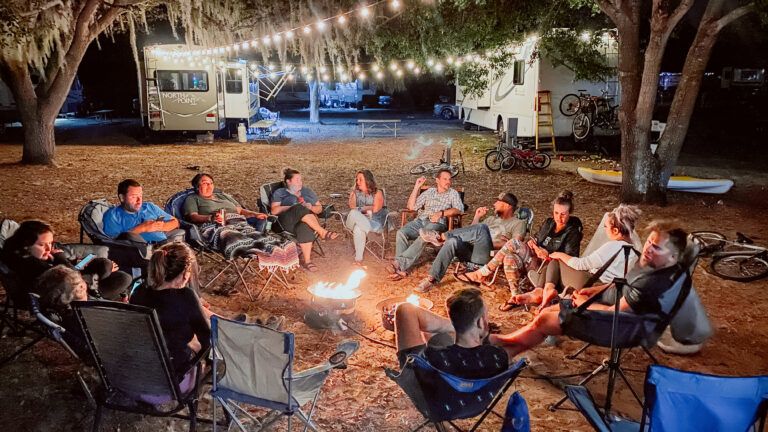
- Large family events, like graduations, where everyone’s converging on one house
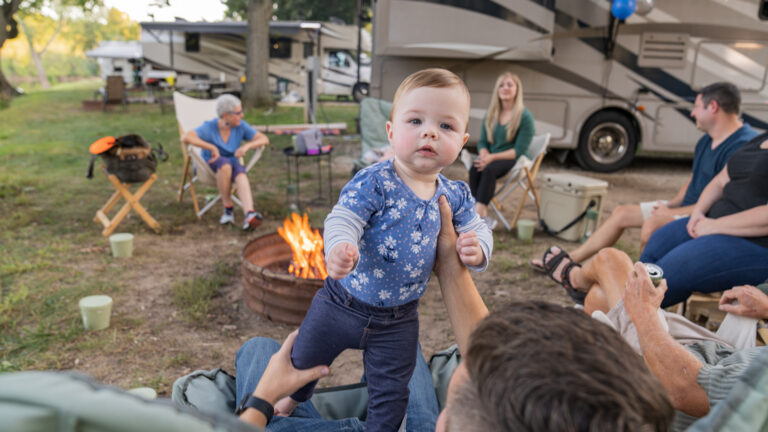
- Welcoming a new baby, giving the new family privacy while staying close enough to help
- Visiting family in a small house without adding more guests to a cramped home
Driveway Camping vs. an RV Space Rental: Which Should You Choose?
If your own driveway (or a neighbor’s) isn’t a fit due to size or slope, weigh it against booking a traditional campground space.
| Factor | Driveway / Moochdocking | Campground / RV Space Rental |
| Proximity to family | Very close — you’re staying with them | More distance, usually with some notice before visits |
| Cost | Free or very low (a gesture of thanks is common) | Nightly RV space fees apply |
| Amenities | Limited to what the host’s home can offer, unless full hookups are available | Full-hookup sites offer water, power, and sewer without relying on a host |
| Booking flexibility | Informal, arranged directly with your host | Requires a reservation, subject to the campground’s cancellation policy |
Common Mistakes to Avoid
- Showing up without confirming HOA or local parking rules first
- Assuming hookup access without asking your host directly
- Not measuring your RV against the driveway’s length, slope, and clearance beforehand
- Overstaying an agreed-upon timeframe without checking in with your host
Frequently Asked Questions About Moochdocking
No, moochdocking is not quite the same as boondocking. Boondocking means camping without hookups, typically on public land. Moochdocking is staying on a friend’s or family member’s private property and often includes access to their power or water.
Yes, you should always confirm with your host ahead of time. Discuss hookup access, parking location, and how long you plan to stay.
Moochdocking could get your host in trouble with their HOA if the association prohibits RV parking. Check your host’s HOA rules and local ordinances before you arrive to avoid putting them at risk of a fine.
Bring your own kitchenware, linens, and toiletries, so you’re not relying on your host’s supplies while you’re on their property. Also, bring any gear specific to your trip, like kid essentials or camp chairs.
Yes, you can moochdock without hookups. If your host can’t offer power or water access, plan to dry camp using your RV’s own systems, and locate a nearby dump station in advance.
Moochdocking is typically free, yes — there’s no campground fee. However, it’s common courtesy to bring a small gift, cover a meal, or contribute toward utilities as a thank-you.
Ready to plan your own moochdocking trip? Browse RVshare rentals and find the right rig for visiting family this season.