Before renting an RV for a concert, race, or sporting event, you’ll need to choose the right RV size for your group, check the venue’s RV camping rules and hookup availability, and book early since event-adjacent rentals sell out fast. Most first-time renters find that an RV puts them closer to the action than a hotel would, while also saving money once costs are split across the group.
Key Takeaways
- Motorhomes (Class A, B, and C) and towable travel trailers each suit different group sizes and venues.
- Many event venues offer only dry camping, so plan for limited hookups and generator rules.
- Booking early gets you better RV selection, lower prices, and a better campsite or parking spot.
- Knowing your RV’s amp service (30 vs. 50) prevents tripped breakers and dead batteries on event weekends.
- RVshare delivery rentals can eliminate towing and setup hassles entirely for event trips.
Frequently Asked Questions About Renting an RV for an Event
Yes, you can rent an RV without experience. In fact, most RVshare renters are first-timers. RVshare owners typically provide a walkthrough before guests leave with their rental. They show guests how to operate the generator, hookups, and appliances and will give basic driving and towing pointers if you need them. You don’t need RV experience before renting, just a willingness to ask questions.
No, in most states you do not need a special license to rent an RV. A standard driver’s license covers most rental motorhomes and travel trailers. Some states do impose weight-based requirements for very large rigs, so it’s worth a quick check with your state’s DMV if you’re renting something unusually large.
Dry camping means camping without water or electric hookups, often in a designated lot or a field at an event venue. Boondocking specifically refers to camping off-grid on public or undeveloped land, away from formal campgrounds entirely. Most event camping is dry camping, rather than actual boondocking.
Temporary RV rental insurance typically runs between $15 and $30 per day. Pricing is based on factors like the RV’s age, type, length, and stated value. Larger or more expensive rigs with higher coverage limits can push the cost up to $50–$70 per day. On RVshare specifically, an Essential protection package is automatically included in your quote when you book an RV covered by the RVshare Protection Plan, and renters can choose a different package at booking.
Every RVshare rental requires RVshare Insurance and Protection, which covers accidental damage even if the RV is stationary or delivered to your event site. The standard protection plan covers things like fire, theft, vandalism, windstorm or hail, collision, and damage to interior items. This includes appliances, cabinets, and furniture, up to $300,000 in comprehensive and collision coverage depending on the RV’s value. If something happens, you’ll work through your deductible (and any security deposit waiver you’ve purchased) rather than being on the hook for the full repair cost. For interior-specific damage beyond what’s included in the standard plan, optional Interior Damage Protection adds up to $1,500 in additional coverage after the deductible.
No, you don’t need a full hookup campsite for event camping. Most event venues only offer dry camping or limited hookups. A full hookup campsite with water, electric, and sewer is more common at traditional campgrounds than at event parking areas. You’ll want to plan your water and generator use accordingly if you’re staying on-site at the venue itself.
RV Types at a Glance
| Type | Best For | Cost | Ease of Use |
| Class B (camper van) | Couples, solo travelers | $$ | Easy |
| Class C | Families, small groups | $$$ | Easy |
| Class A | Large groups | $$$$ | Moderate |
| Travel Trailer | Flexible group sizes | $$ | Moderate (towing required) |
| Fifth Wheel | Large groups, longer stays | $$$$ | Moderate (requires pickup truck) |
Why Rent an RV for an Event?
RVshare’s 2025 Travel Trend Report found that 63% of travelers see RVs as appealing accommodations for multi-day festivals, while 53% feel the same about tailgating events.
Renting an RV for a concert, big game, or festival lets you stay close to the action, skip hotel shortages or their surge pricing, and bring a built-in space for cooking, relaxing, and socializing with your group. Common events people RV to include music festivals, NASCAR and IndyCar races, baseball and football games, state fairs, and RV shows, though just about any multi-day event with on-site or nearby camping is a candidate.
How Do I Choose the Right RV Size for an Event?
RVs are split into two broad categories: motorhomes, which you drive, and travel trailers, which are towed behind a separate vehicle.
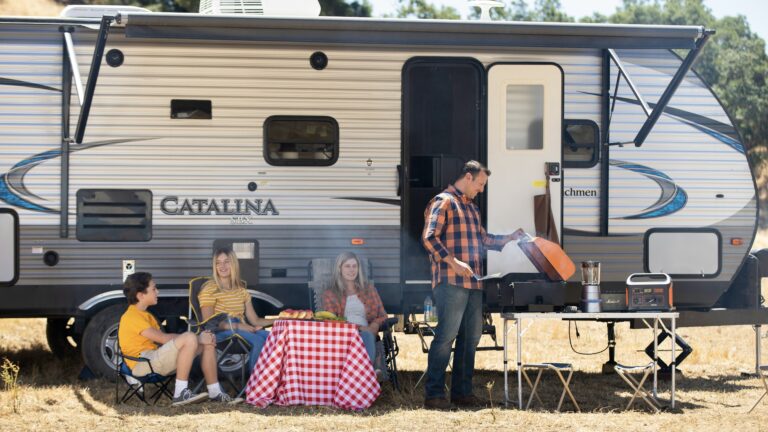
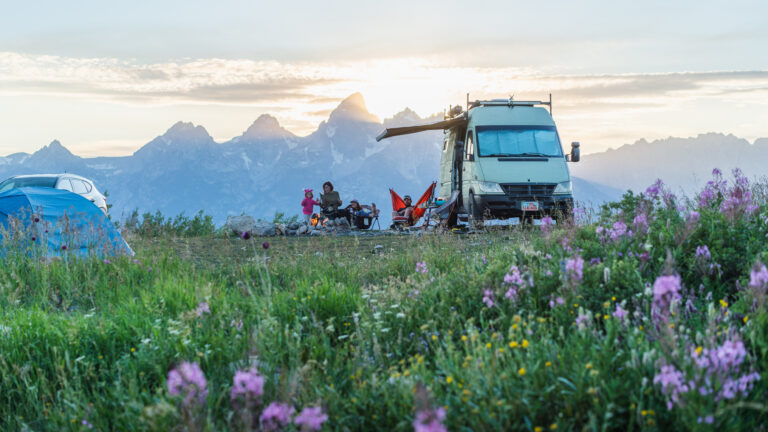
Class A motorhomes are the large, bus-style coaches most people picture when they think “RV.” Class B campervans are smaller and easier to maneuver, which makes them a good fit for tighter event parking lots. These are also a popular option for boondocking when hookups aren’t available. Class C campers are built on a truck chassis and tend to be one of the easier options for first-timers to drive. Travel trailers range from small pop-ups to large units with multiple slide-outs, and all require towing. Fifth wheels are the largest towable option, and hitch into a pickup truck bed rather than a bumper. They’re a great option if you’ve got a big group and a truck that can tow one.
You should consider two factors when conducting your search: how many people are in your group, and what size restrictions your venue or campground has on RV length. RVshare listings specify exactly how many people can sleep comfortably in a given rental, and event venues typically post any length restrictions on their camping or parking pages.
What Event RV Camping Rules Should I Check Before Booking?
Before booking, confirm a few things directly with the event organizer or venue:
- Whether on-site RV parking is allowed — many events offer it, but not all
- Whether the RV area has hookups, or whether you’ll be dry camping
- Whether and when you’re permitted to run a generator. Many venues restrict generator use during designated quiet hours.
- The specified arrival and departure windows for the RV camping area, which can be tighter than the event’s own start and end times.
How Do RV Electrical Hookups Work at Events?
Most RVs run on either 30-amp or 50-amp shore power service. Knowing which one your rental uses matters more at events than almost anywhere else. A 30-amp system gives you about 3,600 watts to work with. This is enough for one air conditioner plus basics like lights and a TV, but it’s easy to overload if you add a microwave or hair dryer at the same time. A 50-amp system delivers roughly 12,000 watts, enough to run multiple high-power appliances simultaneously.
If your event venue offers only dry camping, you won’t need to worry about amps. Your onboard generator (standard on most motorhomes and many travel trailers) becomes your power source. Check with the event organizer first, since generator use is often restricted during quiet hours, and some festivals discourage or ban it outright.
How Far in Advance Should I Book an RV for an Event?
Book an RV as early as you can, since popular events can sell out RV rentals and on-site parking passes months ahead. Booking early gets you a wider selection of RVs, better pricing on both the rental and the campsite, and a better shot at your preferred spot, either on-site at the venue or at a nearby campground.
“Renting an RV for an event is an effective way to upgrade your on-site accommodations. Before you book an RV, remember to ask yourself what your priorities are and how you want to use this space. If you want a more private space than tent camping and favor temperature control, then a simple travel trailer would be a great choice. If you want the RV to be an extension of the event, like hosting people and cooking, then a bigger RV like a Class A or a full-size travel trailer would be a better fit.” — Fiorella Yriberry, Full-Time RVer and Brand Ambassador
How Do I Plan My Route and Campsite for an Event Trip?
Check the event website to see if camping is available on the grounds. If it is, secure a spot and follow any rules outlined on the website. If you’re not staying on-site, you can search nearby campgrounds in the city or area where the event is being held. Reserve your spot as early as possible, whether you’re parking on-site or off, since on-site passes tend to sell out fastest and surrounding campgrounds often raise prices as the event approaches.
When mapping your route, build in a few RV-specific considerations beyond the usual road trip stops: avoid low-clearance, narrow, or unpaved roads (particularly in a larger Class A), plan fuel stops at truck stops rather than standard gas stations, and budget extra time for event-related traffic near the venue.
What Should I Pack for RV Event Camping?
Beyond your usual road trip packing list, a few extras are worth bringing for event camping: tailgating gear like folding chairs and an outdoor grill, power cords and a portable power bank if you’ll be dry camping, enough food and drinks for the full event, and weather-appropriate gear for long days outside. Check your specific rental listing to see what’s already included, since kitchen basics, linens, and towels vary by owner.
What Should I Expect When I Arrive?
When you arrive, you’ll likely find a friendly representative who can help you check in and show you where your campsite is. They may also be able to help you navigate tight parking arrangements or back-in spaces, which can present a challenge — but a totally overcomeable one — to newbies. The main rule of thumb: if you need help, ask. Everyone was a new RVer at some point, and the people around you will likely be more than happy to help.
RV Camping Tips for Popular Event Types
Here are some top tips for specific, popular types of events that are popular with RVers.
Music Festivals
Music festivals are one of the most common (and exciting) places to RV. However, you’ll want to be prepared for:
- Limited hookups. At most fests, dry camping is the name of the game, and generator use is discouraged. (You may be able to find electricity hookups, but they may also come only with a significantly upgraded and more expensive parking pass.)
- Lots of noise and late-night activity. Obviously, that’s kind of the entire point of a music festival, but if you want to get your beauty sleep, bring earplugs!
- The need for portable power solutions such as cell phone power banks (some fests also offer charging stations).
- Packing out everything you pack in, including garbage.
Sporting Events and Tailgating
If you’re RVing to a sporting event and hosting a tailgating party:
- Arrive early to secure the best spot in the lot.
- Set up your outdoor area to encourage guests to mingle and enjoy the party vibe.
- Consider food prep ahead of time. The venue may have policies around outdoor grilling, for example, that could cramp your style… but not if you’ve made something amazing beforehand.
- Keep an eye on venue alcohol restrictions, too. A tailgate party may seem like a moot point without a beer in hand, but some venues don’t allow open containers.
Races (NASCAR, IndyCar, etc.)
If you’re lucky enough to get to take a rental RV to a race, here’s what you need to know.
- These races require multi-day camping setups. If you don’t have hookups, be prepared to be without power for longer, and make sure you have plenty of water on board.
- Arriving early can help you find the best site to view the race (although there’s usually not a bad seat in the house)
- Be prepared for dust and changing weather conditions. Those cars can kick up some serious debris, and while rain can halt a race, you’ll still need to deal with it as a camper.
Fairs and Local Events
Smaller local events, fairs, and one-offs can still be great opportunities to camp. At these events, be prepared for:
- Smaller spaces, which can also mean easier logistics for campers. (You likely won’t have to navigate a complex map, just one big field of rigs.)
- Family-friendly setups
- Flexible schedules that mean you won’t have to feel pressed for time to see and do it all
First-Time RV Rental Mistakes to Avoid
Some of the biggest first-timer RV rental mistakes to avoid include:
- Not checking power compatibility. Some rigs take 30 amps, and some take 50 — and you may be stuck without power if you don’t check which setup is available ahead of time.
- Overpacking or underpacking. Take a close look at your RV rental listing and only bring what you know you’ll need.
- Ignoring water and waste tank limits. Having an onboard plumbing system does come with its limitations. You’ll want to know how much your gray wastewater tank (which catches sink draining) and black wastewater tank (which catches toilet draining) hold, arrive with them empty, and make sure your potable water is full.
- Not understanding how to use the generator. Ask the person you’re renting from for a demonstration. That’s the surest-fire way to ensure you aren’t stuck without electricity when you most want it!
How RVshare Makes Event Travel Easier
Renting with RVshare really is a game-changer, whether you’re RVing to a sporting event or a music festival. We offer a wide selection of RVs nationwide, and you can even have your RV delivered and set up on site ahead of time.
Our platform also offers built-in protection for both renters and owners, as well as roadside support, so you’re covered every step of the way. Renting an RV means convenience, flexibility, and the freedom to travel your way. Explore RV rentals for your upcoming event today.