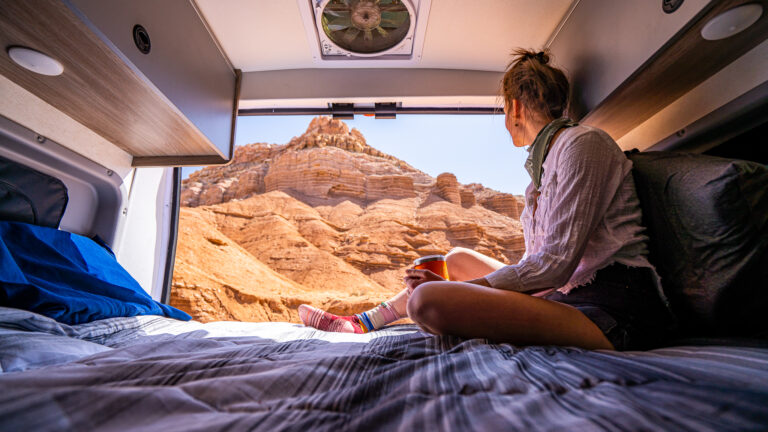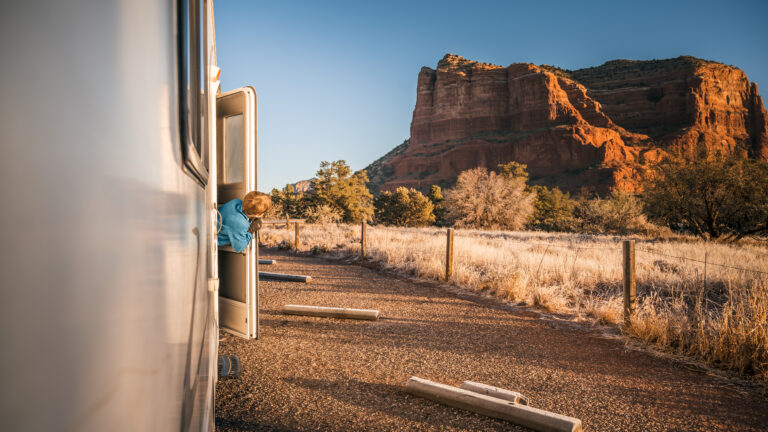
How do you plan an RV road trip? Start by choosing the right RV for your group and your route, then map your drive with RV-friendly stops, book campsites in advance, and set a realistic budget for the rig, fuel, and campgrounds. Most first-time RVers find the process more manageable than they expect, especially when they plan ahead and lean on the RV owner for guidance. This guide walks you through every step, from picking a rig to packing the kitchen, so you can travel with confidence on your first trip or your fiftieth.
Key Takeaways
- Class C motorhomes and travel trailers are popular, approachable picks for a first RV road trip.
- RV-friendly routing tools help you avoid low bridges, tight roads, and steep grades.
- Booking campsites early matters most during summer, holidays, and event weekends.
- A simple budget covers four things: the rig, fuel, campgrounds, and everyday trip costs.
- Every RVshare rental includes insurance and protection options plus 24/7 roadside assistance.
Why Take an RV Road Trip?
Before the how, a quick word on the why. Here are the reasons RVing is one of the most rewarding ways to travel:
- It’s flexible – No sitting in an airport waiting out delay after delay. Hit a traffic jam in an RV and it is far less stressful, because everything you need is already with you.
- It’s comfortable – Airline seats are cramped, and hotel stays mean unpacking and repacking at every stop. An RV lets you bring your creature comforts along for the ride, right down to the kitchen sink.
- It’s pet- and kid-friendly – The privacy of your own motorhome or travel trailer makes it easy to bring every member of the family.
- You can pack for any adventure – Skis, coolers, bikes, and gear that never fit in a sedan all have a place. The only real limits are closet space and undercarriage storage.
- You can try the lifestyle before you commit – Renting gives you access to RV travel without the storage and maintenance that come with ownership, and it is both easy and affordable.
For all of these reasons, RV road trips suit beginner travelers, families, remote workers, and everyone in between. Below, we cover everything from choosing the right RV to the details of route and itinerary planning, plus budgeting, packing lists, and more.
How Do You Choose the Right RV for a Road Trip?
Renting through a peer-to-peer platform like RVshare gives you access to far more variety than a traditional rental counter. Whether you want to stretch out in a big rig or take a nimble Class B camper van down a back road, you can find it here. For a deeper breakdown of every option, see our full guide to RV types and classes.
Here are the basics:
- Motorhomes come in Class A, Class B, and Class C. You drive these rather than tow them. Class A models tend to be the largest and most luxurious. Class B camper vans handle narrow roads and off-grid travel best. Class C motorhomes are often a comfortable middle ground for families.
- Towable RVs include travel trailers and fifth wheels. Fifth wheels are large trailers that need a heavy-duty truck to tow. Towables let you unhitch and explore in a smaller vehicle, though they take more practice to drive.
Use this quick comparison to match a rig to your trip:
| RV Type | Drive or Tow | Best For | Ease for Beginners |
| Class A motorhome | Drive | Large groups, long trips, maximum comfort | Moderate |
| Class B camper van | Drive | Couples, solo travelers, off-grid trips | Easy |
| Class C motorhome | Drive | Families and first-timers | Easy |
| Travel trailer | Tow | Families who want a separate tow vehicle | Moderate |
| Fifth wheel | Tow (heavy-duty truck) | Roomy stays, more experienced drivers | Moderate to hard |
When you are choosing, keep three things in mind:
- The size of your group: Each RVshare listing shows how many people the RV sleeps near the top of the page. Remember that some of those spots may be shared beds, pull-out couches, or converted dinettes.
- Where you are going: Resort-style campgrounds with concrete pull-through pads suit a big Class A. If you are heading down unpaved BLM roads, a smaller rig like a camper van makes more sense.
- Your experience and comfort level: Some small pop-ups and camper vans skip onboard bathrooms but feel easy to maneuver. Larger RVs pull out all the stops on comfort but take more confidence to drive. Only you can weigh the right trade-off for your travel style.
How Do You Plan an RV Route and Daily Driving Distances?
You have a rig in mind. Now for the fun part: planning your route.
If you have taken a road trip before, a lot of the basics carry over, like deciding how long each driving day should be. Many RVers follow the 3-3-3 rule as a starting point.
What is the 3-3-3 rule? It is a simple guideline for relaxed RV travel: drive no more than 300 miles in a day, arrive at your campsite by 3 p.m., and stay at least 3 nights before moving on.
There are a few considerations specific to RVing, though. In a large or towable rig, you may not be able to turn around or back up easily on narrow roads, so check your route ahead of time. You will also want to confirm clearance on any low bridges. On the major U.S. highway systems you should be fine, but for smaller towns, historic routes like Route 66, and mountain or desert driving, it is worth researching in advance and making sure you are stocked with enough food, water, and fuel.
This is also the time to lay out where you will stop overnight and where you will refuel. Not every overnight stop needs to be a destination campground. On longer legs, there are places where you can park your RV overnight for free (usually for a single night), which beats driving drowsy. If you do drive at night, put safety first: check your headlights, slow down, and watch for animals.
A good routing tool helps. Alongside Google Maps or Apple Maps, consider checking out Roadtrippers, which offers RV-friendly routing built around your rig’s size, or using an AI planner to help you plan your RV trip.
How Far Should You Drive Each Day on an RV Trip?
Aim to balance travel days with sightseeing days. The 3-3-3 rule above is the easiest guardrail: cap driving at about 300 miles, stop by mid-afternoon, and settle in for a few nights so you actually get to enjoy each stop instead of rushing to the next one.
Where Should You Go on Your RV Road Trip?
With your route guidelines in mind, it’s time to look at the map and decide where you’re actually headed.
Pro tip: The open road can make the whole country feel within reach, and it is, but it helps to match your destination to your travel style and experience level. If this is your first RV trip, a weekend getaway close to home is a gentler start than a cross-country loop through 30 national parks, as tempting as that sounds. State parks are often overlooked and can be just as beautiful, with excellent campsites.
Here are the most common types of RV trips:
- Outdoorsy adventures – National parks, scenic routes, and trips built around a specific activity. Getting outside while staying comfortable is one of the biggest draws of RVing.
- Urban getaways – RVs work for city travel too. Many major cities have RV parks and campgrounds nearby, and a motorhome can feel homier than a hotel room.
- Event-based travel – A music festival or a holiday with extended family can anchor an otherwise flexible trip around a specific date and place.
As you decide where to go, also think about when. Season and weather shape which destinations shine at any given time. Some parks are at their best in spring, while summer remains the classic road-trip season.
Now that you’ve got basic route-planning guidelines in mind, let’s take a look at the map and decide where exactly you’re going!
Selecting Scenic and Iconic Stops Along the Route
Plenty of travelers want to check a national park (or ten) off the bucket list. But the country is full of remarkable scenic and iconic sites well beyond the 63 national parks.
The most useful rule here: you cannot see it all, but you can fully enjoy what you do see. Focusing on a few places is usually more rewarding than cramming everything in. Along with the national parks, consider building a route around:
- National monuments
- State parks
- State landmarks
- National forests
- Scenic byways
- Roadside attractions
Balance sightseeing days with travel days so you arrive rested and ready to take in the places you came to see.
Planning Around Events and Experiences
Events make excellent anchors for an RV trip. You have a set place to reach by a set date, plus flexible time on either side to customize as you like. Trips often center on:
- Music festivals
- Sporting events
- Harvest celebrations and Oktoberfests
- State fairs and carnivals
- Family gatherings and private events
Keep in mind that when you travel to an event, others are traveling for the same reason, so book your campsites well ahead of time.
Where Can You Camp on an RV Road Trip?
For newer RVers, figuring out where to camp can feel like the hardest part. It rarely stays that way. There are plenty of places to park and rest, with different campground types serving different travelers.
At the most basic level, campgrounds fall into two categories:
- Private campgrounds – privately owned RV parks, often with resort-style amenities like pools, community centers, and gyms.
- Public campgrounds – built into public lands such as state parks and national parks.
Both usually charge a nightly fee, though public campgrounds tend to cost less than private ones. Either type may or may not offer hookups.
There is also boondocking to consider.
What is boondocking? Also called dispersed camping, boondocking means setting up on public land (often BLM-managed) with no hookups and no nightly fee. You are fully off-grid, and you can usually stay up to 14 days before moving on.
When it’s time to empty your tanks, you will use a dump station, a designated spot at many campgrounds and travel centers for emptying your RV’s gray and black water tanks.
Here is how the options compare:
| Campground Type | Amenities | Typical Cost | Reservations |
| Private RV park or resort | Hookups, pools, Wi-Fi, gyms | Higher | Recommended |
| Public campground (state or national park) | Basic to full hookups, scenic setting | Lower to moderate | Often required |
| Boondocking (BLM or dispersed) | None (off-grid) | Free | Not available or needed |
Most newer RVers stick to private and public campgrounds at first, since they offer amenities and an on-site manager who can answer questions. These sites fill up fast, though, especially affordable public ones and anything inside a national park. Book as far in advance as you can, particularly in busy seasons or around an event.
How Much Does an RV Road Trip Cost?
Budgeting may not be the most exciting step, but for most of us it is one of the most important. It does not have to feel restrictive. Knowing what you can spend actually frees you up to enjoy the trip the way you want.
Every budget looks different, but these are the main costs to plan for:
| Cost | Typical Range | Notes |
| RV rental | Set by owner | Nightly rate; many owners discount weekly or monthly stays |
| Campground fees | About $15 to $100+ per night | Varies by type, location, and season |
| Fuel | Varies | Larger motorhomes and fifth wheels use more |
| Food, activities, souvenirs | Varies | You control this by cooking in the RV |
As you plan more trips, you will spot easy ways to save on the very same route. Many campgrounds use dynamic pricing, charging more during peak season, so traveling in the shoulder season can lower your campground fees right away. Both campgrounds and RV owners often discount longer stays, such as a full week or month. And because you can cook for yourself in an RV, you can trim your food budget while choosing exactly how many miles to drive.
What Should You Pack and How Do You Prepare Your RV?
You’re getting close to ready. Next up: packing.
The specifics depend on your trip. A couple heading to the mountains for winter sports will pack very differently from a family of six going to the beach for a summer weekend. Still, a few essentials apply to nearly everyone:
- A water hose, electrical connection cable, and sewer hose
- Bedsheets and towels
- Cookware, kitchen equipment, and serveware
- Personal items, including clothing and electronics
- An emergency kit
Your rental may include bedsheets, towels, and kitchenware, or it may not, so always check the listing ahead of time. Building an RV packing checklist in advance (based on your destination, the season, and your party size) keeps things simple. If you stay in developed campgrounds, you can usually grab anything you forget on the road.
Before you leave, take care of a few preparations. If you are renting on RVshare, the owner will walk you through the specifics of that rig, but in general:
- Check the tires, mirrors, backup cameras, and other driving components for safety before you head out.
- Confirm you have everything for setting up camp, including wheel chocks and leveling blocks.
- If it is your first time, ask the owner to show you how to set up and break down camp before you leave.
The RV owner is your best resource here. They know the rig better than anyone.
Common First-Time RV Road Trip Mistakes
If this is your first trip, there are a few common beginner mistakes worth sidestepping. Since you are reading this, you can skip the trial and error:
- Overbooking the trip – Trying to see everything leads to an exhausting schedule. Aim for quality over quantity.
- Overpacking – An RV holds a lot, but not everything, and rigs have weight limits that your gear counts against.
- Not knowing 30-amp from 50-amp hookups – RVs have different electrical needs, and not every campsite can handle the higher draw. Knowing your rig’s amperage helps you book the right site.
- Skipping the pre-drive inspection – Pulling away with the steps down or an awning out does happen. A quick walk-around prevents it.
- Ignoring the tanks – Dumping wastewater at a dump station is not as intimidating as it sounds, but leaving it too long gets unpleasant fast.
- Forgetting the RV moves – Everything in your cabinets and fridge is subject to acceleration and braking. Secure it before you drive so you don’t end up with a mess later.
Expert Tip: The single best move a first-timer can make is to have the RV owner give you a full walkthrough at pickup. Take notes or a quick video on your phone covering how to run the water, power, and tanks, how to level the rig, and how to hitch or unhitch if it is a towable. Five minutes of setup instruction saves hours of guesswork on the road. For more, browse our Road Diaries articles and beginner videos.
Why Renting Is a Smart Way to Start RVing
You should be feeling ready to start planning with confidence.
If you love it (and we suspect you will), you may even consider buying an RV of your own down the line. For a beginner, though, renting is an excellent way to explore the lifestyle without the long-term responsibility of ownership. On a peer-to-peer marketplace, you can also try different types of RVs to see which make, model, and floor plan fits your travel needs best.
When you rent with RVshare, every rental includes insurance and protection options along with 24/7 roadside assistance. There are also plenty of resources to help you plan a great trip, even if it is your first. And when you are ready to step into RV ownership, you can list your own rig for the next traveler to discover.
Frequently Asked Questions About RV Trip Planning
Start at the beginning. Think about the activities you enjoy on a trip and where an RV could take you to do more of them. Factor in how much vacation time you have and your budget, then choose a rig and route from there. Learn more about how to plan an RV trip with us at RVshare.
While it all depends on the camper (and their confidence level with driving larger vehicles), many beginners find a Class C motorhome a relatively approachable but still luxurious and spacious way to travel. If you’re traveling solo or as a couple and willing to be a little rugged, a camper van can also be a good option.
For most standard rental RVs, you don’t need a special license to drive an RV. A regular driver’s license covers the great majority of motorhomes and towable rigs that first-time renters choose. A small number of very large motorhomes can require a special license in certain states, so confirm the requirements with the owner and your state’s rules before you book.
The best RV for a beginner road trip depends on your comfort with driving larger vehicles. Many beginners find a Class C motorhome an approachable yet spacious and comfortable option. If you are traveling solo or as a couple and do not mind roughing it a little, a camper van is another good choice.
The goal is to balance travel with sightseeing. Many RVers follow the 3-3-3 rule: drive no more than 300 miles a day, stop by 3 p.m., and spend at least three days at each destination between legs.
RVs are allowed in most national parks. However, not all national parks have campgrounds that are accessible to RVs, or all RVs. If you’re planning to try and stay on-site, be sure to check the NPS website ahead of time to see which campgrounds allow RVs and learn about any length restrictions or seasonal closures.
Some campgrounds are first come, first served, but reservations are usually a good idea, whether you are staying at a private RV park or a public campground in a state or national park. If you are boondocking on BLM land, you do not need (and usually cannot make) reservations.
You can have a shoestring trip or a luxurious one. From choosing an affordable rental to picking lower-cost campgrounds and cooking for yourself, there are many ways to customize and lower the overall cost of RV travel.
For a first, second, or third trip, renting gives you the flexibility to try the RV lifestyle without the long-term costs and responsibilities of ownership. A peer-to-peer platform like RVshare also lets you sample different types of RVs that traditional outlets rarely carry, such as Class B camper vans or pop-up trailers.