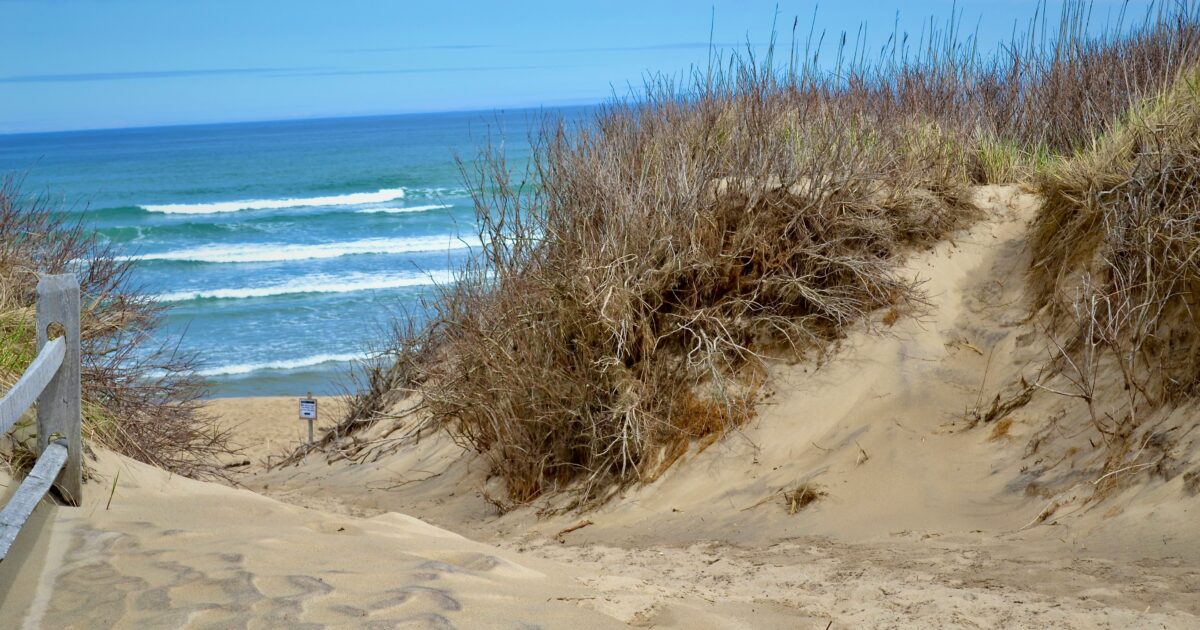
You can legally live in an RV full-time in Massachusetts, but you must park on private property zoned as residential, either your own land or someone else’s with permission, and comply with local visibility ordinances. These regulations often require RVs to be hidden from public view behind structures, fences, or buildings. Massachusetts has no federally managed public lands for boondocking, so your options are limited to private property or long-term stays at RV parks and campgrounds that offer seasonal or annual rentals. The state requires liability insurance on motorized RVs. Trailers over 10,001 pounds must have air brakes, and all trailers need safety chains and proper lighting. While Massachusetts lacks the tax advantages of popular RV domicile states like South Dakota or Florida, it offers access to coastal camping on Cape Cod, proximity to Boston’s cultural attractions, and beautiful fall foliage.
This information is current as of March 2026, but local regulations change frequently. Always verify with your specific city or county zoning office before making permanent RV living decisions.
Massachusetts RV Living: Legal and Illegal Locations At a Glance
| Location Type | Legal Status | Typical Cost | Duration Limit | Best For |
| Long-Term RV Parks | Legal | $800-2,500/month seasonal | Park rules vary; some annual | Most practical option for full-time living |
| Own Property (Primary Residence) | Legal with permits | Land cost + setup ($20k-300k+) | Often temporary permits only (6-12 months renewable) | Landowners willing to navigate zoning process |
| Cape Cod Seasonal Parks | Legal | $3,500-6,000/season (April-Oct) | Seasonal only; most close winter | Summer/fall residents; snowbirds |
| State Parks | Legal | $30-60/night | 14-day maximum per stay | Short-term camping, not full-time |
| BLM/National Forest (Dispersed) | Not available | N/A | N/A – no federal lands in MA | Not an option in Massachusetts |
| Boston/City Streets | Restricted/Prohibited | N/A | Varies; 24-72 hours typical | Avoid for long-term; enforcement varies |
| Private Property (Not Yours) | With permission & permits | Negotiable ($300-800/month) | Often temporary permits (6-12 months) | Arrangement with landowner plus zoning approval |
| Rest Areas | Limited | Free | Some prohibit overnight; check signs | Emergency only; not reliable |
Why Full-Time RV Living Laws Matter in Massachusetts in 2026
Massachusetts has no single statewide RV living law, but rather a patchwork of 351 municipal zoning ordinances that create extreme variation from town to town, making it one of the most complex states for RV living compliance.
Unlike states with uniform county-level rules, Massachusetts gives nearly complete zoning authority to individual municipalities:
- Boston and surrounding suburbs generally prohibit RV living or severely restrict it
- Cape Cod towns vary wildly — Truro allows it with permits; other towns prohibit it entirely
- Western Massachusetts rural towns (Berkshires) tend to be more permissive, but still require permits
- Worcester area has mixed regulations depending on the specific town
- Neighboring towns can have opposite rules — crossing a town line can mean shifting from complete prohibition to permissive regulations
Massachusetts doesn’t prohibit RV living at the state level, but there are obstacles:
- No federal public lands: Massachusetts is the only state in New England with ZERO federally managed BLM or National Forest lands
- Visibility ordinances: Most towns require RVs to be hidden from public view
- Temporary permit systems: Many towns issue only 6-12-month permits requiring renewal
- Health department approval: Septic and water requirements add complexity
- High population density: Limited available land and neighbor complaints
To live full-time in an RV in Massachusetts successfully, be sure to research your specific town’s zoning bylaws before settling there. Obtain any necessary permits before moving your RV onto a property. Be sure to comply with visibility ordinances to avoid any neighbor complaints. Budget for any necessary screening, like fences or barriers. Plan for the permit renewal process every 6-12 months. Have a backup location ready in case your permit is denied or not renewed. And consider RV parks as an easier alternative to private property for full-time living.
Where Can You Legally Park an RV Long-Term in Massachusetts?
In Massachusetts, many towns and local laws require you to park your RV on private property out of view of any public way. That means your RV must be either inside a structure or behind a building, fence, or other object that obstructs the view from the street. You can sometimes park your RV for a short period of time on the street or in a driveway.
All of these laws vary, depending on the area in Massachusetts. Be sure you know the local zoning laws for the area where you’re going to stay.
Typical municipal street parking rules:
- 24-72 hour limits in most towns before you must move
- No RV parking zones in some residential neighborhoods
- Overnight parking prohibits in many business districts
- Winter parking bans (typically December-March) prohibit street parking during certain hours to allow snow plowing
What Types of Properties Can You Live On Full-Time in an RV in Massachusetts?
Here are some of the properties where you can live full-time.
- You can opt to stay in an official RV park, campground, or resort that offers long-term rentals. Some campgrounds rent by the season, and others might even rent by the year.
- You can also live full-time in your RV on private property that can either belong to you or someone else. Before you settle in, be sure that you know all the applicable municipal and state laws regarding living in your RV on private property.
Can You Boondock or Dry Camp in Massachusetts?
Traditional boondocking is not available in Massachusetts because the state has zero federally managed BLM (Bureau of Land Management) or National Forest lands. In fact, it’s the only New England state without federal public lands for dispersed camping. Massachusetts state parks restrict camping to designated campgrounds only, with a 14-day maximum stay, and private land requires owner permission. Massachusetts state forests prohibit dispersed camping entirely. All camping must be in designated campgrounds or designated backcountry campsites.
While traditional boondocking isn’t available, there are some alternatives. If you’re a Harvest Hosts member, you can find lots of options for camping that aren’t traditional RV parks. However, Harvest Hosts sites are generally intended for one-night stays. You may be able to stay 2-4 nights, but these sites are not intended for long-term camping.
Some churches and casinos also allow RV camping, but again, just for a night or two.
What Are Massachusetts’s RV Insurance Requirements?
The state of Massachusetts requires liability insurance for any vehicle that has a driver. That means that the insurance must be on your car, truck, or RV. Your insurance covers any trailers attached to your car or truck, including travel trailers, pop-ups, fifth wheels, and toy haulers. Vehicles without their own motors will need additional policies for fire, theft, and other damage not covered under your main policy.
What Are Massachusetts’s RV Towing and Registration Laws?
When it comes to fifth wheels, toy haulers, or travel trailers, Massachusetts requires trailers of 10,001 pounds or more to have separate air brakes. All trailers in Massachusetts, except semi-trailers, must be connected to the towing vehicle by safety chains in addition to the hitch. The trailer must have functioning directional lights and a white light that illuminates the license plate. As far as mirrors go, the law states that the driver must be able to see the road behind the trailer and the left side simultaneously.
Full-Time RVing in Foxborough
Foxborough is a suburb of Boston. One of the RV campgrounds in Foxborough is listed among the Top 10 Campgrounds in Massachusetts. It’s only a short drive to Boston and all of the perks of that city. Sports fans can attend Patriots, Red Sox, Celtics, or Bruinsgames. History buffs will enjoy the Freedom Trail and the many historical landmarks in the area.
RVing in Foxborough FAQs
You can park on private property anywhere as long as you follow local zoning laws and other state laws.
Yes, you may. Remember, you have to keep the RV out of sight of people driving by. You’re also subject to zoning approval, health department approval, and in many places, this applies to temporary permits only.
Full-Time RVing in Truro
Truro is almost all the way at the end of Cape Cod. Only Provincetown is further out into the ocean. The fishing and swimming are exceptional on either the eastern shore, which faces the Atlantic Ocean, or the western shore which faces Cape Cod Bay. You’ll find a wonderful RV resorts in North Truro, as well, some of which provide rentals for an entire season.
RVing in Truro FAQs
No, you can’t just park anywhere. Aside from the designated RV campground in Truro, you can park on private property. It can either be your own property or someone else’s. If it’s someone else’s, you need that person’s permission.
Yes, you may practice full-time RV living on your own property in Truro. However, you’re subject to zoning approval, health department approval, and in many places, this applies to temporary permits only.
How Do You Establish Your Massachusetts RV Domicile?
You’ll want to make sure you’re prepared to live in your RV full time. This includes setting up a way to receive mail, ensuring your children go to school, and making sure that you have an income to support yourself. Remember, too, that you have to follow all applicable laws regarding living in your RV full-time.
Having your mail sent to a post office box near you is a convenient way to get it. Because you won’t have a fixed address, you have to have what’s known as a “domicile” in any state of your choosing. That’ll be your “home away from home” and where all of your mail will likely be received. When you renew your driver’s license, it’ll be through that state as well and not the state where you’re actually staying in your RV.
When you vote, you’ll be voting in your domicile state because that’s your official address of record. Don’t forget to register! If you have questions about voter registration, then contact the applicable Bureau of Voter Registration.
When it comes to school, RVers usually choose either to homeschool their children or to register them in the state where they are. If you’ve registered your children in a regular school and you move, then you’ll have to re-register them when you arrive at your new location.
Another thing that RVers do is to find a family doctor in their domicile state and then return to that area for prescription renewals, annual physical exams, and other routine medical services. By having good health insurance, they also cover themselves if either they or their family members need hospitalization while on the road or while living on private property in Massachusetts.
Once you’ve set all of that up, you’ll need a job. Usually, this will be some sort of remote position. It’s generally a good idea to make sure that your RV is equipped with a mobile hotspot with unlimited internet so that you can always perform your job duties. Some RVers get jobs at the campgrounds where they stay, trading work for rental fees, income, or both. Others find seasonal work at businesses near where they’re staying.
Because you’re away from your domicile state and traveling from place to place, it would be wise to do your banking at a place with branches in as many states as possible. That way, you won’t have to drive long distances just to find an ATM or do your banking.
Key Takeaways
- You can legally live in an RV in Massachusetts, but only on private property or in designated RV parks, in compliance with local zoning laws.
- Massachusetts lacks federal public lands for boondocking, limiting overnight parking options; visibility ordinances require RVs to be hidden from public view.
- Long-term RV parks and campgrounds offer the most practical living options, with permits required for RVs on private property.
- Liability insurance is mandatory for motorized RVs, and trailers over 10,001 pounds need air brakes and safety chains.
- Always check local regulations as they vary significantly by municipality, and prepare for the RV permit renewal process every 6-12 months.
RVing in Massachusetts FAQs
In most states, you can sleep at rest stops or even along the road if necessary. In Massachusetts, there are some rest stops where you may not sleep overnight. Notices will be posted at the applicable rest stops.
There are no new laws specifically regarding RVs that have been enacted in Massachusetts since 2021.
Yes, it is legal to live in an RV full-time in Massachusetts. Your options are to park on private property or in a designated campsite in a campground that provides long-term camping.
You are allowed to park your RV on your own land in Massachusetts. The only stipulation is that you either put it inside a garage or other structure or that you block the line of sight to it in some way so that people driving by on a nearby road can’t see it.
Yes, if you don’t currently have land in Massachusetts, then you are allowed to buy some and then put your RV on it to live for the long term.
There is no actual law about this, but the owners of RV parks, campgrounds, and resorts make their own rules regarding staying at their establishments. Some of these places will rent to you by the year, so be sure to contact any campground where you wish to stay to ask about how long you can stay.
Have you thought about living in an RV full-time? One of the smart things you can do is to rent an RV for a while to see how “the mobile life” appeals to you. If it does, and you go ahead and buy yourself an RV, then follow these safety tips when setting up your campsite for the first time. Happy trails!