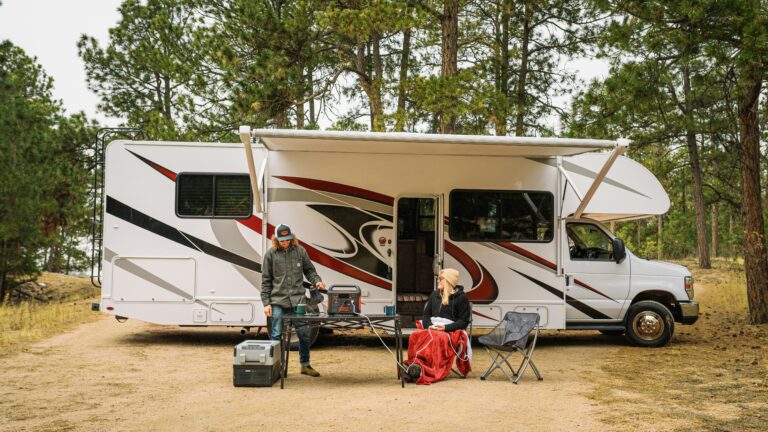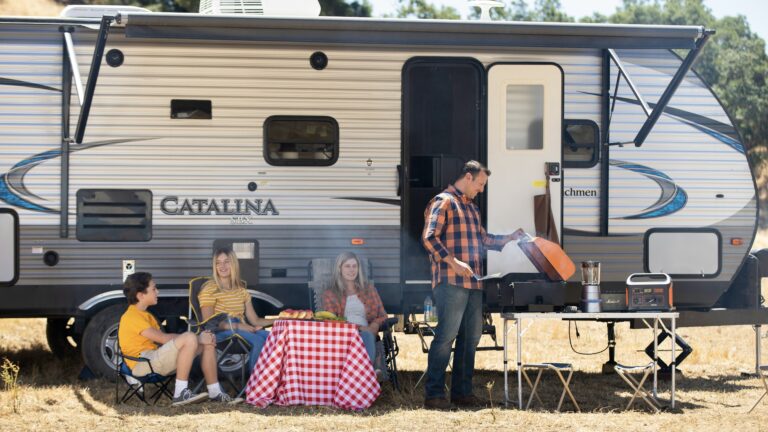
Is renting an RV cheaper than a hotel or vacation rental for a family trip? In most scenarios, yes — often significantly. In the side-by-side comparison we break down below, a week-long RV trip for a family of four comes in around $1,236 for accommodations and fuel, roughly half the cost of a comparable hotel trip and less than half a similar vacation rental. The savings come from consolidating lodging, transportation, and meals into a single rental, and they grow the longer your trip lasts or the more destinations you visit.
Key Takeaways
- A week-long RV rental for a family of four can cost around $1,166 for accommodations and fuel — compared to roughly $2,400 for hotels or $2,700 for a vacation rental in a similar scenario.
- RVs eliminate hidden costs like extra hotel rooms, rental cars, baggage fees, and most dining-out expenses.
- Hotels and vacation rentals can be more affordable for short city stays, solo or couple travel, and off-season trips.
- Booking early, traveling during shoulder season, and choosing the right RV size are the easiest ways to save more.
- The cheapest option always depends on your destination, trip length, group size, and travel style.
Why Are Families Re-Thinking Where They Stay in 2026?
Hotel prices have been climbing steadily, and the vacation rentals that once served as the budget-friendly alternative aren’t always affordable anymore either — especially in popular destinations or during major events like the 2026 FIFA World Cup. Dynamic pricing gives both hoteliers and vacation rental hosts the ability to raise rates in direct response to demand, which means the price you see in January may look very different by June.
At the same time, families are looking for ways to travel with the whole crew — kids, grandparents, pets — without paying for multiple hotel rooms or dealing with the unpredictability of air travel. That combination of rising costs and growing interest in road trips has made RV rentals increasingly popular.
According to the 2026 Travel Trend Report, 49% of Americans say they’re considering an RV for a future road trip, and 87% said they’d be more likely to choose an RV over other lodging options for a national park trip.
What Does “Cheaper” Really Mean for Family Travel?
There’s no single mode of travel that’s always the cheapest. The true cost depends on the many smaller decisions you make — where you stay, how far you drive, how often you eat out, and how many rooms you need. But there are costs associated with non-RV travel that families routinely overlook, especially when traveling in a larger group.
Costs Families Often Overlook
When flying or driving to a hotel or vacation rental, these expenses add up fast:
- Extra hotel rooms or suite upgrades. A single room works for a couple, but families with older kids usually want — or need — a second room or a suite upgrade.
- Hidden vacation rental fees. A nightly rate that looks like a deal can jump significantly once cleaning fees, service fees, and local taxes are added. And even after paying a cleaning fee, most hosts still expect you to do some cleanup.
- Dining out for every meal. Without a full kitchen, most hotel travelers eat out for at least two meals a day. Even modest family meals at restaurants add $40–$60 per sitting.
- Parking, resort, and pet fees. Small per-night charges can quickly bump up the total.
- Rental cars. If you fly to your destination, you’ll likely need to rent a car — an easy cost to forget during planning.
How Much Does a Family RV Trip Actually Cost in 2026?
Below, we’re going to set up several different example trips to help you see for yourself, side-by-side, how costs can differ depending on the type of travel you choose.
Assumptions Used in This Comparison
Before we get into the actual dollars and cents, here are the assumptions we’ll use as we go through these comparisons:
- You’re traveling as a family of four (2 adults, 2 kids)
- You’re headed out for a 5–7 night trip
- You’re choosing from popular U.S. travel regions (i.e. national parks, beach towns, major cities)
What Are the Typical RV Rental Expenses?
Before we crunch the numbers, here are the cost categories you’ll face with an RV rental:
Typical RV Rental Expenses
Here are the typical expenses you’ll face if you choose an RV rental for your next trip:
- The nightly RV rental rate. The cost per night will vary by RV type, location, and time of year. Rates often start around $100–$150 per night for a mid-size rig. Many RVshare owners offer weekly discounts.
- Mileage and generator usage. Some rentals include a set number of daily miles, usually around 100, and charge roughly $0.50 for each additional mile. Generator fees are typically around $3.00 per hour after an included allotment of around four hours.
- Campground or RV park fees. You’ll pay for your campsite in addition to the RV itself. Public campgrounds like state parks typically range from $20 to $40 per night for sites with hookups. Private, resort-style RV parks can run $75 to $100+ per night. Weekly stays sometimes come with discounts.
- Fuel costs. RVs consume much more fuel than a passenger car. A Class C motorhome typically gets 10–16 miles per gallon, while a larger Class A motorhome averages 6–10 MPG. If you’re renting a trailer and using your own tow vehicle, towing will still reduce your mileage and increase your fuel costs.
Example RV Trip Cost Breakdown
For this example, the family rents a Class C motorhome — spacious enough for four, but manageable to drive. They’re heading to a state park 300 miles from home.
| Expense | Cost |
| RV rental (7 nights × $150, with 10% weekly discount) | $945 |
| State park campground (7 nights × $30) | $210 |
| Fuel (300 miles at ~13 MPG, gas at $3.50/gal) | $81 |
| Mileage overage | $0 (under included mileage) |
| Generator fees | $0 (shore power at campsite) |
| Total (accommodations + fuel) | $1,236 |
Where Do Families Save the Most With an RV?
If that price shocked you by being lower than expected, here are some of the little things that add up big time and help you save when you travel with your family in an RV.
- One accommodation instead of multiple rooms: No extra room charges, no suite upgrades, no per-room taxes
- Kitchen access for meals: Cooking on the road keeps your food budget close to normal grocery spending, rather than $40–$60 per restaurant meal.
- Built-in transportation: No rental car costs, no baggage fees, not even airport parking
- Pet-friendly travel: Most RVshare rentals allow pets for a one-time deposit (typically around $50), compared to $50+ per night pet fees at many hotels.
How Much Do Hotel Stays Cost Families in 2026?
Now let’s translate the same trip into a hotel scenario.
What Are the Typical Hotel Expenses?
- Nightly room rates. Mid-range hotels in popular travel areas commonly run $200+ per night.
- Second rooms or suite upgrades. Families with older kids often need two rooms, which can double the accommodation cost.
- Parking and resort fees. Per-night add-ons of $15–$30 that aren’t always visible at booking.
- Transportation. Unlike an RV, a hotel doesn’t move. You’ll need to drive your own car, rent one, or fly — each with its own cost.
- Dining out. Without a full kitchen, most families dine out for at least one to two meals per day beyond any included breakfast.
Example Hotel Trip Cost Breakdown
The same family drives 300 miles to the same destination, splitting the week between two hotels to explore different areas.
| Expense | Cost |
| Hotel A (4 nights × $200 + $15/night parking/resort fee) | $860 |
| Hotel B (3 nights × $250 × 2 rooms for extra space) | $1,500 |
| Dinners out (7 nights × $60) | $420 |
| Lunches on the road (4 meals × $40) | $160 |
| Fuel (300 miles at 28 MPG, gas at $3.50/gal) | $38.50 |
| Total (with food) | $2,978.50 |
| Total (accommodations + fuel only) | $2,398.50 |
When Might Hotels Be the Cheaper Option?
Hotels aren’t always more expensive. They can be the more economical choice for:
- Short city stays where you’d be unlikely to find an affordable campground and the fees associated with renting an RV might be higher than the nightly rate of a hotel.
- Solo or couple vacations, where one, non-upgraded room will suffice.
- Off-season travel, when hotels may be available at deeply discounted rates.
- Destinations with limited RV access. (This one speaks for itself: If you can’t take an RV to your destination, that’s that!)
Where Do Hotels Get Expensive Fast?
On the other hand, hotel costs spike quickly in certain situations:
- National park gateway towns. The national parks are more popular than ever, and nightly rates can top $300 per night. Plus, you’ll be further away from the park and more likely to have to wait in line at the entry gates each morning before you can get to your hike or sightseeing.
- Peak summer destinations. Trying to go to Malibu in June? You could definitely be looking at hotel prices close to $400 per night.
- Urban tourist hubs. Seattle, New York, Chicago: They’re all great towns, and they all have some very expensive hotels to choose from. If you travel by RV, you might not stay right in the middle of the action, but you could stay nearby and commute in to see the sights — and still get a great night of sleep in the countryside.
- Major events. World Cup matches, festivals, and concerts mean dynamic pricing can push rates even higher.
How Much Do Vacation Rentals Cost Families in 2026?
Finally, let’s look at the same trip as a vacation rental.
What Are the Typical Home Rental Expenses?
Staying in a vacation rental was once considered a budget-friendly alternative to hotel accommodations. These days, though, there are plenty of expenses that can add up quick (and aren’t always immediately apparent).
- Nightly rate. The nightly rate can vary widely, from under $100 for a room to $1,000+ for a spacious beachfront house.
- Cleaning fees. Most properties add a flat cleaning fee, which can significantly increase the per-night effective cost, especially on shorter stays.
- Service fees and local taxes. Platform fees and local tourism taxes that aren’t always visible in the advertised nightly rate.
- The “advertised price vs. actual price” gap. A listing at $300/night can easily land closer to $400/night once all fees are included.
Example Vacation Rental Cost Breakdown
| Expense | Cost |
| Vacation rental (7 nights × $300, effective ~$400/night after fees, with 5% weekly discount) | $2,660 |
| Fuel (300 miles at 28 MPG, gas at $3.50/gal) | $38.50 |
| Total (accommodations + fuel) | $2,698.50 |
In this example, the vacation rental actually costs more than the hotel scenario — even though the hotel trip included two rooms at the second property. The hidden fees are what push the total above the hotel option.
When Do Vacation Rentals Make Sense?
Vacation rentals work well when you need more space than a hotel, and you’re staying in one location the whole time. A kitchen helps reduce the cost of meals on the road, and for larger groups like extended family reunions and multi-family trips, splitting a big house can bring the per-person cost down significantly. Vacation rentals are less competitive on shorter stays where the cleaning fee is spread across fewer nights, or during peak season when dynamic pricing inflates rates.
How Do All Three Options Compare Side by Side?
Here’s the full comparison for a seven-night family trip, 300 miles from home, two adults and two kids:
| RV Rental | Hotel Stays | Vacation Rental | |
| Accommodations + fuel | $1,236 | $2,398.50 | $2,698.50 |
| Cost per person | $309 | $599.63 | $674.63 |
| Kitchen access | Yes | Rarely | Yes |
| Pet-friendly | Usually (one-time deposit) | Often ($50+/night fee) | Sometimes (varies) |
| Multi-destination flexibility | High (home travels with you) | Low (repack each stop) | Very low (single location) |
| Requires driving large vehicle | Yes (or use delivery) | No | No |
Which Option Is Cheapest by Trip Type?
The right answer to this question depends on the kind of trip you’re planning.
Road Trips & National Parks
RV rentals are the clear winner for multi-destination road trips. You eliminate the cost of multiple hotel rooms, avoid packing and unpacking, and gain the flexibility to link together several stops. For national parks, camping inside or adjacent to the park is typically far more affordable than staying at a gateway-town hotel — and puts you closer to the trailheads.
Expert Tip: Reserve national park campsites as early as possible. Sites fill up quickly precisely because they’re the most affordable way to stay inside the parks.
Beach Vacations
Almost everyone loves to be by the water, which is why beach vacations are so classic. It’s also why beachside hotels and campgrounds alike sometimes charge a premium on top of similar accommodations elsewhere. Compare costs on a case-by-case basis for your specific destination, and keep in mind the cost savings for a place with a kitchen, and for bringing your own transportation.
City-Based Trips
For urban travel, hotels and vacation rentals are often better in terms of convenience and access. Campgrounds near major cities exist, but they may be 30–60 minutes from downtown. If you’re willing to drive in, an RV can still save money — but for short, city-focused trips, a centrally located hotel may make more sense.
How Can Families Save Even More on an RV Rental?
If you’ve decided to go the RV route, these strategies can bring costs down further:
- Book early, especially for peak-season travel when campgrounds and popular RVs fill up fast.
- Travel during shoulder season (spring or fall) for lower rental rates, cheaper campgrounds, and fewer crowds.
- Choose the right RV size. A smaller rig costs less to rent and burns less fuel. A Class B camper van or a compact travel trailer may be plenty for a family of four on a shorter trip.
- Look for weekly discounts. Many RVshare owners discount longer rentals.
- Cook most meals in the RV. Treating restaurant meals as occasional splurges rather than the default can save hundreds over a week.
- Consider delivery rentals. If you’re staying at one campground for the full trip, delivery can save you fuel costs and eliminate the need to drive the RV at all. You’ll want to weigh those savings against the delivery fee to see if it makes sense for you.
What Other Factors Should Families Consider Beyond Price?
Cost matters, but it’s not the only consideration. A few other factors that make RV travel especially well-suited for families:
- Comfort and space: Even a mid-size RV gives your family more usable living space than a single hotel room, with dedicated sleeping areas, a kitchen, and a bathroom.
- Pace and flexibility: You set the schedule. No check-in windows, no flight connections, no rushing to make a restaurant reservation. For families with young kids, controlling the pace of the day can make or break a trip.
- Less packing and unpacking: On a multi-stop trip, you set up once. Everything stays where you put it.
- Time outdoors: Campgrounds put your family in direct contact with nature — hiking, swimming, fishing, and campfire time are built into the experience, not ticketed add-ons.
Frequently Asked Questions About Renting an RV
In most cases, yes renting an RV is cheaper for families, especially for trips of five nights or longer, multi-destination road trips, and national park vacations. The savings come from paying for one accommodation instead of multiple rooms, having kitchen access to reduce dining costs, and eliminating rental car and baggage fees. For short city stays or off-season travel, hotels can sometimes be more affordable.
RV rentals are often more affordable once you account for the cleaning fees, service fees, and local taxes that increase vacation rental prices beyond the advertised nightly rate. Vacation rentals can be competitive for large groups splitting a single property, or for longer stays in one location where the cleaning fee is spread across many nights.
A week-long trip for a family of four in a Class C motorhome — including the rental, campground fees, and fuel for a 300-mile drive — typically comes in around $1,200. Your actual cost will vary based on the RV type, campground choice, distance traveled, and how often you eat out.
Class B camper vans and smaller travel trailers are the most affordable to rent and the most fuel-efficient. For families of four, a Class C motorhome offers a good balance of space and cost. Larger rigs like Class A motorhomes and fifth wheels provide more room but cost more to rent and in fuel.
Delivery rentals can save on fuel if you’re camping at a single location, and they eliminate the stress of driving a large vehicle. The delivery fee varies by owner and distance, so compare the total cost (delivery fee vs. fuel and mileage charges) to see which option works better for your specific trip.
Most campgrounds include hookups in their nightly site fee, though the rate varies by hookup type. A full hookup site with water, electric, and sewer costs more than a site with electric-only or no hookups. Public campgrounds like state parks typically charge $20–$40 per night for hookup sites; private RV resorts can charge $75–$100+ per night.
Ready to see how much your family could save? Browse RV rentals near your destination and compare prices for your next trip.