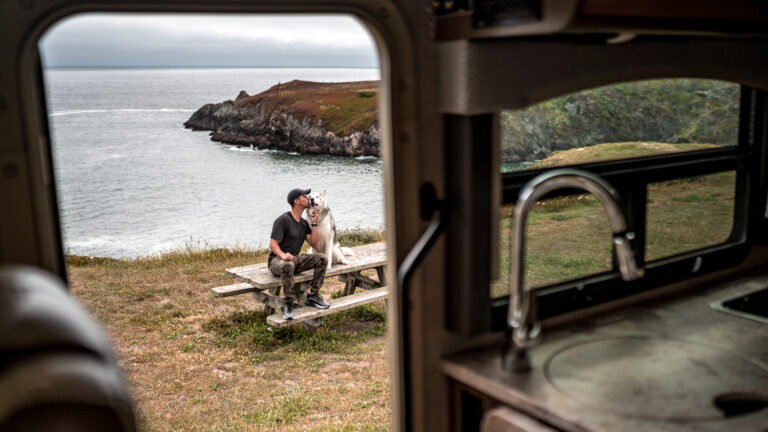
How do you plan an RV road trip from scratch? Start by deciding where you want to go, how long you have, and what kind of experience you’re after — then work backward through the logistics. You’ll need to build a route, book campsites, choose the right RV, and pack smart. The process is simpler than most first-timers expect, and RVshare has guides covering every step, from choosing a destination to returning your rental at the end of the trip.
Key Takeaways
- Build your itinerary around 200–250 miles per driving day (roughly 5 hours on the road) to keep the trip enjoyable.
- Book campsites early for peak-season travel, especially at national parks where sites fill up months in advance.
- Use an RV-specific route planner like RV LIFE to avoid roads with low bridges, tight turns, or weight restrictions.
- Budget for fuel, campground fees, the RV rental itself, and any attraction admissions before you leave.
- RVshare has destination guides, campground lists, packing checklists, and beginner resources to help with every stage of planning.
How Do You Build an RV Road Trip Itinerary?
A good RV road trip itinerary balances driving days with rest days and gives you enough flexibility to take detours without derailing the whole trip. Here are the main factors to work through.
How Far Should You Drive Each Day in an RV?
Most experienced RVers recommend not driving more than 200–250 miles in one day, or roughly five hours on the road. For one thing, driving a large rig is more mentally taxing than driving a car. You’re watching mirrors more closely, taking wider turns, and maintaining a slower speed. Arriving at your campsite before dark also makes setup significantly easier, especially if you’re new to RV travel.
Be sure to build rest days into longer trips. After a full driving day, spending the next day hiking, sightseeing, or simply relaxing at your campsite keeps your trip from feeling like a marathon.
How Do You Plan an RV-Friendly Route?
Not every road can accommodate an RV. Low bridges, narrow mountain passes, and roads with tight switchbacks can be dangerous or impassable in a larger rig. Before you finalize your route, run it through an RV-specific navigation tool like RV LIFE to look for any obstacles.
How Does Travel Season Affect Your RV Trip?
When you travel matters as much as where you go. The peak summer months from June through August mean higher campground prices, fuller sites, and longer lines at popular attractions. The shoulder seasons in spring and fall offer milder weather, fewer crowds, and lower costs in most regions.
If you’re set on a summer trip, book campgrounds and popular attractions as far in advance as possible. Many national park campsites open reservations six months in advance and fill within hours of opening.
How Should You Budget for an RV Road Trip?
You’ll want an idea of what your trip will cost before you hit the road. Here are the major cost categories to plan for:
- RV rental fee: This is the nightly rate, plus any weekly discounts
- Fuel: RVs typically get 8–18 MPG depending on size. Multiply that by the miles you plan to travel. AAA also has a gas cost calculator to give you an idea of your cost
- Campground fees: Fees are usually $20–$40 a night for public campgrounds with hookups, and $75–$100+ for private RV resorts. You can also find free spots for boondocking in many areas.
- Mileage and generator fees: Check whether your rental charges for overage or other fees
- Attraction admissions and activity costs
- Groceries and dining
Cooking in the RV kitchen or on a camp stove, choosing public campgrounds over private resorts, and planning free activities like hiking are some of the easiest ways to keep costs down.
Expert Tip: If you’re on a tight budget, national forests and Bureau of Land Management (BLM) land offer some of the most affordable camping in the country — many sites are low cost, and some are free.
Where Should You Go on an RV Road Trip?
If you’re not sure where to start, think about what kind of experience you want. RVshare has destination guides organized by interest, and narrowing down your trip type makes the planning process much more manageable.
Trip Inspiration by Interest
| Trip Type | Best For | Where to Start |
| National parks | Hiking, scenery, wildlife | National parks guide |
| Beach vacations | Relaxation, water activities, warm weather | Beaches guide |
| Cities | Culture, food, landmarks, entertainment | Cities guide |
| Amusement parks | Families with kids, thrill-seekers | Amusement parks guide |
| Events and festivals | Music, food, sports, community | Events guide |
| Historic sites | History, education, national landmarks | Historic sites guide |
| Waterfalls and hiking | Outdoor adventure, photography, fitness | Waterfalls guide |
Which National Parks Are Most Popular for RV Travel?
National parks are among the most popular RV destinations in the country. Here are the five most-visited and five least-visited.
Most Visited:
- Great Smoky Mountains — 11.5 million visitors
- Zion — 5 million visitors
- Yellowstone — 4.8 million visitors
- Grand Canyon — 4.4 million visitors
- Yosemite — 4.3 million visitors
Least Visited:
- Kobuk Valley National Park — 7,786 visitors
- Gates of the Arctic National Park and Preserve — 14,923 visitors
- Lake Clark National Park and Preserve — 19,778 visitors
- Isle Royale National Park — 29,091 visitors
- Katmai National Park — 34,479 visitors
The least-visited parks aren’t necessarily less spectacular — they’re just harder to reach. If you’re looking for solitude and don’t mind remote travel, they’re definitely worth considering. For RVers specifically, parks like Isle Royale (accessible only by ferry or seaplane) present some logistical challenges, so check RV accessibility before committing.
Expert Tip: If your top-choice national park campground is full, check nearby national forests, BLM land, or state parks. Gateway towns outside popular parks often have campgrounds with availability when the park itself is booked solid. Check out our list of destination dupes for more ideas.
Where Should You Stay on an RV Road Trip?
Once you’ve picked a destination, you need to figure out where to park for the night. RV campgrounds range from full-service RV resorts to free dispersed camping on public land.
What Are the Different Types of RV Campgrounds?
- National park campgrounds: These are some of the most scenic and most in-demand campgrounds. Sites can fill up months in advance for popular parks during peak season. Amenities vary from basic, with no hookups and pit toilets, to full hookups at some parks.
- State park campgrounds: State park campgrounds are typically more affordable than private campgrounds, with amenities ranging from rustic to full hookups. Many state parks offer excellent scenic camping at a lower price point than national parks or private resorts.
- Private RV parks and resorts: Private campgrounds range from basic pull-through sites to full resorts with pools, clubhouses, laundry, and Wi-Fi. Costs are higher, at around $75–$100+/night, but the amenities can make a long trip more comfortable.
- National forest campgrounds: National forest campgrounds are often low cost or free, with minimal amenities. They’re a great option for budget-conscious travelers who are comfortable with a more rustic setup.
- Bureau of Land Management (BLM) land: Much of the BLM land in the western U.S. allows dispersed camping — parking your self-contained RV on public land with no hookups, no services, and no fees. The standard BLM stay limit is 14 days in one location before you need to move.
- Glamping and upscale campgrounds: If you want to experience the outdoors, but with more comfort, some campgrounds offer upgraded sites with premium amenities, landscaped grounds, and resort-style facilities.
What If Your Preferred Campground Is Full?
If your first-choice campground is booked, try these alternatives:
- Check nearby towns for private RV parks — gateway communities near popular parks often have availability when the park doesn’t.
- Look at national forests or BLM land near your destination for lower-cost, less-crowded options.
- Check state parks in the same region, which are often less competitive to book.
- Consider adjusting your travel dates — shifting by even a few days, especially by avoiding weekends, can open up availability.
What Do You Need to Know About Renting an RV for a Road Trip?
If you don’t own an RV, renting one is the easiest way to get on the road. RVshare connects you with private RV owners who rent out their rigs, and the platform handles insurance, payment, and roadside assistance.
How Do You Choose the Right RV?
The right RV depends on your group size, your destination, and your comfort with driving a larger vehicle. Here’s a quick comparison:
| RV Type | Best For | Driving Difficulty |
| Class B (Camper Van) | Couples, solo travelers | Easy — drives like a large van |
| Class C (Mid-Size Motorhome) | Families, small groups | Easy — most popular for first-timers |
| Class A (Large Motorhome) | Large groups, extended trips | Moderate — largest and most spacious |
| Travel Trailer | Families with a tow vehicle | Moderate — requires towing experience or practice |
| Fifth Wheel | Large groups with a pickup truck | Moderate — requires a fifth-wheel hitch |
If you’d rather skip driving a large rig entirely, many RVshare owners offer delivery rentals — they bring the RV to your campsite, set it up, and pick it up when you’re done.
What Should You Know Before Your First RV Rental?
If you’ve never rented before, a few things to be aware of:
- Read the listing carefully for mileage limits, generator policies, pet rules, and cleaning expectations.
- The owner will give you a walkthrough of the RV’s systems before your trip. Ask questions, take notes, and record short videos for reference.
- Take photos of the interior and exterior of the RV at pickup and return to document its condition.
- Budget for fuel, campground fees, and any mileage or generator overage charges beyond the base rental rate.
What About Dump Stations and RV Logistics?
If your campground doesn’t have sewer hookups, you’ll need to locate a dump station to empty your RV’s black and gray water tanks. Most campgrounds have them on-site, and they’re also available at many truck stops and some rest areas. Check out our guide to dump stations here, or check RVingLife (formerly Sanidumps) or Campendium for nearby dump stations.
Be sure to check out our RV road trip pre-travel checklist before heading out on a big trip as well.
Frequently Asked Questions About Planning an RV Road Trip
For peak-season travel like summer and holiday weekends, start planning two to three months ahead since popular campgrounds and RV rentals book up quickly. For shoulder-season or off-season trips, a few weeks of lead time is usually sufficient. National park campsites are the exception – many open their reservations six months in advance and fill very quickly.
No, you don’t need experience to rent an RV. The majority of RVshare renters are first-timers. Owners provide walkthroughs of their RV before your trip and can show you how everything works. Delivery rentals are available if you’d rather skip driving entirely.
Costs for an RV road trip will vary depending on the RV type, trip length, and destinations. A week-long trip for a family of four in a Class C motorhome, including the rental, campground fees, and fuel, typically comes in around $1,000–$1,500. Cooking in the RV and choosing public campgrounds over private resorts are the easiest ways to keep costs down.
A Class C motorhome is the most popular choice for first-time RVers. It offers a good balance of living space, drivability, and affordability. If you have a tow vehicle and some towing experience, a travel trailer is also a solid option, and usually has a lower rental price point.
Yes, it’s possible to camp for free on an RV road trip. Dispersed camping on BLM land and some national forest land is free. However, you’ll need a self-contained RV because no hookups or services are available. The standard BLM stay limit is 14 days in one spot. Free camping requires more self-sufficiency, but it can dramatically reduce trip costs.
RV LIFE is the most widely used route planner tailored to RVs. It accounts for vehicle dimensions and flags low clearances and other hazards. Campendium, Hipcamp and The Dyrt are popular for finding and reviewing campgrounds. RVingLife helps locate dump stations. Google Maps works for general navigation but doesn’t account for road restrictions that sometimes apply to RVs.
Ready to start planning? Browse RVshare rentals near your destination and find the right rig for your next road trip.