RVing doesn’t have to be expensive. While it’s fun to browse luxury motorcoaches with premium finishes and residential amenities, some of the most capable, family-friendly rigs on the market come from budget-friendly brands like Jayco, Thor, Keystone, and Forest River. These manufacturers have figured out how to build solid, livable RVs at prices that won’t require a second mortgage — and the best ones don’t sacrifice the features that actually matter.
| Brand | RV Type | Entry Model | Price Range | Standout Feature |
| Jayco | Class A, Class C | Alante 29F, Redhawk SE | $125,000 – $190,000 | Best warranty in the industry (2+3 yr) |
| Thor Motor Coach | Class A, B, C | A.C.E. 29G, Rize 18G | $90,000–$190,000 | Huge dealer network; pet-friendly |
| Entegra Coach | Class A, Class B | Vision 27A, ARC 18C | $85,000–$195,000 | 2-yr bumper-to-bumper; quality build |
| Winnebago | Class B | Solis Pocket 36A/36B | $95,000–$145,000 | Strong owner community; in-house manufacturing |
| Coachmen | Class C | Freelander 22XG–31MB | $115,000–$160,000 | Easy to drive; Azdel composite walls |
| Gulf Stream | Class C | Conquest LE 6280LE | $85,000–$130,000 | No-frills build keeps weight and cost down |
| Keystone | Travel Trailer | Hideout 175BH/261BH | $14,000–$32,000 | Many under 4,000 lbs — midsize SUV towable |
| Forest River | Travel Trailer | Salem FSX 178BHSK | $22,000–$35,000 | Waterproof flooring; solar-ready |
| Four Wheel Campers | Truck Camper | Project M, Slide-In | $12,000–$40,000 | 5-yr structural warranty; 50+ yr heritage |
| Scout | Truck Camper | Yoho, Olympic | $23,000–$34,000 | Wood-free aluminum build; off-grid ready |
Some of the least expensive rentals available on RVshare include Forest River, Gulf Stream, Dutchmen, Jayco, and Cherokee.
Why Budget RV Brands Are Worth a Closer Look
The cheapest RV brands aren’t just about low price tags — they often come with practical advantages that more expensive rigs don’t offer.
- Lower fuel costs: Budget rigs tend to be smaller and lighter, which means better fuel economy on the road.
- Easier to drive: Compact Class Cs and smaller travel trailers are far less intimidating for new RV owners than large Class As.
- Fits more campgrounds: Smaller rigs can access campgrounds, state parks, and forest roads that larger motorhomes can’t.
- Cheaper to insure: Insurance premiums are typically lower for less expensive rigs.
- Less to break: Fewer slides, fewer appliances, and simpler systems mean fewer things that need maintenance or repair.
- Used market savings: Budget brand models often appear on the used market at significant discounts. Buying a 2–3 year old version can cut the price by 25–40%.
Affordable Motorhome Brands
There are lots of options for affordable motorhomes. Families and other travelers might be surprised at what it actually costs to purchase a new motorhome. Here are a few companies making inexpensive RVs to buy. Keep in mind that the MSRP may not be what you pay – watch for sales and discounts for lower prices. Also, if you choose a lot of higher-end finishes and upgrades, you’ll end up paying more than you would for a base model.
Jayco
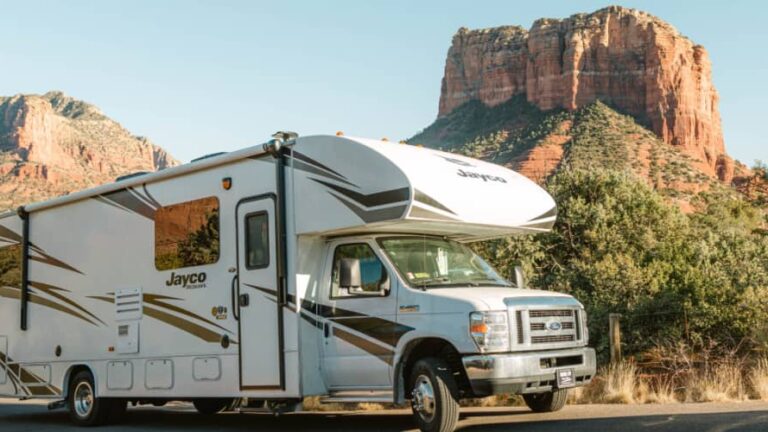
Jayco is now part of Thor Industries and is known for both its Class A and Class C motorhomes. The company has a reputation for creating family-friendly rigs, with three-to-six dedicated beds and plenty of storage space. The Jayco Alante 29F is a great option for families. It’s built on a Ford chassis with a bunkhouse layout. Jayco is also a popular brand for first-time buyers. The company’s 2-year limited, 3-year structural warranty is twice the coverage of most brands.
Thor
Thor has motorhomes at a variety of price points – it makes our list of both the cheapest RV brands to buy, and our list of top luxury brands. The less expensive Thor models get good marks for being both family- and pet-friendly. The Thor Resonate has a variety of floor plans and can accommodate six to eight people. It has one or two slide-outs and one to three bunk beds, making it a great family option. The Freedom Traveler has a compact layout and is pretty gas-efficient for its size. Customers also say some of Thor’s models drive more like a car than a motorhome.
Entegra
Entegra makes quality, family-friendly motorhomes with bunkbeds, convertible dinettes, and residential-style kitchens. The Vision series is one many families choose, and there are a variety of layouts, all of which accommodate five to seven people. Entegra also has excellent warranties, and the company is known for the quality of its builds.
The cheapest RV brands for Class A motorhomes can often save you money in other ways as well. Less expensive rigs tend to be smaller and lighter weight, so you can save on gas. Gas-powered engines are usually cheaper to service and maintain than diesel engines. Cheaper motorhomes also tend to have less expensive insurance, and a smaller rig might mean you can fit into smaller campgrounds or drive roads that bigger rigs can’t. Options like fewer slideouts and fewer appliances, like washers and dryers, also mean fewer things that could break or require maintenance. They also mean your motorhome will weigh less overall.
Most Budget-Friendly Campervans & Van Conversions
As with motorhomes, campervans and van conversions can range from inexpensive, older used options to new vans that cost more than $200,000. Many campervans also have higher MSRPs, but you can often find them at dealerships for considerably less.
Winnebago
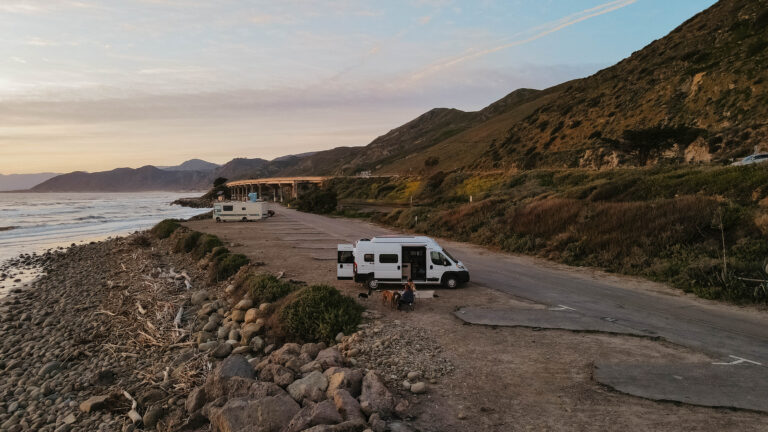
Winnebago is the top producer of campervans and makes both diesel and gas models. Some campervans are even available in a 4×4 version, so you can take them to even more exciting places. The Winnebago Solis is the least expensive of the Winnebago vans. Winnebago vans have full insulation, a surprising amount of storage, solar power, and even kitchens and full bathrooms. The company manufactures a lot of the van components in-house, so it can ensure quality control.
Winnebago uses either Ram ProMaster gas chassis or Mercedes-Sprinter diesel chassis for its vans.
Entegra and Thor both make some excellent, affordable RVs in the Class B category as well. The Entegra ARC 18C and the Thor Rize 18G are great choices for campervans.
Conversion Vans
If you’re a do-it-yourselfer, you can also purchase a van to convert into a camper on your own. Buying a new van and adding insulation, beds, storage, and even plumbing often costs less than buying a completed campervan. If you want to build your own conversion van, popular van models to consider include the Ram ProMaster 1500/2500, the Ford Transit, the Chevy Express / GMC Savana, or used Mercedes Sprinter vans. The cost of the conversion, after you’ve purchased a van, can run from $5,000 to $20,000, depending on how fancy you want to get. You might want to add a bed platform, a portable power station or solar kit, a camp stove or small kitchenette, a portable or cassette toilet, and possibly a water jug system with a pump.
Inexpensive Class C RVs
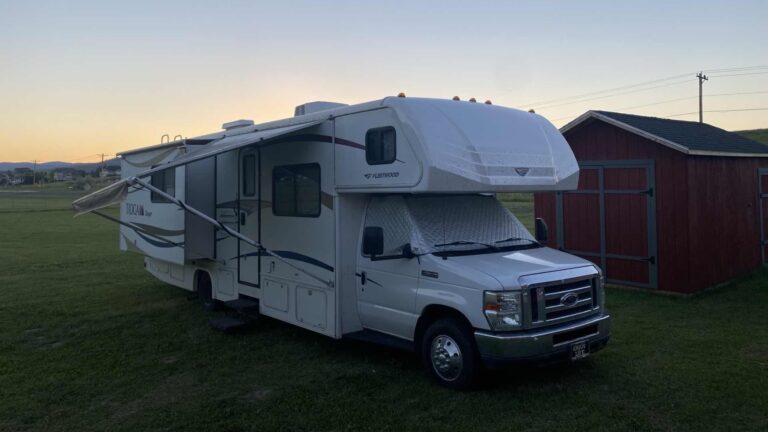
Class C RVs are a great size for a family traveling together. Class C campers are medium-sized RVs, usually with a sleeping bunk above the cab. They’re built on a regular van chassis – typically a Ford E-Series or Chevy 4500 chassis – and include all of the typical amenities you’d find in a Class A motorhome. You should expect to have a kitchen, a bathroom, and usually an onboard generator, although they usually have fewer slides than a larger Class A.
Coachmen
Coachmen Class C campers are excellent entry-level campers. They’re well-suited for families or couples, and some models have bunk beds, convertible dinettes, and over-cab sleeping areas. The Coachmen Freelander is one of the more affordable options. Models range from 24-33 feet long and sleep from six to eight people. Coachmen also features sturdy, durable interiors that can hold up to kids and pets.
Coachmen RVs are also intuitive to drive, making them a good choice for new RVers.
Gulf Stream
Gulf Stream is one of the cheapest RV brands you can find making quality Class C campers. The Conquest Class C is basic, functional, and quite inexpensive. You won’t find fancy finishes and upgrades, but you’ll reap the benefits when you pay for your rig. Most Gulf Stream campers are built with wood framing and vacuum-bonded laminated fiberglass walls.
Gulf Streams are also easy to drive and park, making them a great option for new RVers. They’re also a great choice for budget-conscious families. Because the materials are less costly, Gulf Streams aren’t the best choice for full-time RVers, but they’re a nice option for weekend and seasonal campers.
Cheapest Travel Trailers & Fifth Wheels
Travel trailers and fifth wheels are a convenient choice if you’re doing a lot of daytime exploring when you camp. You can unhook your tow vehicle and use it to drive all over, then hook up before heading on to your next destination. Here are a few excellent entry-level RV brands for travel trailers and fifth wheels.
Keystone
Keystone is also owned by Thor Industries, and their travel trailers are some of the most popular RVs in the US. They have trailers in a range of prices, and there are several options for cheap travel trailers. The Keystone Hideout sleeps from 3-10 people, depending on the model. Keystone is a great brand for family-friendly trailers, and many have bunkhouse floor plans and outdoor kitchens. Midweight trailers like the Hideout require a half-ton truck, like a Ford F-150, for towing.
Because they’re backed by Thor, there’s a good network of dealers and parts, which can save you even more over time. The less expensive trailers don’t have luxury finishes, and some of the smaller ones don’t have slideouts and offer less room.
Forest River
Forest River is one of the largest RV makers in the US, and you’ll find trailers in every size and price point. The company is owned by Berkshire Hathaway (yep, Warren Buffett’s company).
Trailers like the Cherokee are entry-level models at a lower price point, and they’re great for families as well. It has options for bunkhouses for the kids, plus basic but functional kitchens and bathrooms. You need a mid-size SUV or small truck to tow a Cherokee Wolf Pup, or a half-ton pickup to tow the larger trailers.
Affordable Truck Campers
Some of the most affordable recreational vehicles are truck campers. They’re also some of the easiest to drive, off-road in, and to set up camp for the night. Like campervans, truck campers are a good option for solo travelers or couples, especially those looking for adventure. You won’t find a whole lot of room in them, but some ingenious setups can pack a lot of storage and amenities into a surprisingly small space.
Four Wheel Campers
Four Wheel Campers has been building lightweight pop-up truck campers for more than 50 years. They’re built to handle year-round, off-grid camping. The aluminum frame won’t rot like wood and moves with the truck on uneven surfaces. It also lightens the load on the truck. Four Wheel Campers have a five-year structural warranty and are known for holding up for a long time.
There aren’t many fancy perks, but the campers will stand up to rough roads and the rigors of exploring off the beaten path.
There are three platforms and they fit a mid-sized truck like a Tacoma or Frontier, a full-sized pickup like an F-150 or a Tundra, and a 3/4- and 1-ton truck like a F-250 or Ram 2500/3500.
Scout
Scout Campers are relatively new – they began in 2020 by Adventurer Manufacturing. They have the lightest hard-wall and pop-up truck campers on the US market. Campers are made from aluminum, not wood, keeping them light and snug. They have a three-year structural warranty, which matches many popular RV brands. Instead of luxury finishes and sleek materials, Scout uses sturdy materials that will hold up to off-roading and exploring.
The company has truck campers that fit 5-foot midsize beds like a Ford Maverick or a Jeep Gladiator. They also make some that fit 5- & 6-foot midsize beds like a Tacoma or Ranger, some that fit half-ton beds like an F-150, and some that fit heavy half-ton to 1-ton beds like an F-250 or a Ram 2500/3500. Families with a half-ton can even get a roof-top tent that allows them to sleep up to six people.
Campers also have a cooktop, fridge, power, and water that can be removed to use at camp and to lighten the load while you explore areas around camp.
What Makes a Budget RV Different from a Luxury One?
Budget and luxury RVs are made differently in a few key ways, and knowing what to look for helps you evaluate whether a cheap rig is a good value or a risk.
- Materials – Budget RVs tend to have wood framing and laminate flooring and walls. They also often use one-piece fiberglass roofs and simpler, cheaper finishes, trims, and other details. Higher-end units use composites or aluminum in their builds and more expensive trims and finishes, which makes them more durable and attractive … but also adds to the cost.
- Chassis – Cheaper Class C campers use a Ford E-Series cutaway or a Chevy 4500 chassis, which have decent ride quality but aren’t as nice as a Mercedes chassis. Less-expensive models also skip upgrades and premium suspension packages.
- Features – Less-expensive models have more basic interiors with vinyl upholstery, laminate countertops, and basic appliances. Higher-end models may use better-quality materials for kitchens, bathrooms, and other areas. They also have luxury touches like solid surface counters, tile backsplashes, and LED lighting packages.
- Layouts – Budget RV models usually have fewer slides and more basic floorplans. You might find you have less room and less storage in a cheaper RV. There’s less variation in the layouts since one way to keep prices low is to order materials and do work in bulk.
The important caveat: quality varies within budget brands. Look for RVIA-certified composite sidewalls, a solid chassis, and quality insulation. Jayco is widely cited as the budget brand most consistent about quality across its price range.
Tips for Finding the Best Deal on an RV
One of the best ways to save even more on the cheapest RV brands is to purchase a used vehicle instead of a new one. Choosing an RV that’s even just a few years old can be much less expensive than buying a new one.
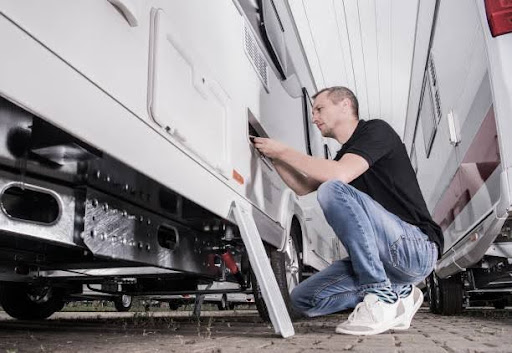
If you’re hoping to find a good deal on an RV, begin by doing some research. Find a reputable dealer with a good reputation when it comes to selling used RVs. Whether you’re buying from a dealer or an individual, you can hire an RV inspector to go over the vehicle and check for issues. You can also ask to see the maintenance logs for the vehicle.
You’re more likely to find deals at the end of the year. You may also find good deals at a local RV show, where you can talk to dealers about their vehicles and check out a variety of rigs all in one place.
If you find an RV you’re interested in, try it out by renting the same model through RVshare. Plan a trip and use the RV to see if you like the layout, the appliances, and the other RV features. You might even plan several trips and use a different RV model each time to see which features you like and which you don’t. You might find that something you thought was a deal-breaker really doesn’t matter … or that you love a feature you hadn’t considered.
Key Takeaways
- RVing can be affordable with budget-friendly brands like Jayco and Thor offering practical features without high prices.
- Budget RV brands often provide lower fuel costs, easier driving, and greater access to smaller campgrounds.
- Models such as Jayco Alante and Thor Resonate stand out for their family-friendly layouts and warranties.
- Investing in less expensive RVs can mean savings on insurance, maintenance, and better deals on the used market.
- Cheapest RV brands may have simpler materials but offer good value if you look for quality within budget options.
Frequently Asked Questions About Cheap RV Brands
For travel trailers, Keystone and Forest River consistently offer the lowest entry prices — some Keystone Hideout models start under $15,000 new. For motorhomes, Gulf Stream and Thor offer the most accessible Class C options starting around $85,000–$90,000 new. Truck campers are the most affordable RV category overall, with Four Wheel Campers and Scout models starting around $12,000–$23,000.
The major budget brands — Jayco, Keystone, Forest River, Coachmen — are RVIA-certified and built to industry standards. Budget means simpler materials and fewer features, not necessarily poor quality. Jayco, in particular, gets consistently strong reviews for build quality across its price points. Even so, any RV purchase still benefits from a professional inspection before signing.
For most buyers, a 2–3-year-old used model offers the best combination of value and reliability. New RVs depreciate 15–25% in the first year. Buying used lets someone else absorb that depreciation. A professional inspection and clean maintenance log make a used purchase much lower risk.
Truck campers are the most affordable entry point — Scout and Four Wheel Campers both have models under $25,000. For towables, a used Keystone or Forest River travel trailer can often be found for under $10,000 on the used market. Renting an RV through RVshare before buying is also a cost-effective way to figure out which type works for you before committing.
The quality of warranties varies by brand. Jayco’s 2+3-year warranty is the industry’s best. Four Wheel Campers offers 5-year structural coverage. Most other budget brands — including Keystone and Forest River — provide 1-year limited + 3-year structural warranties, which is the standard. Scout offers a 3-year structural warranty. Always confirm current warranty terms directly with the manufacturer before purchasing.
To test out some of the inexpensive models, you can rent one on RVshare. That way, you can see if it suits you and your lifestyle before committing to a purchase.