Knowing your RV’s dimensions isn’t just useful — in many situations it’s essential. The wrong number at the wrong moment can mean a damaged roof on a low bridge, a rig that won’t fit your campsite, or a trailer you don’t have the vehicle to tow. Whether you’re planning a route, booking a campsite, or sizing up a rental, here are the key measurements to know and how to get them.
Common RV Dimensions For Each Class
| RV Type | Length | Width | Height | Weight |
| Class A Motorhome | 26–45 ft | 8–8.5 ft | 11–13.5 ft | 13,000–30,000 lbs |
| Class B (Campervan) | 18–24 ft | 7–8 ft | 8.5–11 ft | 6,000–11,000 lbs |
| Class C Motorhome | 25–35 ft | 8–8.5 ft | 10–11 ft | 10,000–20,000 lbs |
| Travel Trailer | 12–35 ft | 7–8.5 ft | 7–12 ft | 500–10,000 lbs |
| Fifth Wheel | 25–45 ft | 8–8.5 ft | 11.5–13.5 ft | 5,000–20,000 lbs |
| Pop-Up Camper | 8–16 ft | 7-7.5 ft | 4.5–5 ft (closed) | 1,400–4,000 lbs |
For a more specific deep dive, our RV manufacturers’ digest provides detailed dimensions for most RVs available on the market.
Why RV Dimensions Matter
Your RV measurements come up more often than most first-time owners expect. Here are the key scenarios where getting the numbers right matters.
- Campground fit: Many campgrounds have length limits and site size restrictions. Know your length before you book.
- Road and bridge clearance: Low bridges, tunnels, and mountain passes can have height restrictions. Your roof — including any AC units, solar panels, or satellite dishes on top — needs to be able to clear them.
- Weight limits: Some roads, bridges, and ferry crossings have weight limits. Know your loaded weight, not just the factory spec.
- Towing compatibility: Your trailer’s weight determines what vehicle you need to pull it. Getting this wrong can be dangerous.
- Storage: Covered RV storage has height and length limits. Knowing your dimensions saves you from an expensive surprise.
Drivable Motorhome Dimensions
Since motorhomes cover everything from small pop-up trailers to large Class A RVs, there’s a large range of motorhome dimensions. Here are ballpark numbers for each type.
Class A Motorhomes
Class A motorhomes are the largest drivable RVs — the big bus-style rigs. They can sleep up to 10 people and come fully equipped with at least one full bathroom, a kitchen with a full appliance suite, an entertainment area, a bedroom, and additional sleeping space. High-end models can include two bathrooms, a washer/dryer, and outdoor kitchens.
Height: 11 to 13.5 feet. This measurement does not include rooftop AC units, satellite dishes, or other add-ons — and those can add several critical inches. Always measure your total height, including anything mounted on the roof, before planning your route.
Width: 8 to 8.5 feet with slideouts closed. Slideouts can extend 2–3 feet per side when deployed, so always know your full deployed width when reserving a campsite.
Length: 26 to 45 feet. Longer rigs require more thought around tight turns, steep mountain roads, and campgrounds with access restrictions.
Weight: 13,000 to 30,000 lbs. Weigh your rig fully loaded — water, gear, and passengers add more than most people expect.
Class B Dimensions on Average
Class B motorhomes are campervans built on van platforms — most commonly the Mercedes Sprinter, Ford Transit, or Ram ProMaster. They’re the most maneuverable of the drivable classes and can fit in standard parking spaces. Basic models carry little more than a bed; more elaborate builds include a small kitchen, a wet bath, and solar power. Most sleep 1–2 people comfortably, with some accommodating up to four.
Height: 8.5 to 11 feet.
Width: 7 to 8 feet, depending on the platform.
Length: 18 to 24 feet.
Weight: 6,000 to 11,000 lbs, making them the lightest drivable class.
Class C Dimensions on Average
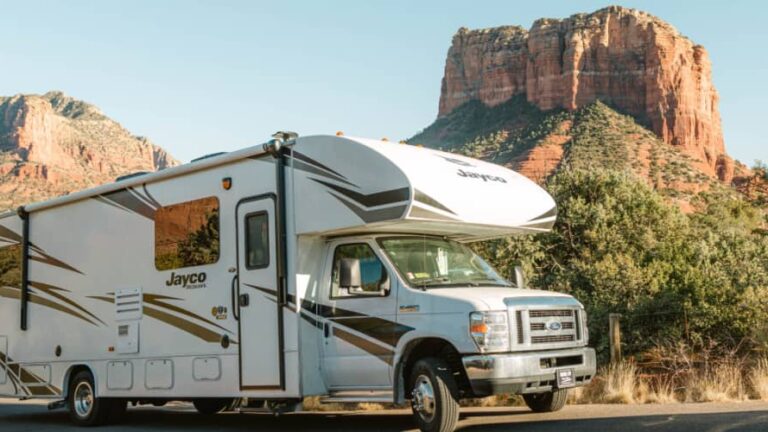
Class C motorhomes are built on a truck or van chassis with an over-cab sleeping area that extends above the driver’s cab — a signature feature you can spot from a distance. They’re a popular choice for families because they offer considerably more living space than a Class B while being less intimidating to drive than a full Class A. A typical Class C includes a kitchen, bathroom with shower, main bedroom, and the over-cab sleeping area, plus dinette or seating areas that convert to additional beds.
Height: 10 to 11 feet. As with Class As, roof-mounted accessories are not included in this figure — factor those in separately.
Width: 8 to 8.5 feet. Some models include slideouts, which add width when deployed.
Length: 25 to 35 feet.
Weight: 10,000 to 20,000 lbs.
Towable Trailer Dimensions
Trailers are the other major category of RVs – they’re an RV that you tow along behind you. You’ll need to know the height, width, and weight of any trailer you might tow for many reasons. One of the most important, however, is to make sure you have the right kind of vehicle to tow your trailer. A heavy trailer will need a much larger towing vehicle than a light teardrop trailer.
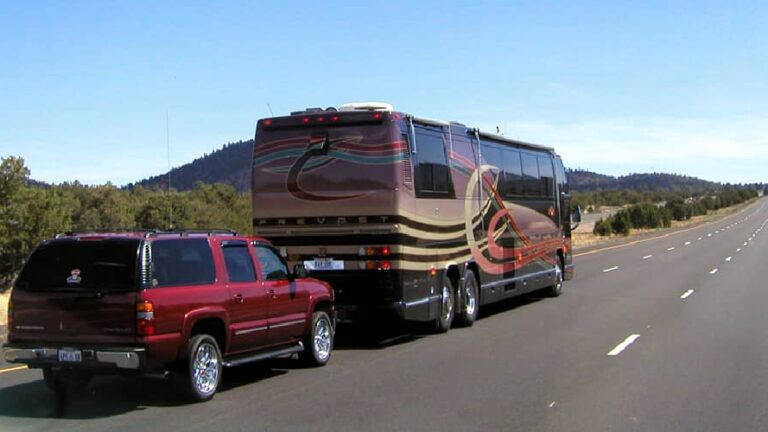
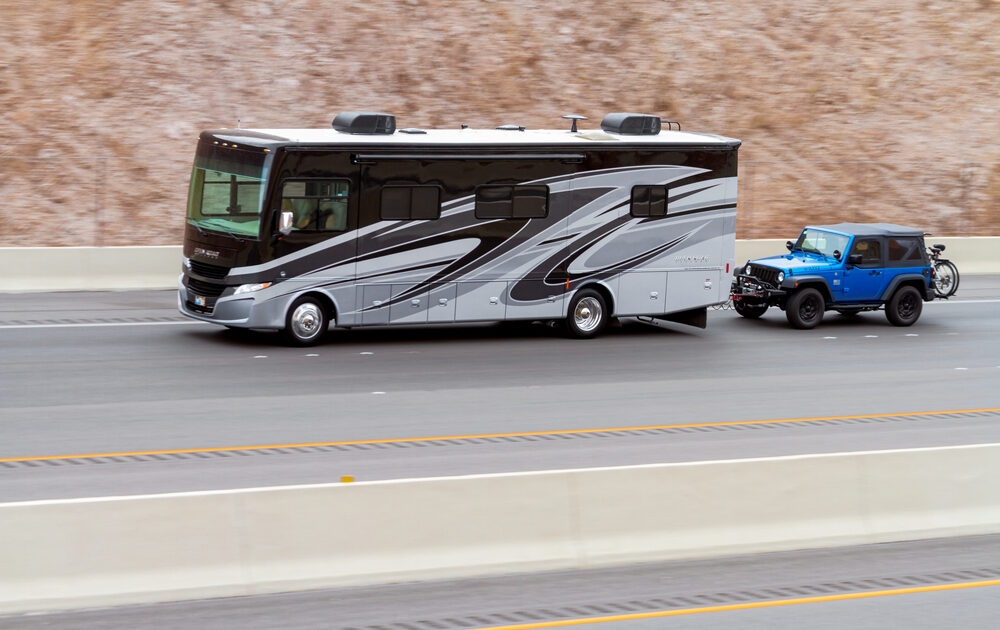
Also, keep in mind that roads with vehicle length limits usually include the length of both your tow vehicle and your trailer. You’ll need to know the combined length of the two vehicles. Also, if you’re towing with a tall truck, you’ll want to know the height of your truck as well. For height restrictions, you’ll need to consider the height of your tallest vehicle, whether that’s your towing vehicle or the trailer itself.
Travel Trailer Dimensions on Average
“Travel trailer” covers a wide range of towable RVs — from ultralight teardrop campers that a small SUV can tow, to large family trailers that require a full-size truck. Make sure you know your tow vehicle’s towing capacity and the trailer’s tongue weight before hitching up.
One important note on length: roads with vehicle length limits almost always count the combined length of your tow vehicle and trailer together. Measure both.
Height: 7 to 12 feet.
Width: 7 to 8.5 feet.
Weight: 500 lbs (small teardrops) to 10,000 lbs (large trailers).
Fifth Wheel Dimensions on Average
Fifth wheels connect to a special hitch mounted in the bed of a pickup truck, which makes them more stable at highway speeds than standard travel trailers. They can be very large — rivaling or exceeding Class A motorhomes in living space — and they require a capable truck to tow. Fifth wheels typically have multiple slideouts, so always know your deployed width before pulling into a campsite.
Height: 11.5 to 13.5 feet.
Width: 8 to 8.5 feet (slides closed).
Length: 25 to 45 feet.
Weight: 5,000 to 20,000 lbs.
Pop-Up Camper Dimensions on Average
Pop-up campers (also called fold-down or tent trailers) collapse flat for towing and expand at camp. They’re among the most affordable RV options and can often be towed by smaller vehicles. Some are very basic sleeping platforms; others include bathrooms, indoor kitchens, and outdoor kitchens. Most comfortably sleep four, though some models accommodate up to eight.
The key dimension to know for pop-ups is their towing height — typically 4.5 to 5 feet — which makes storage and low-clearance travel much easier than with a hard-sided trailer.
Height (closed): 4.5 to 5 feet.
Width: 7 to 7.5 feet.
Length: 8 to 16 feet.
Weight: 1,400 to 4,000 lbs.
Where RV Dimensions Matter Most
Here’s where you’re really going to need to know your RV dimensions.
National Parks
Most national park campgrounds accommodate RVs between 25 and 40 feet, but some limit rigs to as few as 19 feet due to narrow access roads and tight turns. A few have sites that accept up to 42 feet. Always check the specific campground — not just the park — before booking, as limits can vary within the same park.
State Parks
State parks vary widely. Overhanging trees, telephone wires, and narrow roads all create restrictions that differ from park to park. Some require special permits for oversized vehicles. Research each park individually before arrival.
Private Campgrounds
Private campgrounds often have length and height restrictions due to narrow entrance roads, sharp turns, or overhead obstacles. Check before reserving — finding out your rig won’t fit after a long drive is not a fun experience.
Storage
Covered RV storage facilities have strict height and length limits. If you plan to store your rig under cover, get your full dimensions — including rooftop equipment — before signing a contract.
Driving Considerations
Before your trip, map your route with your RV dimensions in hand. Key things to check:
- Combined length if towing: always calculate tow vehicle plus trailer together.
- Height clearances on bridges, tunnels, and underpasses. Most major interstates have a minimum 14-foot clearance, but rural roads, older bridges, and city underpasses can be significantly lower.
- Weight limits on local bridges and roads — particularly relevant for large Class As and heavy fifth wheels.
- Length restrictions on steep or winding roads, mountain passes, and some scenic byways.
How to Measure Your RV
Getting accurate measurements is straightforward with a little preparation. Follow these steps before your first trip.
- Gather your tools
You’ll need a tape measure long enough for your full rig — a 50-foot tape measure works well for most vehicles. Grab a notebook or open a notes app to record everything, and recruit a second person to hold one end of the tape.
- Attach everything you’re taking on the road
Mount your bike rack, cargo carrier, propane tanks, and any other add-ons before you start measuring. Your numbers need to reflect real-world conditions, not a stripped-down rig.
- Measure length three ways
If you’re towing, measure your trailer alone, your tow vehicle alone, and then both together fully hooked up. Roads with vehicle length limits count the combined total — you need all three numbers.
- Measure height from the ground up
Run the tape from the ground to the highest point on your roof. Then add the height of any AC units, vents, solar panels, or antennas. Manufacturer specs almost never include rooftop equipment, so this step is where most people underestimate their actual clearance height.
- Measure width with slideouts in mind
Measure your rig with all slideouts fully retracted for road travel, then again with them fully deployed for campsite planning. Slideouts typically add 2–3 feet per side.
- Take every measurement twice
Confirm each number with a second pass before recording it. A single-digit error in height can mean a very bad day under a low bridge.
- Weigh your rig fully loaded
Factory weight specs don’t account for water, gear, food, or passengers. Find a certified truck scale — many truck stops have them — and weigh your rig the way you’d actually travel. This is the number that matters for weight-restricted roads and bridges.
- Save your measurements somewhere accessible
A note on your phone, a card in the glove box, or a sticker on the dashboard all work. You’ll want these numbers handy when you’re booking campsites or planning your route on the fly.
Key Takeaways
- Knowing your RV weight is crucial to avoid campsite and road restrictions.
- Different classes of RVs have varying dimensions for length, width, height, and weight.
- Accurate RV measurements ensure fitting into campgrounds, passing under bridges, and meeting towing requirements.
- Measure your RV thoroughly before a trip, including all added accessories, to avoid surprises.
- Always weigh your RV fully loaded to determine compliance with weight limits on roads and bridges.
Frequently Asked Questions About RV Dimensions
Length is the most commonly restricted dimension. Most national park campgrounds accommodate RVs between 25 and 40 feet, but some sites have lower limits — as short as 19 feet. Height matters too on access roads with overhanging trees or low clearances. Always check the specific campground page on Recreation.gov before booking.
No — manufacturer width specs almost always reflect the rig with slideouts fully retracted. When deployed, slideouts typically extend 2–3 feet per side. Always use your deployed width when evaluating campsite fit.
Yes. Roads with vehicle length limits count your tow vehicle and trailer together. Measure and record both, and know your combined length before planning your route.
Start with your owner’s manual or the manufacturer’s spec sheet — these give factory dimensions for length, width, and height. For weight, a truck scale gives you the most accurate loaded number. If you’ve added anything to the roof or exterior, measure those additions yourself and add them to the factory height figure.
Most interstate overpasses are designed for 14-foot clearance, which accommodates most RVs. But older bridges, city underpasses, and rural roads can be significantly lower, sometimes under 12 feet. A Class A with rooftop AC and satellite at 13.5 feet has less than a foot of margin under a standard overpass, and even less under older structures. Knowing your true height and planning accordingly prevents costly roof damage.
Ready to hit the road? If you don’t have your own RV, you can browse RV rentals on RVshare to find the right size rig for your next adventure — from compact campervans to full-size Class A motorhomes.