Most RVers have a dream of visiting at least a few of our nation’s stunning national parks, and for good reason. Each of the 63 designated U.S. national parks offers its own beautiful landscape and incredible history to go with it — but only the most dedicated explorers will get to visit these hidden gems.
Lesser-known national parks offer the perfect opportunity for RV travelers, who get to set their own pace and enjoy all the comforts of home while they experience parts of the country so many miss out on. Below, we’ve listed our favorite hidden gem national parks for your next RV road trip, focusing on off-the-beaten-path parks with fewer visitors and breathtaking views. (And, of course, along with peer-to-peer RV rentals, we’ve got all the deets you need to make it a perfectly unforgettable RV camping trip.)
Table of contents
Hidden Gem National Parks to Explore: RV Road Trip Edition
Get out your jeweler’s loupe — because without further ado, we’re going to give you an up-close and personal glimpse at these hidden gem national parks!
1. Lassen Volcanic National Park (California)
In a state chock-a-block full of national parks (most of which are similarly full of visitors — we’re looking at you, Yosemite), Lassen Volcanic National Park offers the twin benefits of being one of the least-visited national parks in the roster and offering a unique, dynamic landscape. Whether you’re looking for an excuse to set your inner geologist loose or simply on the market for some forested hiking trails, Lassen Volcanic truly has it all.
Why It’s a Hidden Gem
With its acres of bubbling mud pots and serene views of snowed peaks over blue lakes, Lassen Volcanic National Park is the kind of destination that feels like several destinations in one. It also usually sees less than half a million visitors each year, compared to the four million or more visitors that descend upon a park like Yosemite. That means you’ll be able to fully sink into and enjoy your peace and quiet.
RV Route + Drive Tips
This park is best approached from the cities of Redding or Chico; it’ll take you about an hour or an hour-and-a-half of driving from each of those towns, respectively. It’s also located along the CA-89 scenic byway, which winds through several stunning volcanic and mountain vistas. (Be sure your rig can handle those narrow, winding roads!)
You can access the park via several major highways, all of which offer standard-width bridges safe for Class C rigs and fifth-wheels. If you’re flying in, the closest major airports are Sacramento International (SMF) and Reno-Tahoe (RNO).
Campgrounds and RV Parking
Lassen Volcanic National Park features two on-site campgrounds that are RV-friendly:
- Manzanita Lake Campground offers reservable RV sites with electric hookups
- Butte Lake Campground features first-come, first-served sites with some larger RV spaces available for bigger rigs
You can also explore some other private and public campgrounds in the area of Lassen Volcanic National Park.
Must-See Nearby Attractions
While an NPS park ranger will be happy to walk you through all of the park’s can’t-miss attractions, be sure not to skip out on Bumpass Hell, the largest hydrothermal area in the park. The hike through it is just three round-trip miles and relatively flat, making it a workable option for many different campers.
Kings Creek Falls is another classic feature, offering expansive views as well as the tranquility of meadows and waterfalls. It does, however, feature a bit more of an incline, so be sure to check in with park staff to ensure your party is up for it.
2. North Cascades National Park (Washington)
Ask anyone who’s done a good job of exploring the Pacific Northwest what their favorite national park is, and the odds are pretty good they’ll say North Cascades. (I say that as someone who lives in Portland and knows several local hikers who swear it’s the most beautiful place on earth.)
It’s also, however, a bit off the beaten track — and not quite as well-known as some of Washington’s other (admittedly also stunning) landscapes. That’s why it’s the perfect opportunity for your hidden-gem national park RV road trip.
Why It’s a Hidden Gem
While everyone else will be (literally) lining up to do Paradise Park at Rainier or Olympic National Park’s Hoh Rainforest, if you visit North Cascades, chances are you’ll have vast swaths of this epic, rugged landscape all to yourself. Bonus: North Cascades is the most heavily glaciated area in the U.S. outside of Alaska, which has earned it its esteemed reputation as the “American Alps.” To be there is a truly unforgettable experience.
RV Route + Drive Tips
The easiest way in is via North Cascades Highway (Washington SR-20), which comes due east out of Burlington or involves getting off on SR-530 just a few miles north of Seattle on I-5. (Seattle is, of course, home to one of the west coast’s biggest airports, and the total drive time from the airport itself to the national park is about two-and-a-half hours, depending on traffic.
Note that there are often seasonal closures in the winter and spring due to snowfall and other inclement weather, and at any time of year, be prepared for winding mountain roads — take it slow and steady if you’re driving a bigger rig.
Campgrounds and RV Parking
Along with other area campgrounds, North Cascades offers one on-site camping option that is RV friendly:
- Colonial Creek Campground offers coveted RV sites with lake views — we recommend reserving early
- For a private option just outside the park, head to Skagit River Campground, which offers spacious spots near the river it’s named after and amenities including a laundry facility and playground
Highlights
North Cascades is so beautiful, the truth is, you kind of can’t go wrong, even if all you do is drive in and look around. But two of our personal favorite highlights include:
- Diablo Lake Overlook, where the lake whose shimmering surface you’ll gaze into gets its otherworldly turquoise color from the pure glacier waters that feed it
- Cascade PassTrail, which, in a park geared towards backpacking, gives day-hikers all the rugged mountain views they could ask for — and more
3. Congaree National Park (South Carolina)
It’s just plain true that most of America’s national parks are clustered on the west side of the Mississippi River. But don’t make the mistake of thinking there aren’t epic landscapes to be experienced on the east side, too.
Congaree National Park — one of the newer ones in the roster, officially designated as a national park in 2003 — also has the distinction of being an international biosphere reserve. And that’s for good reason: the park preserves the largest intact tract of old-growth bottomland hardwood forest in the entire U.S., along with featuring some of the tallest trees in Eastern North America.
Why It’s a Hidden Gem
Despite the old-growth accolades we named above, Congaree remains one of the least-visited national parks in the country. In 2023, just over 250,000 people made their way into this one-of-a-kind landscape, compared to the millions that visit the better-known national parks out west.
RV Route + Drive Tips
We recommend driving in from Columbia, SC via I-26 and I-77 — a route that offers flat, paved roads, standard bridge overpasses, wide shoulders and no steep climbs. (In short, the drive is extremely RV-friendly.)
Campgrounds and RV Parking
Along with several private campgrounds in the area surrounding Congaree National Park, you can also look into onsite camping options:
- Longleaf Campground, located just off the entrance road, offers RV sites with electric and water hookups — a luxury in the national park system
- If you’re open to a more rugged adventure, Congaree also offers backcountry camping options; permits are required, but they’re also free
Activities
Congaree National Park is well-known for its one-of-a-kind boardwalk trails, which serve to protect the sensitive wetland ecosystem in which those hardwoods have rooted themselves. (It’s also a floodplain, so the boardwalk keeps you from getting your feet wet!)
If you’re willing to be a little closer to the water, however, check out the Cedar Creek Canoe Trail, which winds its way along an easy, six-mile journey through the heart of the park.
4. Big Bend National Park (Texas)
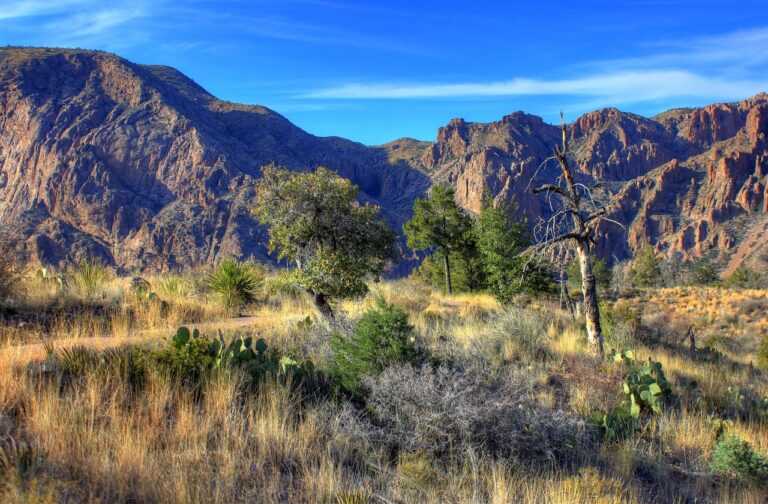
I’ll come clean: Big Bend National Park is on the top of my to-visit list. Why, you ask? Well, if massive canyon walls surrounding a winding Rio Grande and top-class dark sky stargazing views weren’t enough, its range, the Chisos Mountains, is the only one that is situated entirely within the bounds of a U.S. national park.
It’s also way down deep in south Texas, right across the border from Mexico, making for relatively mild weather year round (though nighttime temperatures can drop in the winter — it is a desert, after all!) Plus, it’s so out-of-the-way, only a few people who live on planet earth will ever get to see it.
Why It’s a Hidden Gem
Vast desert landscapes, Rio Grande views, and truly some of the most wide-open spaces in the entire U.S. — when it comes to hidden gem national parks, Big Bend is basically the definition. (Oh, and there’s also nearby Big Bend Ranch State Park to explore while you’re down there, too.)
RV Route + Drive Tips
There’s no way around it: Big Bend is hard to get to. (That’s part of why so few people do each year; it averages fewer than half a million annual visitors.) You’ll likely end up taking either TX-118 or US-385 south from the Marfa area (also well worth carving out time to explore). Keep in mind that this is the deep desert with long, desolate stretches without cell signal. Fuel up ahead of time, never let your tank get more than half empty, carry food and water and ideally an emergency satellite radio, just in case.
Campgrounds and RV Parking
Good news for our readership: Two of Big Bend’s onsite campgrounds are RV-friendly, and at least one is accessible to bigger rigs like fifth wheels. Take a look:
- Rio Grande Village RV Campground is your move if you’re driving a bigger RV. Along with its riverside views, it also offers full hookups — a rarity!
- Those in smaller RVs can consider Chisos Basin Campground, but with tight turns and major elevation changes, the park recommends no trailers over 20 feet or RVs over 24
Must-Do’s
Perhaps the park’s most famous feature, Santa Elena Canyon is 1,500 feet deep, run through by the Rio Grande, and marks the border between the U.S. and Mexico. There are several different paddling routes you can choose from, although a short nature trail also allows on-foot access.
We mentioned this above, but it bears repeating: be sure to give yourself some nighttime flexibility for stargazing. Big Bend National Park is part of the Greater Big Bend International Dark Sky Reserve, the largest dark sky certified place in the world.
5. Guadalupe Mountains National Park (Texas)
Another often-overlooked Texas stunner, Guadalupe Mountains National Park is a land of extremes. Along with serving to protect the world’s most extensive exposed Permian fossil reef, the park also features endless-looking sand dunes and is home to Guadalupe Mountain, “flat” Texas’s highest peak (which is quite impressive at more than 8,700 feet).
Why It’s a Hidden Gem
Like Big Bend, Guadalupe Mountains is located in the desert landscape of west Texas, though this one is on the northern border with New Mexico rather than the southern border with… well, old Mexico. Dramatic limestone peaks and low desert scrub combine to offer a totally unique travel experience, and since fewer than 250,000 visitors appear each year, you’ll have many of those wide-open spaces all to yourself.
RV Route + Drive Tips
The best routes for RVers will be from El Paso or Carlsbad, New Mexico. (While you’re in the area, be sure to save time to visit Carlsbad Caverns!) US-62 offers a scenic route, but be aware of the elevation changes you’ll see along the way. These are mostly rural highways, and are safe for most tow vehicles, but again, watch your fuel meter and be sure to carry excess food and water
Campgrounds and RV Parking
There are three developed campgrounds inside Guadalupe Mountains National Park, and all of them offer RV spots — but some are more limited than others.
- Pine Springs Campground has 13 RV sites available, though there are no hookups or dump stations
- Dog Canyon Campground offers four RV sites, while Frijole Horse Corral Campground has just one — but is the only option for those traveling with horses
You can also check out nearby private RV parks with full hookups and other amenities.
Don’t Miss
Fit, adventurous travelers won’t want to miss the opportunity to hike to the top of the park’s eponymous peak, especially since it also comes with bragging rights for having been to the highest spot in Texas. And McKittrick Canyon’s unique geology is worthwhile any time of year, but in the fall, it’s also home to some of the most spectacular fall foliage in the entire American southwest.
Planning Your RV Road Trip
Now that you know where you’re going, let’s dive into the details of how to do it right — that is, in an RVshare rental rig.
Best Times to Visit These Parks
While each of these parks has its own unique weather patterns (thanks to their locations all across the country), it’s important to understand that, especially in extreme terrains like those in North Cascades National Park, seasonal weather can have a major impact on your travels. Snow closures are common in the northerly climes in the winter, while summer heat could foil your hiking plans if you head to west Texas at the heart of summer. Be sure to check the monthly weather ahead of time to understand the best time to visit the specific park you’re interested in.
Note also, though, that the seasons with the very best weather are also likely to be the most crowded. That’s why the shoulder seasons — which offer decent weather but relatively fewer travelers — can offer the best of both worlds. (Of course, in parks that are already hidden gems, you’ll likely have less trouble as far as competing with other visitors.)
Fuel & Supplies Planning
Especially in remote-area parks like Big Bend and Guadalupe Mountains, be sure you have a sense of the filling stations, propane refill points, and dump stations you’ll use upfront. (Apps like Roadtrippers can make this process a lot easier.)
The last thing you want is to get stuck without fuel in the middle of nowhere, so we recommend treating a half tank like empty and prioritizing refilling at every chance you get. After all, one of your pre-planned gas stations might run out of fuel — so you always want a backup plan on hand. (Carrying a gas can is another solid option!)
Why Visit Hidden Gem National Parks by RV
Just in case our descriptions above haven’t quite convinced you…
Benefits of RV Road Trips
RV road trips offer you the flexibility and freedom to explore remote areas without having to give up the comforts of home. Say goodbye to cramped car camping or wind-flapping tents — you can bring literally everything, including the kitchen sink, along for the ride.
RV travel can also be a lot more cost-effective compared to hotels and car rentals, not to mention less hassle. Who wants to unpack and repack every time you pick up and drive to the next location? In an RV, it’s all ready, all the time. That’s probably why 87% of respondents in our latest Travel Trend Report say they’re more likely to pick an RV over other accommodation options on a national park trip.
Why Rent Your RV from RVshare
RVshare offers a large selection of peer-to-peer RV rentals for any group size and budget, and our renters enjoy nationwide pickup locations near major cities and travel hubs. (We’ve also recently introduced one-way options for those hoping to get the most out of their journeys, since you won’t have to worry about saving time and resources for the return.)
Each RVshare rental comes with insurance and roadside assistance included, and we offer personalized route-planning support. It’s stress-free travel, without owning an RV — the best of both worlds!
Exploring less-crowded national parks by RV is more than worthwhile. In fact, it can be downright magical, especially with your favorite people by your side. (And yes, you, yourself count — we see you, solo travelers!)
RVshare will be here for all the planning and prepping, and any ups and downs along the way. Start your road trip adventure today!