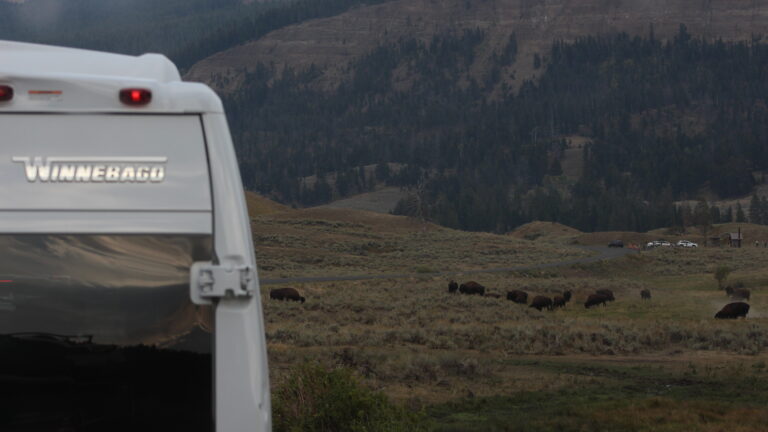
RV rental prices average $50 to $450 per night, depending on the RV type. Class A motorhomes cost between $150 and $450 a night, Class B campervans $100 to $350, Class C RVs $100 to $400, and travel trailers $50 to $200. Once you add gas, campground fees, insurance, and mileage, total costs run about $150 to $600 per day for a complete trip. Budget travelers get the best value from pop-up or small travel trailers, while families needing space should plan on $200 to $300 a night for a Class C. Peak season costs 30 to 50% more than off-season, and weekly or monthly rentals are usually 15 to 25% cheaper than daily rates.
Key Takeaways
- RV rental prices range from $50 to $450 per night, depending on whether you choose a Class A, B, or C motorhome or a trailer.
- Total daily costs, including gas, campgrounds, and insurance, average $150 to $600 per day for a complete trip.
- Seasonal demand can raise rates 30 to 50%, while weekly or monthly rentals often come with discounts.
- Hidden costs like gas, campground fees, and insurance have a big impact on what you actually pay.
- Understanding all of the costs up front is the best way to budget accurately and avoid surprises on your trip.
How Much Does it Cost to Rent an RV?
RV rental prices depend on the type of RV, the season, your location, and how long you rent. The nightly rate is only part of the picture, so it helps to look at the all-in daily cost before you book.
Start planning your trip with the RV Rental Cost Calculator tool for a clearer idea of what your specific rental would run.
What Does It Cost to Rent Each Type of RV?
Here is how the different RV types compare on average rental cost and total daily cost.
| RV Type | Nightly Rental | Gas (200 miles) | Campground | Insurance | Daily Total | Best For |
| Pop-Up Trailer Rental | $50-$100 | $30-$40 | $30-$50 | $15-$25 | $125-$215 | Budget camping, festivals |
| Travel Trailer Rental | $50-$200 | $30-$50 | $30-$60 | $20-$35 | $130-$345 | Families, longer trips |
| Class B Van Rental | $100-$350 | $40-$60 | $30-$60 | $25-$40 | $195-$510 | Couples, urban camping |
| Class C Camper Rental | $100-$400 | $60-$100 | $40-$80 | $30-$50 | $230-$630 | Families, first-timers |
| Fifth Wheel Trailer Rental | $60-$300 | $40-$70 | $40-$80 | $25-$40 | $165-$490 | Long-term stays, spacious |
| Class A Motorhome Rental | $150-$400 | $80-$150 | $50-$80 | $40-$50 | $320-$730 | Luxury, large groups |
Assumes 200 miles/day driving, 8-12 MPG motorhomes, 15-20 MPG towing. Campground fees vary by amenities.
New to the different RV classes? Our guide to choosing the right RV size breaks down which type fits your group and trip.
Why Do RV Rental Costs Matter in 2026?
The nightly rate usually represents only 40 to 60% of your total trip cost. Expenses like gas, campground fees, insurance, and mileage overages are the ones that tend to catch first-time renters off guard, so understanding the full breakdown is the key to budgeting accurately.
Here is why the complete cost picture matters:
- Hidden fees add up fast – A $150-a-night Class C can reach $300 to $400 a day once you add gas, campgrounds, and insurance.
- Poor planning can shorten a trip – Running low on budget mid-trip could force you to cut things short or spend more than you planned.
- Size does not always equal value – A $100-a-night travel trailer that needs a $400-a-day truck rental can cost more than a $250-a-night Class C with better gas mileage.
- Timing affects affordability – An RV that rents for $150 a night in October can run about $275 a night in July, a jump of roughly 83%.
- Rental type affects flexibility – Motorhomes can park overnight for free in some areas, like certain Walmart lots or rest stops (a practice known as boondocking, or camping without hookups), which can save $30 to $50 a night compared with trailers that need a campground.
The most common mistake first-time renters make is comparing only nightly rates. A “cheap” $75-a-night travel trailer that requires a $100 to $200-a-day truck rental, plus lower gas mileage, can end up costing more than a self-contained $200-a-night Class B campervan. Always calculate the all-in daily cost.
What Are the Average RV Rental Costs by Type?
Here are the average RV rental costs, depending on the type of RV you choose.
Class A Motorhomes
Class A motorhomes are the largest motorhome class. They’re the big, tour bus-style motorhomes that allow you to camp with a wide variety of amenities at your fingertips.
Class A motorhomes in California average around $275 a night to rent, although it’s not unusual to see many in the $300 range. In many other popular cities, they average about $250 a night.
Since these are averages, you’ll also find outliers for much cheaper – down to just $150 a night. But you’ll also find much more expensive rates. Some high-end rentals can go for up to $700 a night.
Class B Campervans
Class B campervans are the smallest type of self-contained RV. These are the #vanlife vans, and while they’re small, you can pack a lot in them! They’re great for solo travelers, as well as adventurous couples or very small families.
Class B campervans average about $200 a night in many popular cities, but you can find them for less than that. There are even some for rent under $100 a night. The overall price range for renting a Class B campervan is from $100-$350 a night.
Class C Campers
Class C campers are a good compromise between a large Class A motorhome and a small Class B van. They have an overhang in the front, which can be used as extra sleeping or storage space. You can find Class C campers to rent in many markets for between $175 and $200 a night. Overall, they range from $100 at the low end to $400 for newer models with lots of amenities.
Average Travel Trailer Rental Prices
If you prefer to tow a trailer rather than drive a motorhome, there are a variety of options and price ranges for that as well. Pop-up trailers are lightweight, and you can often use a crossover, SUV, or even a car to tow them. Fifth-wheel and travel trailers are much larger, and you may need a large truck to tow those. Many RVshare owners will also set the trailer up for you at your campground for an extra fee.
As a whole, trailers are less expensive than self-contained motorhomes.
Travel Trailers
How much does it cost to rent a travel trailer? Travel trailers can range from 8 to 40 feet, and their rental prices range as well. You can find travel trailers to rent for under $100 a night, but most are in the $100 – $200 range.
Fifth-Wheel Trailers
Fifth-wheel trailers are large travel trailers that you will need a 3/4-ton or 1-ton truck to pull. They are attached to the truck with a U-shaped coupling mounted to the truck bed. Fifth-wheels are often between $175 and $200 a night.
Pop-Up Trailers
Pop-up trailers are the smallest trailer category. They fold down to be towed flat on a small trailer bed. When you arrive at camp, you pop the sides and top up for a trailer that protects you from the elements. Some pop-up trailers are very basic, while others can have kitchens and even bathrooms. Pop-up trailers average about $100 a night, although many are less expensive than that.
What Goes Into the Cost to Rent an RV?
The cost of renting an RV will vary, depending on several factors.
- RV class: The size and class of RV you rent will affect the rental price. In general, a large Class A motorhome is going to cost more than a pop-up trailer. Also, self-contained rigs are generally more expensive than trailers that require customers to provide their own tow vehicle.
- Amenities: RVs with more amenities – full kitchens, larger bathrooms, laundry machines – will usually cost more to rent than more basic motorhomes or trailers.
- Age: The newer the RV or trailer model, the more expensive it generally is.
- Seasons: Busy seasons like summer, spring break, or holidays may cost more than in the off-season. As a general rule, if kids are in school, rental prices will be lower. You may also save on other prices, like admission fees, during this time as well.
What Are the Hidden Costs of Renting an RV?
Along with your RV rental fees, there are a few other costs to consider when renting an RV. If you’re watching your budget, you may want to see if you can limit or eliminate these fees to reduce your RV rental costs.
Gas prices
Most RVs get much lower gas mileage than your standard vehicle, and your gas might add up to a substantial cost. You may want to calculate how many miles your trip will be, and calculate the gas mileage for the vehicle you’ll be using. This will give you a good idea of how much to budget for gas.
Keep in mind, even if you’re using your own vehicle to tow a trailer, that extra weight will also affect your gas mileage.
Campground fees
If you’ll be staying at a campground, you’ll want to budget for those fees as well. Basic campsites with no hookups are going to be a lot less expensive than RV resorts with electric, water, and sewer hookups. Resorts may also have amenities like pools, nature activities and trails, planned events, laundry rooms, showers, and more.
Cleaning fees
Some RV listings show an extra fee for any additional cleaning that’s required. If you return your RV clean and in the condition it was rented to you, you may avoid these extra charges. Discuss any cleaning fees with the RV owner to make sure you know what you will and won’t be charged for.
Mileage fees
There may also be mileage fees associated with your rental. These can vary, so make sure you understand the fees before signing your rental agreement. Some owners allow unlimited mileage for free, while others select a certain number of free miles. If you go beyond the free miles, you can be charged for the extra miles.
Generator usage
If you rent an RV with a generator, you may also be charged a usage fee. Many owners will include a certain number of free hours, and if renters go beyond those hours, they’re charged incrementally. Other owners may charge for all generator usage … and some may not charge for any.
Pet fees or deposits
Some pet-friendly rentals may require an extra deposit or have an extra fee for allowing your furry friend to travel with you.
Extra perks
Owners may also offer extras for additional fees. Some owners are willing to drop off and set up an RV or trailer at campsites within a certain radius of their rental. Others may include extra equipment like kayaks, fire pits, chairs, or extra linens or dishes. And some offer services like propane refills or tank dumping, so you don’t have to worry about them. Each of these extras may come with an extra fee.
How Can You Save Money on an RV Rental?
Here are some tips if you’re looking to bring down the cost of an RV rental.
Book Early
Booking your rental 3-6 months ahead of time can save money as RVs get scarce during peak seasons. You’ll also find a better selection of affordable RVs if you allow yourself plenty of time. Plus, you’ll give yourself lots of time to compare prices on different rigs instead of feeling like you need to grab the first available RV you find.
Rent During Off-Peak Seasons
If your schedule is flexible, you can save a lot by renting during times when kids are traditionally in school. Renting an RV in September or October can mean 20-30% lower rates. Most summer destinations still have beautiful weather, and it may be less hot than the height of summer. Renting in April or May, before the summer rush, can mean 15-25% lower rates. Also, renting on weekdays instead of weekends can mean a 10-15% savings for customers.
Keep in mind that some resort areas use the off-peak season to renovate, take inventory, or allow staff to take their own vacations. If there are particular places you want to visit or eat, check ahead of time to make sure they’re open during the off-season.
Consider Weekly or Monthly Rates
If you plan to rent for a longer period, a camper for rent monthly may mean savings of 25-30%. Discounts of 15-20% may apply to weekly rentals, in addition to the daily rate.
Select Unlimited Mileage Plans
If you plan to travel quite a bit, especially on a cross-country trip, look at the RVs that offer unlimited mileage. You can get hit with $0.35-$0.50 a mile overage fees for some rentals. Unlimited plans can cost between $50-$100 more up front, but mile overages can add up to $300-$500 on long trips. Calculate your daily mileage to see if the unlimited plan may actually be the cheaper option.
Return Clean and Full
There can be extra fees for cleaning, dumping, or filling the RV with gas after a trip. See if the rental you’re interested in charges any of those fees, and save by doing those chores yourself before returning it to the owner.
Bring Your Own Extras
Some rentals have charges for linens, bedding, kitchen items, or outdoor gear. You can save in these areas by providing your own items, which you likely already have at home.
Consider Delivery and Setup
Some RV owners offer delivery and setup if you’re camping nearby and not planning to move. It can seem counterintuitive to pay a fee for this to save money, but sometimes the cost is worth it. You’ll save on gas both ways by opting for the owner to set up their RV for you. If you have work or scheduling constraints, having someone else do the setup also lets you arrive and get straight to vacationing. Finally, if you’re nervous about setting up an RV for yourself, having the owner do it can prevent mistakes that could cost you.
Use RVshare Instead of Traditional Rentals
Peer-to-peer rental services like RVshare can be 20-40% cheaper than using a rental company. You’ll also find more variety, including older RVs that are likely cheaper. Owners are also more likely to offer long-term rental discounts.
Expert Tip
Before you book, watch a quick walkthrough of what to expect as a first-time renter so you can spot the costs that matter most for your trip.
For more first-hand guidance, our First-Time RV Expectations article covers what surprises new renters most.
Common Mistakes First-Time Renters Make
- Comparing only nightly rates – The all-in daily cost, including gas, campgrounds, and insurance, is what actually hits your budget.
- Forgetting the tow vehicle – A low trailer rental rate can be misleading if you also need to rent a truck to pull it.
- Overlooking mileage and generator limits – These are disclosed up front, so read the listing before you book.
- Booking last minute in peak season – Prices climb and selection shrinks, especially in summer and around holidays.
Key Takeaways
RV Rental Cost Data and Trends
RV rental demand and pricing shift from year to year, which is why it helps to check current data before you plan. According to RVshare’s Travel Trend Report, 21% of travelers now plan to take fewer trips in the next 12 months, up from just 10% in 2024. You may be able to score a good deal, based on supply and demand.
For the latest planning research, see our Route Planner and trip resources.
What Real Renters Say
First-time renters often worry most about surprise charges, so it helps to hear from people who have booked. One RVshare customer who described themselves as a novice noted that “the pricing is completely transparent” with no surprises at any stage of the process.
Read more verified reviews on RVshare’s Trustpilot page.
Frequently Asked Questions About RV Rental Prices
It depends on the RV type and your location, but during peak season most rentals fall between about $150 and $300 per night. Larger or more luxurious models can cost more.
Along with season and RV type, geographic location as well as rental duration also have a major impact on RV rental rates and what you’ll pay overall.
Usually, yes, a drivable RV like a Class A or Class C motorhome is more expensive to rent than a towable RV like a trailer. However, there may be some exceptions, such as small camper vans or large fifth-wheel trailers with slide outs.
It varies by rental, so always check the fine print. Common extras include mileage fees, insurance, cleaning fees, generator-use fees, pet fees, and a refundable security deposit.
Usually, yes! Whether you rent from a traditional RV rental firm or on the peer-to-peer market here at RVshare, generally, longer-term RV rental periods offer discounts over the normal nightly rate.
A one-week RV rental typically costs:
Travel trailers: $350–$1,400 per week ($50–$200/night)
Class B campervans: $700–$2,450 per week ($100–$350/night)
Class C motorhomes: $700–$2,800 per week ($100–$400/night)
Class A motorhomes: $1,050–$3,150 per week ($150–$450/night)
Also note that weekly rentals may receive discounts of 15–25% compared to booking the same number of nights individually, which can help lower the overall rental price. Be sure to check with the RV owner for discounted extended stays.
If you’re ready to rent an RV for your own adventure, you can browse thousands of rentals on RVshare. You’ll find transparent pricing and owner reviews to help you make your choice. And you can filter by price, location, and RV type to find the perfect rental at the right price.