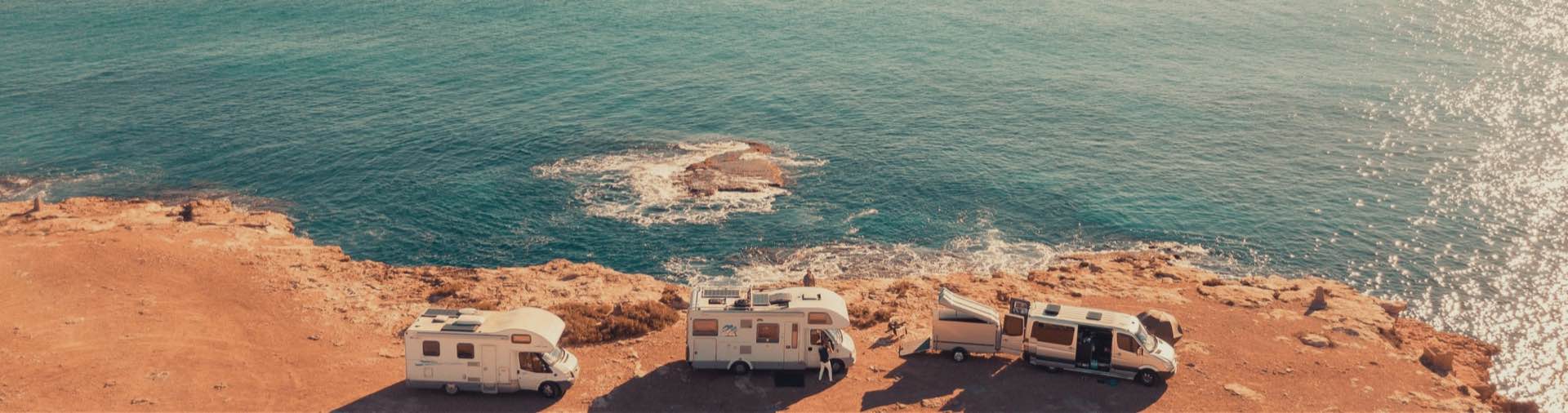
Road Trip with RVshare Riverside to Mt. Rushmore National Memorial
Your Trip At a Glance
- Trip Length: 18 hours, 56 minutes
- Mileage: 1,272 miles
-
Fun fact: The Mojave Desert you'll be passing through is home to one of the most extreme places on Earth in Death Valley, which encompasses the lowest elevation on the continent and some of Earth's hottest recorded temperatures.
Mount Rushmore National Memorial, with its imposing quartet of stone-carved presidents, ranks among the most recognizable landmarks of the United States. The grand monument also happens to reside within a landscape of immense, deep-rooted cultural significance to multiple Native American peoples: the Black Hills, tangled in complicated and tragic history.
Journeying to Mount Rushmore from Riverside takes you from the Inland Empire and Transverse Ranges of Southern California across a spectacular cross-section of the American West. You'll motor across the Mojave Desert and Great Basin, climb to the Colorado Plateau and Rocky Mountains, then head northeastward across the Wyoming Basin to reach the sublime sprawl of the Great Plains and the sky-island heights of the Black Hills.
Road Trip Planner: Stops Along Your Route

Vast deserts and semi-arid basins, the biggest saltwater lake in the Western Hemisphere, soaring mountains and rolling shortgrass prairies: The scenery between Riverside and Mount Rushmore provides a sample of the American West's glorious landscapes and ecosystems. It also covers some of the nation's most distinctive cities and friendly small towns. The trip's perfect for RV-touring, given the variety of attractions and the abundance of camping opportunities.
Mojave National Preserve, California
Some of the most evocative desert lands in the world lie within Southern California's Mojave National Preserve, named after the Mojave Desert. The most extensive forest of the Mojave Desert can be found here. And the landscape mosaic also includes the spectacular Kelso Dunes, among only a relative handful of dunefields known to produce a "booming" sound.
RV Info & Tips
Campgrounds: In addition to abundant opportunities for primitive camping and backpacking, Mojave National Preserve hosts three developed campgrounds: Mid Hills, Hole-in-the-Wall, and the Black Canyon Group & Equestrian Campground. Most of the 38 sites in Hole-in-the-Wall Campground accommodate RVs (with a maximum RV/trailer length of 30 feet); the 26 sites of Mid Hills are reached via an unpaved road not suitable for bigger RVs or motorhomes.
Seasonality: Fall through spring are the most comfortable seasons for exploring Mojave National Preserve, as summer temperatures often climb into the low 100s Fahrenheit.
Roads: Be aware that there's no gasoline available within the National Preserve itself, so come here with a full tank! Numerous desert communities in the surrounding area offer fillups, including Cima, Needles, Jean, and Ludlow.
Las Vegas, Nevada
Sin City, the Entertainment Capital of the World: Vegas is famous the world over for its nightlife, which encompasses everything from glitzy gaming to over-the-top stage shows. Besides the casinos, Cirque Du Soleil performances, big-name pop-star residencies, and magic acts, consider carving off some time for attractions such as the Las Vegas Natural History Museum, not to mention some of the grand natural attractions within day-tripping distance of this 24-hour urban outpost.
RV Info & Tips
Campgrounds: Numerous RV resorts and campgrounds include Red Rock Canyon National Conservation Area and Lake Mead National Recreation Area and provide abundant camping opportunities.
Seasonality: Las Vegas can be a busy place, especially around holidays. Given the desert heat, much of the summer stretch is comparatively "quiet."
How Long to Stay: Consider spending a week or more in the area. Again, the city's Strip – is a bucket-list item. The spectacular outcrops (and climbing pitches) of Red Rock Canyon, appeal to Sin City-based outdoor lovers.
Zion National Park
Among the most celebrated national parks in the U.S., Zion National Park marks where the Colorado Plateau sweeps in gorgeous fashion down to the arid lands of the Mojave Desert and the Great Basin. From the Temple of the Virgins to Kolob Arch, the geology displayed here is spectactular. Expect plenty of company on iconic hikes such as Angels Landing – serving up a view of the North Fork Virgin River's Zion Canyon – and The Narrows, but quieter trails and experiences can definitely be found out here.
RV Info & Tips
Campgrounds: Zion National Park maintains several RV-friendly developed campgrounds, one of which – Watchman – is open year-round. You've also got Lava Point and South campgrounds..
Seasonality: Zion can get roasting in summer, particularly in the lower elevations. Daytime temperatures in winter tend to be very pleasant and ideal for hiking, though nighttime lows can dip below freezing.
Roads: To lessen the footprint of its heavy tourism on the landscape, the park closes Zion Canyon Scenic Drive to private vehicles from March to November, when the Zion Canyon Shuttle gives you road-based access. You can still drive the other park roads during that period.
Salt Lake City, Utah & the Great Salt Lake
Salt Lake City is the legendary "Crossroads of the West" set on the shores of the biggest inland body of saltwater in the Western Hemisphere and backed up against the steep-rising Wasatch Front. From striking landmarks of the Mormon Church to outstanding botanical gardens and a topnotch dining scene, the city alone is a draw. Throw in the "Greatest Snow on Earth" drawing skiers and snowboarders up into the Wasatch Range, and the alkaline flats of the Great Salt Lake basin, and you've got another natural stopping-off point on your road trip.
RV Info & Tips
Campgrounds: From the Pony Express RV Resort & Campground and the Salt Lake City KOA to the campgrounds awaiting up Big and Little Cottonwood Canyons, RVers have numerous options for accommodations on an SLC visit.
Seasonality: Winter's prime time in Salt Lake City. But the mild-to-warm valley temperatures and potential snowsports opportunities make spring and fall highly attractive, and you can beat the summer heat during cool evenings and by escaping to the readily available high country.
Thunder Basin National Grassland, Wyoming
Thunder Basin National Grassland – managed by the U.S. Forest Service alongside the Medicine Bow-Routt National Grasslands – is a wide-open Great Plains landscape of broken to rolling semi-arid mixed-grass prairie. Set within the Powder River Basin, which sprawls between the Bighorn Mountains and the Black Hills, it's a place to seek out quiet and big vistas. Birdwatching can be outstanding—this has historically been a major nesting stronghold for the golden eagle—and you've got good odds of spotting pronghorn, mule deer, and coyotes.
RV Info & Tips
Campgrounds: There aren't any developed campgrounds on the Thunder Basin National Grassland, but boondocking opportunities abound. Check in with the Forest Service's district office in Douglas, WY to learn more.
Roads: A good map and consultation with the Douglas Ranger District will help you understand the layout of private/federal lands within the National Grassland. You also want to bone up on current road conditions, as the road network contains a lot of primitive mileage that can be impassable in wet or snowy conditions.
Gear & Prep: To explore the Thunder Basin National Grassland in an RV, you'll want to be prepared for primitive conditions and self-sufficiency.
Top RV Rentals Near Riverside, California
Explore More with One-Way RV Rentals Across the U.S.
Discover our one‑way RV rentals across the country. Pick‑up in one city, drop‑off in another. Explore freely, no return drive. Check availability now
Pro Tips to Make the Most of Your Trip
Maximize your RV road-tripping experience between Riverside and Mount Rushmore with the following tips. We'll cover potential detours and alternate routes as well as some logistical considerations you ought to keep in mind when trip-planning.
Alternate Route Options
While the most direct route between Riverside, California and Mount Rushmore in South Dakota is anchored by I-15 and I-80 and proceeds mainly through Utah and Wyoming, it's also possible to follow I-40 and I-25 and connecting highways through Arizona, New Mexico, Colorado, and Wyoming. This more Southwest-oriented route puts a lot of other intriguing towns and cities in your path, from Flagstaff, Albuquerque, and Santa Fe to Colorado Springs, Denver, and Cheyenne. This route gives you an extended drive through and along the front of the Southern Rocky Mountains.
Timing & Logistics
Fall might be the all-around ideal time to do this route, given you'll hopefully avoid the worst of the summer heat that can afflict most of its length, from the California desert to the Wyoming Basin, and also the often-gnarly winter weather. Spring and early summer are other good options, but be mindful of the threat of severe thunderstorms, especially in the Great Plains and Black Hills portions.
Take the Scenic Route Out
There are many awesome opportunities for scenery-drenched detours along what's already a scenic route. Consider, for example, heading off the main I-80 route in the Utah-Wyoming-Colorado borderlands to take in Flaming Gorge National Recreation Area and Dinosaur National Monument.
RV Route Logistics
Steep Grades: Much of this route plays out over level or rolling basins and valleys, but there are some steep sections to prepare for. These include Parleys Summit where I-80 crosses the Wasatch Mountains and the stretch of Wyoming Highway 257/West Belt Loop where it climbs after crossing the North Platte River. It also includes sections of Highway 16 and Highway 385 in the Black Hills approaching Mount Rushmore.
Seasonal Driving Conditions: As mentioned, winter weather can be harsh on parts of this route, including the mountainous sections in Utah as well as basically all of Wyoming, subject to blizzards and Arctic blasts. Summer can be roasting in the desertlands as well as the Great Plains stretch, and also brings the potential for strong convective storms, including hailstorms and even the odd tornado. Pay careful attention to the weather forecast and any National Weather Service watches and warnings. Also be aware that high winds can be an issue in the Wyoming stretch.
Fuel Availability: You'll find ample gas stations along this route, but there are also stretches of relatively limited services in, for example, the Mojave Desert, Wyoming's Red Desert, and Thunder Basin – so plan accordingly.
Take in some of the best of the West rolling your RV from Riverside, CA to South Dakota's Mount Rushmore! It'll be a road trip to remember through some of the most stunning countryside in the U.S.
Frequently Asked Questions
How do I plan an RV road trip from Riverside to Mt. Rushmore National Memorial?
To plan an RV road trip from Riverside to Mt. Rushmore National Memorial, start by mapping your route using Google Maps or a trip planner that supports RV navigation. Consider road types, fuel stops, campgrounds, and attractions along the way. Our RV Rental Advisors can help you choose the best vehicle and route based on your travel dates and preferences.
What type of RV should I rent for my trip?
The ideal RV depends on your travel style, group size, and destination. For couples, a camper van or Class B RV offers flexibility and easy driving. Families often prefer Class C motorhomes for more space and amenities. If you’re staying longer or need extra comfort, a Class A RV might be your best choice. Learn more about the different RV classes.
How much does it cost to rent an RV for a road trip?
RV rental prices vary based on vehicle size, rental duration, season, and mileage. On average, RV rentals range from $100–$300 per night, with discounts for weekly or monthly bookings. We also offer one-way rentals if you’re traveling from Riverside to Mt. Rushmore National Memorial without returning to the starting point.
Can I pick up my RV in one city and drop it off in another?
Yes! Many travelers love our one-way RV rental option. If the inventory is available for your route, you can pick up your RV in one location and drop it off in another, which is perfect for cross-country adventures or long-distance road trips.
What should I pack for an RV trip?
Pack essentials like bedding, toiletries, cooking supplies, and outdoor gear. Most of our RVs come equipped with kitchenware and basic amenities. Don’t forget to bring a first-aid kit, maps, and camping chairs for your outdoor setup. Keep this packing list handy to ensure you don’t leave anything behind!
Do I need a special license to drive an RV?
A standard driver’s license is all you need to rent and drive an RV. Keep in mind that you must be 25 to rent an RV.
Where can I park or stay overnight during my road trip?
You can stay at RV parks, national park campgrounds, or designated boondocking areas. Our team can recommend safe and scenic stops along your route from Riverside to Mt. Rushmore National Memorial. Be sure to reserve campgrounds in advance during peak travel seasons.
How do I handle fuel and hookups during my trip?
Most RVshare RVs are equipped for electric, water, and sewer hookups at most campgrounds. Keep track of your fuel stops and learn how to connect utilities before you hit the road. We provide a full orientation before departure to make setup easy.
Is insurance included in my RV rental?
Yes, basic insurance coverage is included with every rental. You can also purchase additional protection plans for peace of mind during your journey. We’ll explain all coverage options when you book your RV.
Can I travel with pets in my RV rental?
Absolutely! Many of our RVs are pet-friendly, so your furry friends can enjoy the adventure too. Use the filters to search for RVs that welcome pets on board.
What are the best road trip routes for RV travelers?
Popular RV routes include scenic coastal drives, national park loops, and cross-country highways. For beginners, you may want to try a long weekend trip where you don’t have to drive quite as far. Just remember to follow the 3-3-3 rule of RVing!