Crossing an international border with an RV can feel intimidating. When we decided to tow our travel trailer through Canada on our way to Alaska, I had so many questions. What food could we bring? Would they search the camper? What paperwork did we need? Could we cross with our cat? Would towing an RV make the process more complicated?
In April, our family crossed into Canada at the Portal, North Dakota border crossing with our truck, travel trailer, two kids, and our cat, Louie. After all the worrying and researching, the actual crossing was much easier than I expected. We were prepared, honest, and had everything organized before we pulled up to the booth.
If you are planning to drive your RV into Canada, especially if you are heading to Alaska, here are the biggest things we learned.
1. Have Your Documents Ready
Before you get to the border, make sure your important documents are easy to reach. You do not want to be digging through cabinets, bags, or glove compartments while you are sitting at the booth.
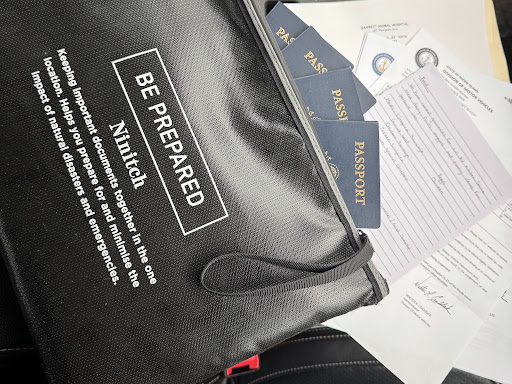
For our crossing, we kept everything together in a folder inside our fireproof document bag. It made the process incredibly easy and gave us peace of mind knowing all of our important documents were protected while traveling. Here is what we had ready to go:
- Passports for everyone in the family
- Driver’s licenses
- Truck registration
- Trailer registration
- Proof of insurance for both vehicles
- Pet vaccination records
- Our general travel plans
- A list of declared items
- Our job offer letter for our summer workamping position in Alaska
If you’re traveling for seasonal work or workamping, I would highly recommend bringing a copy of your job offer letter or any documentation that supports your travel plans. We weren’t asked to provide ours, but it was nice having it readily available just in case. Having everything prepared ahead of time made the whole process feel much smoother.
2. Know What Food You Have in the RV
This was the part I stressed about the most. RVers are not just crossing with a suitcase. We are crossing with a refrigerator, freezer, pantry, and sometimes weeks’ worth of groceries.
The biggest thing to remember is to declare your food. Don’t try to guess what matters and what doesn’t. Since your RV is your home, it’s completely normal to have a full kitchen and pantry with you. If the officer asks if you have food, just be honest. You can simply say something like, “Yes, we live and travel full-time in our RV, so we have our normal groceries and household food for personal use.” That’s exactly what they expect from full-time RVers.
We may have gone a little overboard, but to give ourselves peace of mind, we made a simple list of the food we had in the RV and kept it in our travel document folder. We never actually needed it, but it was nice knowing we could quickly answer any questions if asked. Our border officer didn’t make us discard any of our food. We even had a few frozen packages of meat and some eggs, which can sometimes be hit or miss when crossing. We fully expected to lose a few items, but luckily we didn’t. I honestly think being upfront and honest about everything we had made the process go much smoother.
To Consider:
Rules can change depending on current restrictions, so it’s always a good idea to check the official Canada border website before you go. Fresh produce, meat, eggs, dairy, plants, seeds, pet food, and firewood are all items that can have restrictions or require declaration.
Before crossing, we also tried to keep our groceries fairly simple and avoided stocking up on anything we weren’t sure about. Our mindset was easy: if there was ever any doubt, we’d declare it and let the border officer decide. It’s always better to overdeclare than underdeclare.
3. Leave Firewood Behind
Firewood is one of those things that can be easy to forget about when you are camping. It might seem harmless to have a bundle tucked in the truck bed or camper storage, but firewood can carry pests and diseases.
The safest choice is to leave firewood behind and buy it locally after you cross. This is a good habit whether you are crossing a border or just traveling between states and provinces. We normally never travel with firewood and just get it whenever we are when needed, so we didn’t have any issues with this one.
4. Be Careful With Firearms and Weapons
If you’re traveling from the United States into Canada, firearm laws are very different, and this isn’t something you want to guess, so it’s important to be prepared.
While some hunting rifles and shotguns may be allowed with the proper paperwork and declaration, many handguns, AR-style rifles, pepper spray meant for self-defense, and other weapons aren’t. Even if your firearm is allowed, there’s paperwork to complete and a declaration fee to pay. Unless you’ve already looked into all the requirements, it’s honestly much easier to leave them at home.
We’ve traveled with firearms for protection before, but for this trip to Alaska, we left ours with a family member to avoid any issues at the border. It also saved us from having to deal with the process all over again when crossing back into the U.S. later. For us, it just wasn’t worth the added stress, and it made crossing the border much simpler.
5. About Traveling With Pets
We crossed with our cat, Louie, so this was another thing I wanted to be prepared for. Before we left, we made sure we had his most recent vaccination records with us, including proof of his current rabies vaccination. Canada did not require a health certificate for our cat, but entry requirements can change, so it’s always a good idea to double-check before your trip. I’d also recommend looking into the requirements for returning to the U.S., as those may be different. In our case, they were the same, since we crossed back into the United States through Alaska just a few weeks later.
We kept all of Louie’s paperwork in the same travel folder as our passports and other important documents, so it was easy to access if needed.
At our border crossing, they never asked to see Louie or any of his paperwork, but border officers can ask for your pet’s documents and even request to see your pet. If you’re traveling with a dog or cat, I recommend checking the current entry requirements before you leave and keeping their records somewhere easy to access.
6. Expect Basic Questions and Possible Wait Times
Our border crossing wasn’t scary or intimidating at all. The officer asked us a handful of basic questions, and we simply answered them honestly.
One thing we didn’t really think about beforehand was the possibility of a wait before you even reach the border officer. When we crossed, there was only one lane open and quite a few semi-trucks ahead of us. While we did have to wait a bit to get to the gate, traffic moved steadily and efficiently. It wasn’t awful by any means, but it’s something to plan for, especially during busier travel times. Giving yourself a little extra time and patience can go a long way.
Some of the questions you may be asked include:
- Where are you headed? (For us, it was Seward, Alaska.)
- How long will you be in Canada? (Know roughly how many days you’ll be traveling through.)
- What is the purpose of your trip? (Vacation, work, or simply driving through to Alaska.)
- Do you own the RV? (A simple yes or no is all they’re looking for. Many people rent an RV to explore Canada or drive to Alaska, so don’t worry if it’s a rental.)
- Do you have any firearms or weapons? (This is where you would declare anything you’re bringing with you and provide the required paperwork for any item that’s permitted to enter Canada.)
- Do you have alcohol, tobacco, or drugs? (We simply answered “no,” so they didn’t ask any follow-up questions. Keep in mind that recreational drugs are not permitted to cross the border, even if they’re legal where you live.)
- Are you traveling with any pets? (We answered, “Yes, one cat,” and let them know we had all of his paperwork with us if they needed to see it.)
- Do you have food in the RV? (This is where we explained that we live and travel full-time in our RV, so we had our normal groceries and household food for personal use. We also had a list of the food we were carrying if the officer wanted to review it.)
There’s no need to overthink your answers. Be sure to just answer honestly and directly. Our entire conversation with the border officer only took a few minutes, and being calm, polite, and prepared made the process quick and easy.
7. Prepare for a Possible Inspection
We weren’t selected for an inspection, but it’s something to be aware of before you cross. We’ve talked with other RVers who have been asked to pull over for a secondary inspection, and in most cases, it’s simply part of the process and not a sign that you’ve done anything wrong. Sometimes it’s just at random.
Since your RV is essentially your home, an inspection can feel a little more personal than having a car searched. So before you get to the border, it’s a good idea to have things reasonably organized and make sure your storage compartments are easy to access. There’s no need to deep clean your RV, but avoiding a cluttered mess can make the process much smoother if an officer needs to look around.
If you’re selected for an inspection, stay calm, follow the officers’ instructions, and answer any questions honestly. From everything we’ve heard, inspections are usually straightforward and are simply part of keeping the border secure.
8. Research Your Border Crossing
Not all border crossings are created equal, especially if you’re traveling in a larger RV or towing a trailer. Before your trip, spend a little time researching which crossing makes the most sense for your route and the time of year you’ll be traveling.
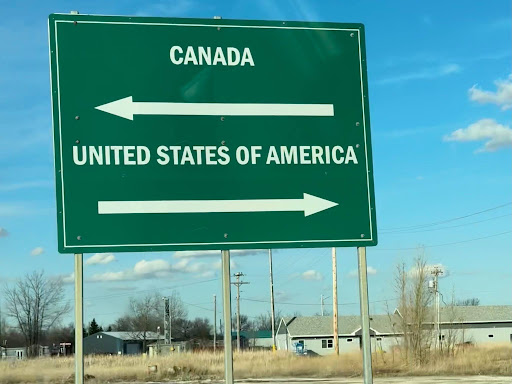
Since we crossed in early April on our way to Alaska, we chose the Portal, North Dakota/Saskatchewan border crossing after doing quite a bit of research. It had good reviews from other RVers, was open year-round, and put us on a route where the roads were well maintained and regularly cleared. Some northern crossings have seasonal hours or may not be the best choice depending on weather conditions, so it’s worth checking ahead.
A little research beforehand can save you a lot of stress once you’re on the road
9. Download Maps Before Crossing
One thing I highly recommend is downloading offline maps before you leave. The last thing you want is for your GPS to lose service right before or after crossing the border. Cell service can be spotty in remote areas of both the northern United States and Canada, especially once you’re traveling along the Alaska Highway.
Before we crossed, we downloaded our route in Google Maps and had a general idea of where we were headed. It gave us peace of mind knowing we could still navigate even without a cell signal.
It’s also worth checking your phone plan before entering Canada. Some U.S. plans include Canada, while others charge roaming fees. It’s much better to know ahead of time than to lose service or come home to an unexpected phone bill.
10. Plan for Fuel
If you’re driving to Alaska, planning your fuel stops is important. Gas stations can be far apart in some areas, and fuel prices are listed in liters instead of gallons, which can be confusing at first. The posted price may look different than what you’re used to seeing in the U.S., and once you factor in liters instead of gallons, Canadian currency, and the higher prices you’ll often find in remote areas, filling up can add up quickly.
We made it a habit not to let our tank get below half once we got farther north. If you see a gas station and you’re getting low, it’s usually worth stopping. That’s especially true when towing an RV, since fuel mileage can drop much faster than you expect.
11. Don’t Rush the Drive Through Canada
View from a stop at Jasper Nation Park in Canada
If you’re driving to Alaska, it can be tempting to treat Canada as simply the road that gets you there, but don’t make that mistake. We gave ourselves about two weeks to get from the border to Alaska, and even that didn’t feel like enough. Some of our favorite stops were in Banff and Jasper National Parks, and the drive through that area was easily some of the most beautiful scenery we’ve ever seen.
Slow down and enjoy the journey. Stop at the overlooks, explore the national parks, and leave room for unplanned stops along the way. We quickly realized that neither Canada nor Alaska are places you’ll want to rush through because there is simply too much to see and do. If you’re still planning your Alaska adventure, RVshare’s guide to RV camping in Alaska is a great resource for finding campgrounds, destinations, and ideas for making the most of your trip!
Final Thoughts
I’ll be honest, I spent way more time stressing about the border crossing than I needed to. Looking back, it ended up being one of the easiest parts of our drive to Alaska. A little preparation really does go a long way.
Have your documents together, know what you’re bringing with you, declare anything that needs to be declared, and answer the officer’s questions honestly. Before you know it, you’ll be on your way, enjoying one of the most incredible road trips you’ll ever take.
Quick RV Border Crossing Checklist
Before crossing into Canada with your RV, make sure you have:
- Passports for everyone traveling
- Driver’s licenses
- Vehicle registration
- RV or trailer registration
- Proof of insurance
- Pet vaccination records (if traveling with pets)
- A general travel plan (possible job offer letter)
- A good idea of what food is in your RV
- No prohibited firearms or weapons
- No firewood
- Offline maps downloaded
- Your phone plan checked for Canada coverage
- Fuel up whenever you have the chance
I hope sharing our experience helps take some of the stress out of planning your own trip. Before long, the border crossing will be behind you, and you’ll be on your way to exploring everything Canada and eventually Alaska has to offer!