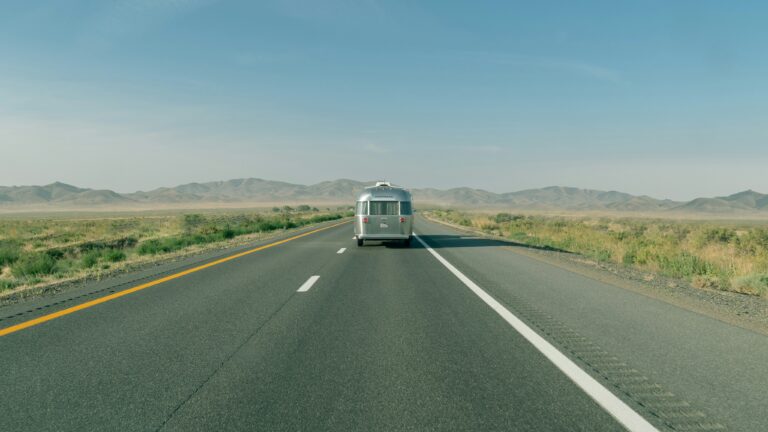
Is RVing more cost-effective than air travel? Short answer: usually, yes. Even if you rent a really nice RV, chances are you’ll pay less than you would on airfare for yourself and your travel party. In a climate where the average domestic airline ticket is more than $380 (according to the latest data available from the Bureau of Travel Statistics), the cost of RV travel easily beats out flying for most families.
In this article, we’ll directly compare some of the most common costs of both RV and air travel, as well as giving you the tips and tricks you need to tackle your first RV adventure successfully. Let’s go!
RV vs Air Travel Cost Breakdown
So let’s break this down and look at real numbers to see which really comes to be the most cost effective travel. For our case study, let’s look at a family of four from Cleveland, Ohio, looking to take a four-day vacation in the Great Smoky Mountains of Tennessee, one of the most visited national parks in the country. (According to the National Park Service, Great Smoky Mountains National Park saw 11,527,939 visitors in 2025!)
Keep in mind that the costs in this comparison are averages, and every situation is different.
| Air Travel Expenses: Average Cost Breakdown | RV Travel Expenses: Average Cost Breakdown |
| Flights: $1704 | RV Rental: $1660 |
| Transportation (Car Rental, Uber): $540+ | Fuel: $500 |
| Hotel/Accommodations: $800 | Campground: $0 to $120 |
| Dining: $580 | Groceries: $180 |
With flights at $266 per person and hotel nights at $200, the air travel option quickly added up. Not only do you have the rideshare to and from the airport, but you need to rent a car if you are traveling to places like National Parks. This adds about $480 of a rental car budget and we are facing some big expenses.
Although the gas cost is high for traveling a 1080-mile round trip, you can save a lot with access to a kitchen and a bed to sleep in! If you are an RV owner you are looking at only $680 total for this adventure!
RV vs. Air Travel Costs: A Quick Comparison
We all want to spend more time adventuring, and once we’ve picked our destination, the next question we think to ourselves is, “What is the best way to get there?” For a lot of us, the best way is also the most cost-effective way. To determine what this is, you really need to know the cost of RV travel and how that compares to the cost of air travel.
The cost comparison will be influenced by a few key questions:
- How many people are you traveling with?
- For how long is the trip?
- How many miles away is the destination from your location?
By answering these questions and using the table below, you will start to find direction toward what option will be the most cost-effective.
| Air Travel Expenses | RV Travel Expenses |
| Flights | RV Rental |
| Transportation (Car Rental, Uber) | Fuel |
| Hotel/Accomodations | Campground |
| Dining | Groceries |
Flights vs. Cost of RV Rental: Which is More Expensive?
The first category up for comparison is the cost of the travel itself.
The average US flight cost is around $380 dollars. That, multiplied by the number of people in your party, can quickly add up to thousands.
- Add baggage fees, at around $40 a piece per person on almost every airline. This cost is only increasing each year as this article highlights.
- Add rideshare/transportation to and from the airport at an average of $35 each way.
- Add airport meals for about $25 per person
Here at RVshare you can find rentals starting as low as $50 a night for tow-behinds and $75 for drivable RVs. If you go for something more middle of the range or even feel like going larger with a $200 + a day RV rental you are still looking at dividing this number by the amount of people in your party, not multiplying, which already brings about great savings. Plus with RV delivery you can save even more by eliminating rideshares from the pick-up process. That cost effectively goes down to zero if you own the RV yourself.
Transportation vs. RV Fuel
With the average nationwide car rental rate of around $100 a day you are looking at another big budget category: transportation. Some locations like National Parks and small cities pretty much require you to rent a car in order to get to and from the attractions.
Choosing to skip the rental car and using rideshare apps won’t save you that much money with average rides across the country at $25 one way. Public transportation would be the most cost effective way to get around, but depending on your destination this can be more complicated and time consuming than helpful.
Now, let’s talk about gas prices, something that can add up when traveling via RV. In the past few years we saw a rise in gas and diesel prices that made thinking of going on a roadtrip difficult. However, as we kick off 2026 we are seeing average prices around the country go down. In fact, Gasbuddy predicts the average cost of gas for 2026 to be $2.97.
Of course, the cost of gas will vary depending on the miles of travel it takes to reach your destination and the location. A class C, typically holds a 40 gallon gas tank and has an average of 10 mpg. Filling up the tank at an average current price of $3.00 a gallon would cost $120. That fill up will be able to take you about 400 miles, which is about 6.5 hours of travel time.
For the exact cost of traveling to your destination apply this formula with: Miles X Price of Gas.
To find more information on gas mileage and RVs check out our detailed guide.
Hotel vs. Campground Costs
Hotel averages per night nationwide are around $186 a night, which might need to be increased if your party is too big for a standard room. Remember that other factors like location, rooms with kitchens, breakfast included and amenities will influence your cost in this category greatly. Sometimes saving on hotel prices can end up adding more to other budget categories.
Campgrounds come with all types of price tags from $0 for public lands to $100 or more for a spot in an established campground with water and electric hook-ups. Boondocking allows you to park for free on public land but keep in mind the limitations. You’ll have to use water and electricity from your own supply and most often you will be further away from attractions.
Dining Out vs. Groceries
Dining is part of any travel adventure but when you are limited to a microwave in the hotel room you are going to find yourself with another unexpected high budget point. Keep in mind, you will be multiplying cost per person of your party.
In an RV not only can you store groceries and pack the fridge with everyone’s favorites, but you have the option to cook meals together. You could even have the family lasagna recipe on the dinner menu. RVs are equipped with full kitchens and although doing the dishes while on vacation is not everyone’s dream, having the space and appliances to cook a meal will save hundreds.
First-Time RVer? Here Are Our Top Planning Tips
If you’ve never traveled by RV before, you’re in for a treat — and not just because it can be so much more affordable than flying. Here are our top tips for first-timers to get the best taste of the experience (but honestly, no matter what you do, chances are you’ll be coming back to RVing again and again).
- Rent the right type of RV. From Class B campervans for solo adventurers and close couples to massive fifth-wheel travel trailers for big families camping in parks, there are a lot of different types of RVs out there — and each is best suited for a specific purpose. An even better idea: try a few trips in a few different types to learn your favorite!
- Book early. Whether you’re staying in a public or private campground, and especially if you’re going to a high-demand location like a national park, booking early is key. That applies for both the rental vehicle and the campsite.
- Consider the type of camping experience you want. Boondocking off the grid on BLM lands is a fun option for those who are willing to rough it, but families and more casual adventurers might prefer a resort-style experience. The good news: both are available!
- Don’t forget that delivery is an option. If you’re not quite ready to drive an RV just yet, you can still enjoy the magic of camping in one. RVshare now offers delivery and setup on select campers, so you can simply show up and enjoy.
Key Takeaways
So what have we learned in this post? A whole lot! For starters:
- The average airline ticket is more than $380. That means that flying alone can cost thousands for even a modestly sized family.
- RVshare offers campers starting as low as $50 per night. Even nicer rigs are often less than $300 per night, which, when you factor in the cost of flying plus hotels, can be quite affordable divided across everyone in your camping part.
- When you’re flying, transportation adds up. Sure, you have to fuel your RV, which can feel expensive at the pump, but all those airport Ubers can easily eclipse those costs.
- RVing’s secret weapon for budget-minded travelers: the kitchen. Restaurant meals can add up to hundreds, or even thousands, of dollars on a week-long vacation. Cooking in your “home” away from home can drastically lower the bill.
RV vs. Air Travel: Frequently Asked Questions
Generally, yes. The average cost of an airline ticket in 2026 is more than $380, which means you’re already looking at nearly $1,000 to fly two people after bag fees and airport meals. Some rental RVs are available for as little as $50 per night, and even a nicer $200-per-night option is likely to be less expensive once you factor in the cost of hotel rooms on a flying vacation.
One recent study found that RV trips tend to save about 60% of costs compared to airfare and hotels for four-person travel parties, or 46% for traveling couples and duos.
Don’t forget to factor in any extra costs for mileage or generator use, campground fees, and fuel.
Often, yes. Since most children require the purchase of an entire airline seat — and each ticket costs more than $380 on average, even for domestic flights — in 2026, many families find RVing to be a more affordable way to travel.
Fuel can be one of the more expensive parts of RVing. Still, when you factor in the transportation costs required for air travel, such as Ubers to and from the airport as well as transportation at your destination, the costs often even out — or RVing comes out on top in terms of affordability.