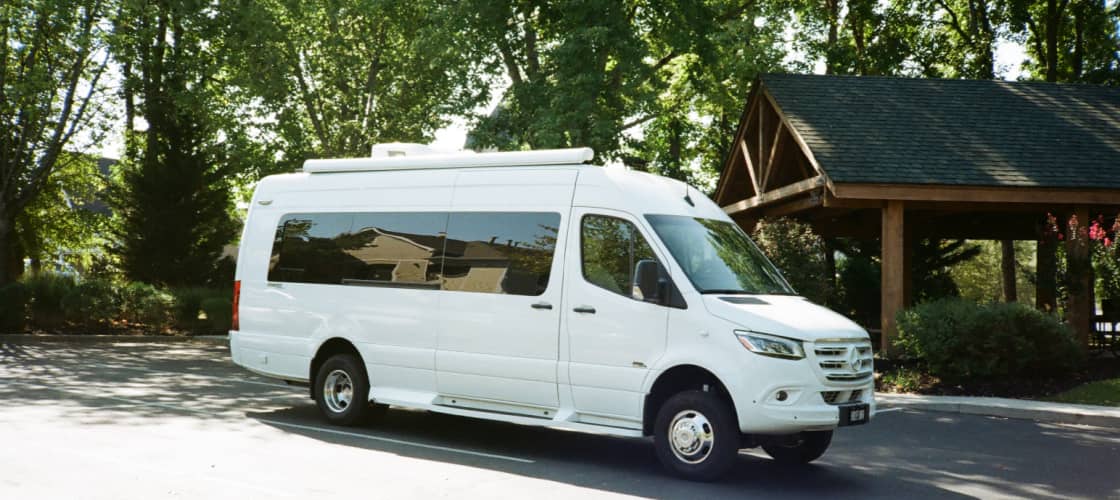
Passenger vans don’t get enough credit as travel vehicles. Most people associate them with airport shuttles or youth sports teams — not road trips. But a well-equipped passenger van can deliver a lot of what larger RVs offer in a fraction of the size, cost, and complexity. For groups who want to travel together comfortably without the commitment of a full motorhome, a passenger van is often the smartest option on the lot.
Passenger Vans at a Glance
| Van Type | Sleeps | Best For | Avg. MPG | Key Amenity |
| Ford Transit (standard) | 2–4 | Weekend trips, small groups | 16–20 MPG | Flexible layout, easy to drive |
| Mercedes Sprinter (converted) | 2–4 | Extended travel, couples, families | 15–21 MPG | Full wet bath, kitchen, smart tech |
| Sprinter Ultimate Coach | 6–8 | Group travel, corporate retreats | 15–18 MPG | Luxury seating, entertainment system |
| Signature Custom Conversion | 2–3 | Luxury road trips, events | 15–18 MPG | Theater seating, full AV system |
Why Rent a Passenger Van Instead of a Larger RV?
Passenger vans sit in a useful middle ground between a standard rental car and a full-size motorhome. Here’s why they’re worth serious consideration:
- Cost savings: Passenger van rentals are generally less expensive than Class A or Class C motorhome rentals. You also avoid the high fuel costs that come with larger, heavier rigs. Converted Sprinter vans typically get 15–21 MPG — better mileage than any drivable RV class.
- Easier to drive: A full-size conversion van is far less intimidating to park and navigate than a 30-foot motorhome. You can pull into a normal parking space, drive through urban areas without planning around low bridges, and take mountain roads without worrying about length restrictions.
- Rent instead of own: Owning a passenger van means maintenance costs, storage fees, insurance, and depreciation, even when the van sits unused for months. Renting gives you access to a well-maintained, equipped vehicle only when you need it, without the long-term financial obligations.
- All-in-one travel: Modern converted passenger vans combine transportation, lodging, and a kitchen into a single vehicle. That’s one booking, one set of keys, and one fuel stop — not a hotel plus a car plus a restaurant for every meal.
What to Look for in a Passenger Van Rental
Not all passenger van rentals are built the same. Before booking, consider these factors:
Size and sleeping capacity
How many people are traveling, and how many need to sleep in the van? Most converted passenger vans sleep 2–4 comfortably. If your group is larger, a Class C motorhome may be a better fit.
Kitchen and bathroom
Entry-level conversions may have a kitchenette and a cassette toilet. Higher-end conversions — particularly Mercedes Sprinter Ultimate Coach builds — often include a full wet bath with a shower, a microwave, a sink, and a refrigerator.
Technology and entertainment
Many converted vans include smart TVs, Bluetooth audio systems, onboard WiFi, and USB charging ports throughout.
Fuel type
Diesel Sprinters get better range and are more efficient than gas models, which matters on longer trips with current fuel prices.
Mileage limits and policies
Check the rental agreement carefully for daily mileage caps, generator use policies, and any additional fees for pets, late returns, or campsite hookups.
What Kinds of Trips Work Best for a Passenger Van?
Here are the road trips that work best for a passenger van:
Road Trips with Family or Friends
A converted passenger van keeps the whole group in one vehicle. You don’t need to caravan, coordinate stops, or split up your group. For a 3–7-person trip, it’s often the most seamless option, especially when the route involves overnight stops at different locations.
Outdoor Adventures and Camping
For campers who want access to national parks, state forests, and remote campgrounds without tent camping, a van with a bed and bathroom is a significant upgrade. You drive in, park, and you’re home. Many campgrounds are fully equipped with electrical hookups, water, and waste disposal.
Sporting Events and Concerts
A passenger van with fold-out tables, a refrigerator, and power outlets is perfect for tailgating. Groups can drive together, set up in the parking lot, and have a fully stocked base of operations before and after the event.
Weekend Getaways
For a short escape from the city, a van rental is more flexible than booking hotels. Drive to the mountains Friday afternoon, wake up Saturday at elevation, and be back Sunday evening. You don’t have to deal with check-in lines, checkout deadlines, or a separate car rental.
What’s Available to Rent on RVshare
RVshare has a wide selection of converted passenger vans available for rent. Here’s a sample of what you’ll typically find:
- Ford Transit conversions are the most accessible entry point. They’re compact, easy to drive, and often configured with a sleeping platform and basic kitchen setup. They’re a good choice for two travelers on a budget-conscious trip.
- Mercedes Sprinter Ultimate Coach builds are the most popular converted passenger vans on the platform. They typically include full wet baths with hot and cold water, a microwave and refrigerator, captain’s chairs with swivel and reclining functions, and rear bench seats that convert to a full bed. Seating varies by layout, typically 6–8 passengers.
- Signature Custom Conversion Sprinters are the premium end of the passenger van category. Expect hardwood floors, L-shaped couches, power reclining chairs, dual Samsung smart TVs, Blu-ray players, onboard WiFi, 5+ cell phone charging ports, and upgraded stereo systems. These are popular for bachelorette trips, birthday weekends, and other occasions where the van itself is part of the experience.
Some listings also include water and electrical hookup ports, an oven or stove, a shower, and a toilet. It’s everything a small Class C offers in a vehicle that parks in a standard space.
Best Destinations for a Passenger Van Trip
Here are some of the best destinations for a passenger van trip:
National Parks
Passenger vans are ideal for national park trips. They’re small enough to navigate park roads with length restrictions, but equipped well enough to stay on-site. Yellowstone, Yosemite, Grand Canyon, and Zion are all excellent van destinations.
Scenic Coastal Drives
The Pacific Coast Highway through California and the Overseas Highway through the Florida Keys are two of the best road trip routes in the country for a van. Both offer views, small towns worth stopping in, and plenty of campgrounds along the way.
Remote Wilderness Areas
For travelers who want to get off the grid, a self-sufficient van opens up destinations that larger RVs can’t access. Utah’s desert roads, the Pacific Northwest’s forest routes, and backcountry Alaska are all more accessible in a van than in a 40-foot motorhome.
Music and Arts Festivals
Multi-day festivals like Bonnaroo, Coachella, or regional events are significantly more comfortable with onboard sleeping and bathroom access. Park on the festival grounds, sleep in the van, and walk to the stages — no hotel commute, no campsite setup.
Taking a Passenger Van to Campsites
Passenger vans are welcome at most campgrounds and work particularly well at sites with full hookups. Connect to shore power to run the van’s electrical systems, fill your fresh water tank, and empty the waste tank without the hassle of a larger motorhome.
For boondocking on BLM land or dispersed camping, a well-equipped van with solar and a water tank is one of the most capable and self-sufficient options available.
Key Takeaways
- Passenger vans offer a cost-effective and comfortable alternative to larger RVs for group travel.
- They provide better fuel efficiency, easier navigation, and combine transportation with basic amenities.
- Different van types cater to various needs, from weekend trips to extended family vacations.
- When renting, consider size, sleeping capacity, kitchen amenities, technology features, and fuel type.
- Passenger vans excel in outdoor adventures, music festivals, and national park trips, making them versatile travel options.
Frequently Asked Questions About Renting a Passenger Van
A converted passenger van is a full-size van — typically a Mercedes Sprinter or Ford Transit — that has been custom-built with amenities like beds, a kitchen, a bathroom, entertainment systems, and storage. They function like a compact RV but drive and park far more easily than a traditional motorhome.
Most converted passenger vans sleep 2–4 people comfortably. Some larger Sprinter builds with rear bench conversions can accommodate up to 6 for sleeping, though it’s tight. Check the specific listing for sleeping capacity before booking.
Yes, a passenger van is significantly. easier to drive than an RV. A full-size Sprinter van is roughly the same length as a large pickup truck and fits in standard parking spaces. Class A and Class C motorhomes require more practice and planning, especially for parking and navigating mountain roads with length restrictions.
Yes, you can take a passenger van to a national park. Passenger vans are welcome at virtually all national park campgrounds and have no trouble with the road length and height restrictions that can exclude larger RVs. Some national parks, like Zion, require shuttle transportation inside the park during peak season — you can park at the designated lot, and visitors take the shuttle in.
Browse RVshare for converted passenger van listings in your area. You can filter by vehicle type, dates, and location. Listings include detailed amenity descriptions, photos, and owner reviews so you know exactly what you’re getting before you book.
If you want to try out a passenger van before purchasing, you can browse passenger van rentals on RVshare. Find the perfect converted van for your next trip — from weekend escapes to cross-country road trips.