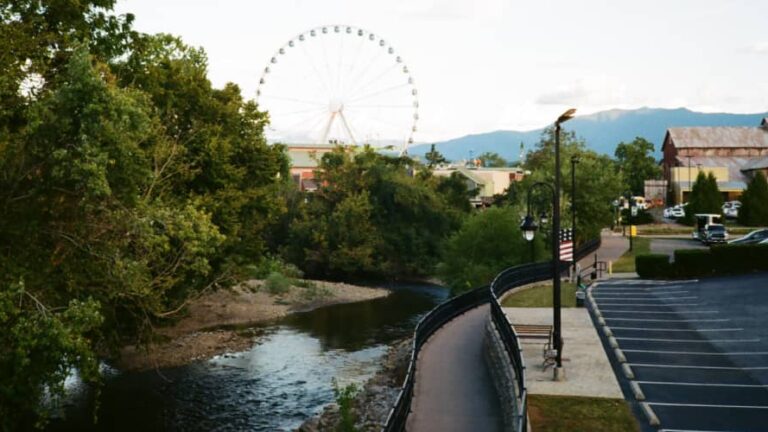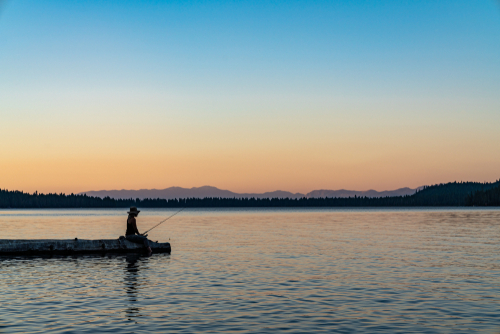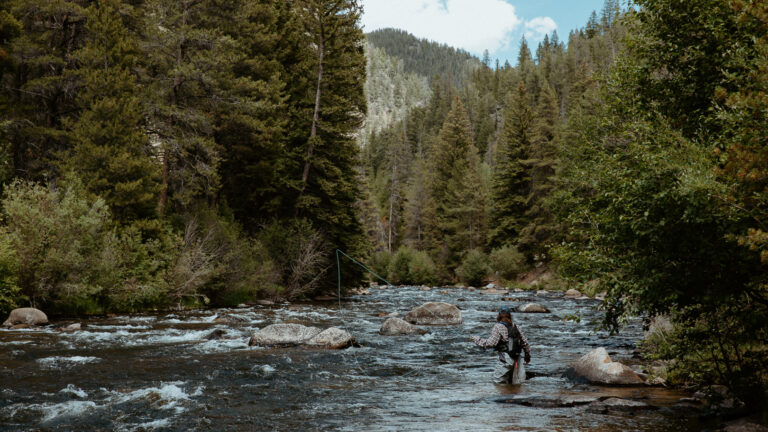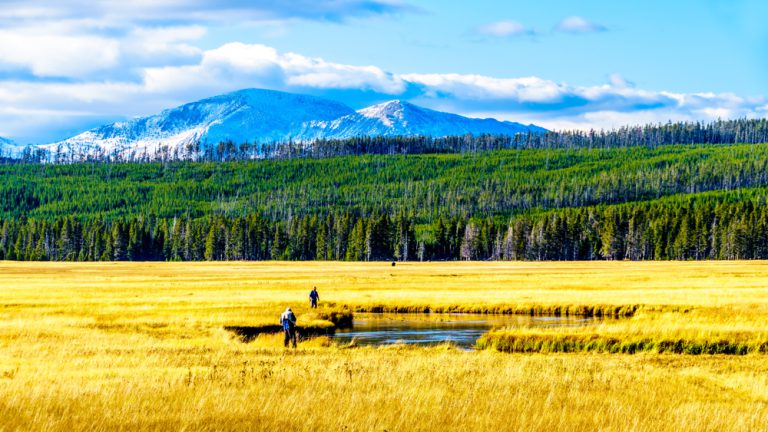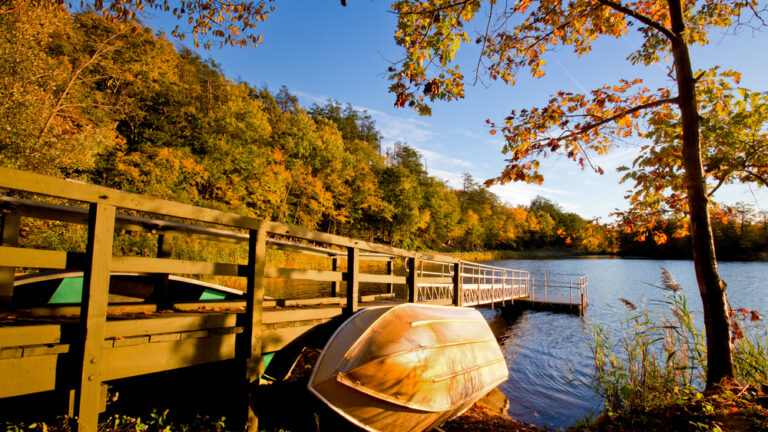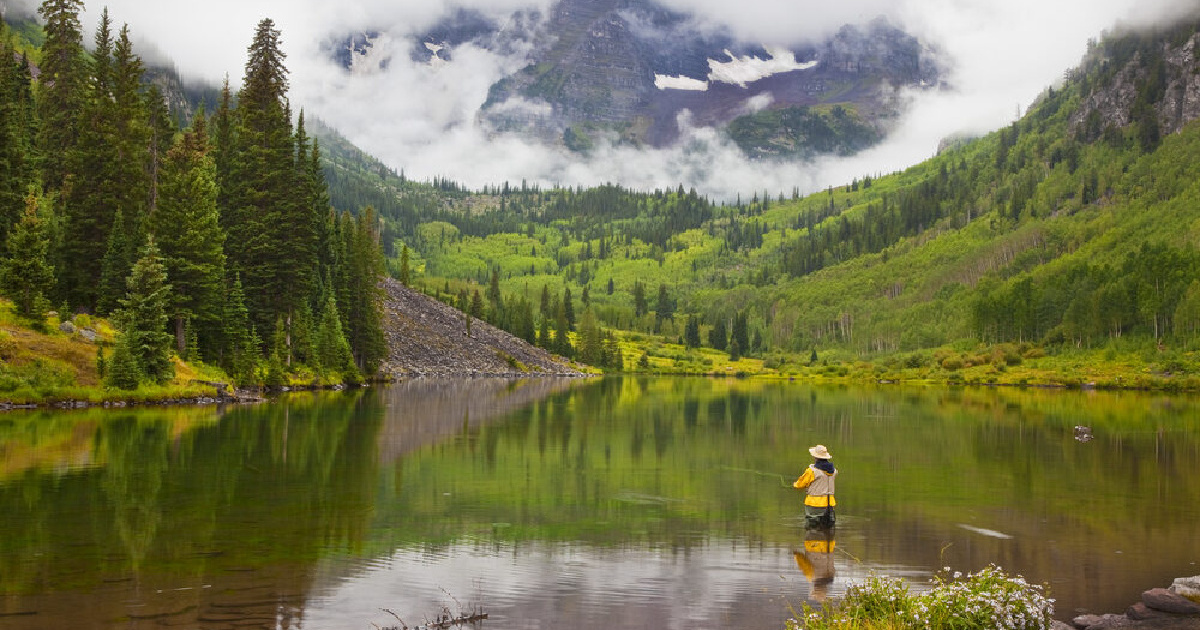
Colorado has plenty of room for anglers to roam. The state has more than 6,000 miles of fishable streams and over 1,300 lakes and reservoirs. Choose from Gold Medal trout tailwaters in the mountains to warmwater reservoirs on the eastern plains. Winter doesn’t stop the fishing either. When the temperatures plummet, anglers simply switch to ice fishing.
That variety is exactly why Colorado is well-suited to an RV trip. You can fish kokanee at Blue Mesa Reservoir, float a Gold Medal stretch of the Roaring Fork River, and drop a line for walleye at Lake Pueblo, and you can carry your rods, waders, coolers, and camp with you the whole way. Below are the best places to fish in Colorado.
Best Places for RV Fishing in Colorado
| Fishing spot | Best for | RV camping experience | Good to know |
| Blue Mesa Reservoir | Kokanee salmon & trophy lake trout | NPS lakeside campgrounds; some electric at Elk Creek, dump stations | State’s largest lake; kokanee peak late summer–fall |
| Roaring Fork River | Gold Medal rainbows & browns | Town base camps (Glenwood Springs/Carbondale) with full-hookup RV parks | Float-friendly; wade access via the Rio Grande Trail |
| Vallecito Lake | Big browns, pike & rainbows | Lakeside private resorts (hookups) plus San Juan NF campgrounds | ~15+ mi NE of Durango; pike best mid-May–mid-June |
| San Juan River (Pagosa Springs) | In-town rainbows & browns | Full-hookup RV parks in Pagosa Springs | Fish downtown, then soak in the hot springs |
| Lake Pueblo | Spring walleye, bass & catfish | State park sites, electric & non-electric, dump stations | Trophy walleye peak Mar–Apr; warmwater year-round |
| Fryingpan River | Trophy tailwater trout | Rustic White River NF campgrounds at Ruedi (no hookups) | Mysis-shrimp fishery below the dam; technical & crowded |
| John Martin Reservoir | Wipers, walleye, crappie & catfish | State park; Lake Hasty electric hookups plus basic long sites | SE plains; reservoir season runs mid-March–October |
| Turquoise Lake | Lake, rainbow & brook trout, kokanee | 8 rustic USFS lakeside campgrounds (no hookups), ~9,900 ft | Summer only; developed sites only, no dispersed camping |
| Chatfield Reservoir | Trout, walleye & bass | State park, full & electric hookups near Denver | Full hookups seasonal; tall rigs use Plum Creek entrance |
| Cherry Creek Reservoir | Walleye, trout, bass & crappie | State park, mostly full hookups, minutes from Denver | Easy metro-Denver base camp |
Blue Mesa Reservoir
Blue Mesa Reservoir, in the Curecanti National Recreation Area near Gunnison, is the largest body of water in Colorado. Over 3 million kokanee salmon are stocked annually at this lake, and it remains the state’s premier kokanee fishing spot. The prime time for fishing for these salmon is from late summer into fall: kokanee stack up in big pre-spawn schools in late July and August, and snagging season runs November 1 through December 31. The reservoir also holds the state-record kokanee at just over 7 pounds, though most run considerably smaller.
Blue Mesa is just as well known for its lake trout. The state actively manages the balance between kokanee and lake trout, and it’s not unusual to catch trout over 24 inches, with true trophies topping 30. Blue Mesa is also a solid spot for ice fishing for yellow perch once the basins freeze.
RV Trip Snapshot
- Base camp: The National Park Service runs about ten campgrounds along the reservoir. Elk Creek is the largest, open year-round, and the go-to for RVers who want hookups. Loop D has 30- and 50-amp electric sites plus a dump station, right by the visitor center, marina, and boat ramp.
- Fishing access: Lake Fork and Stevens Creek sit directly on the water with dump stations and boat-ramp access, but no hookups.
- RV notes: Stevens Creek can accommodate rigs over 35 feet. Sites are open and sunny and this is high sagebrush country with little shade. Plan for wind and sun.
- Best for: Anglers who want to camp lakeside with a boat ramp just steps away. Book Elk Creek Loop D if hookups matter; most other sites are first-come, first-served and fill fast in summer.
Roaring Fork River
The best fishing on the Roaring Fork River is from the confluence with the Crystal River near Aspen to where it meets the Colorado River near Glenwood Springs. This lower stretch got a Gold Medal recognition from the state. That’s a designation reserved for waters that produce at least 60 pounds of trout per acre and at least 12 trout of 14 inches or longer per acre. An upper section near Aspen is also designated Wild Trout Waters, meaning the trout reproduce naturally rather than coming from a hatchery. Many anglers find these wild fish more challenging to catch.
The lower river is big, wide, and best experienced by drift boat, though the Rio Grande Trail offers easy wade and shore access along the bank. Expect rainbows, browns, and mountain whitefish, with the largest fish in the system living in this lower stretch.
RV Trip Snapshot
- Base camp: There’s no campground on the riverbank itself, so anglers camp in Glenwood Springs or Carbondale, where private RV parks offer full hookups.
- Fishing access: Take a day trip from camp to boat ramps and Rio Grande Trail access points; the lower river’s depth and current make it ideal for floating.
- RV notes: Highway 82 makes for easy towing between towns and access points. You don’t have to navigate rough forest roads.
- Best for: Anglers who want a comfortable town nearby with restaurants and services, and who plan to float or wade a world-class Gold Medal river by day.
Vallecito Lake
Vallecito Lake sits in the mountains northeast of Durango, formed by damming the Los Pinos River, known locally as the Pine, along with Vallecito Creek. You’ll find excellent fishing for large brown trout throughout the year, and northern pike are most active from mid-May through mid-June. Rainbow trout fishing can also be superb, and the lake holds kokanee salmon. It’s a great launch point for backcountry fishing in the surrounding San Juan National Forest and the Weminuche Wilderness. Just be sure to fish only from public land.
There are lots of options for campgrounds in Durango and the surrounding areas. You’ll also be near Mesa Verde National Park, so it’s definitely worth taking some time to explore the cliff dwellings.
RV Trip Snapshot
- Base camp: The Vallecito Lake area has private lakeside resorts and campgrounds with hookups, plus U.S. Forest Service campgrounds in the San Juan National Forest for a more rustic stay.
- Fishing access: Many sites put you within walking distance of the shoreline; a marina rents boats and sells tackle.
- RV notes: The lake sits at about 7,800 feet, so nights are cool even in summer. Roads in are paved and manageable for most rigs.
- Best for: Families who want a scenic lakeside base with a choice between full hookups and forest camping, plus Mesa Verde as a nearby day trip.
San Juan River
The San Juan flows right through downtown Pagosa Springs, and a public stretch runs through the heart of town — you can fish it, break for lunch or a soak in the hot springs, and get right back on the water. The Colorado water here is stocked with trout every summer through the Pagosa Quality Fishing Project, and it’s a friendly spot for rainbows and browns, with the occasional big fish landed in town.
South of Pagosa Springs, the river enters the Southern Ute Indian Reservation, where fishing requires tribal permission and a separate license. The San Juan’s most famous water — the legendary tailwater holding thousands of trout per mile — lies farther downstream below Navajo Dam, across the line in New Mexico, so a day trip there calls for a New Mexico license.
RV Trip Snapshot
- Base camp: Pagosa Springs has full-hookup RV parks within minutes of the in-town water.
- Fishing access: You can fish the public stretch right from downtown; Forest Service campgrounds up the river’s forks offer quieter water if you’re willing to drive.
- RV notes: Town access is easy and paved, so reaching the town fishing spots is simple even in a larger rig.
- Best for: Anglers who like the idea of fishing a few hours, soaking in the hot springs, and returning to camp — all without moving your RV much.
Lake Pueblo
If you love to catch big walleye and wonder where to fish in Colorado for the species, head to Lake Pueblo near Pueblo in March and April. While you can still get bites during the summer, the fishing typically slows during the warmer months. This lake in Lake Pueblo State Park has special walleye regulations, including size limits and a spring spawning closure near the dam, designed to protect the fishery. For fall walleye, try live-bait rigs or trolling crankbaits. Lake Pueblo is also a prime spot for bass, bluegill, wiper, and catfish, and it never freezes, so you can fish it year-round.
You can camp at Lake Pueblo State Park, and there are electric hookups, plus water and dump stations at many sites. There are also lots of campgrounds in Pueblo where you can stay.
RV Trip Snapshot
- Base camp: Lake Pueblo State Park has more than 400 campsites across several loops, with electric and non-electric options and dump stations. The Northern Plains and Arkansas Point loops sit close to the boat ramps.
- Fishing access: You can fish the reservoir, the ponds, and the Arkansas River right inside the park.
- RV notes: Reservations are recommended in the busy summer season. A daily park pass or annual CPW pass is required to enter.
- Best for: Warmwater anglers who want easy hookup camping a short walk or drive from the water, especially for the spring walleye run.
Fryingpan River
The Fryingpan River is a Gold Medal River near Basalt that originates in the Hunter-Fryingpan Wilderness, managed by the White River National Forest. This river contains two different parts, separated by the Ruedi Reservoir. Catch the biggest trout with Mysis shrimp flies by fishing below the dam, but be forewarned that this area can get very crowded. While most anglers head to this location to fish for brown trout, cutthroat, rainbow, and brook trout are also caught in this river.
Below the dam, the river is managed under special regulations: artificial flies and lures only, catch-and-release for all trout except a small allowance for brown trout under 14 inches. Always confirm current rules with Colorado Parks & Wildlife before you go.
RV Trip Snapshot
- Base camp: The White River National Forest runs several campgrounds around Ruedi Reservoir, just upstream of the tailwater. Expect rustic sites with no hookups. Basalt has commercial RV options for hookups.
- Fishing access: Camping near Ruedi puts you just minutes from the tailwater’s public access points.
- RV notes: Fryingpan Road follows a narrow canyon — fine for most rigs, but drive slowly and watch for anglers parked along the shoulder.
- Best for: Fly anglers who want to wake up near a legendary tailwater and don’t mind trading hookups and amenities for proximity to the water.
John Martin Reservoir
One of the best reasons for fishing in Colorado at John Martin Reservoir near Hasty is the variety of fish caught throughout the season. Start in spring by fishing for crappie and saugeye. The most popular time to go fishing at this reservoir is early to mid-summer when the bass and wipers are biting. Even on the hottest days of the summer, night fishing for catfish can be great. Finally, when the days begin to cool, the crappie start biting again.
You can camp at the state park while you fish in this reservoir.
RV Trip Snapshot
- Base camp: You can camp right at John Martin Reservoir State Park. Lake Hasty Campground, below the dam, has electric hookups, showers, and a dump station; the Point Campground offers basic sites that handle long rigs.
- Fishing access: Fish the main reservoir from shore or boat, or fish Lake Hasty just below the dam, which is stocked with trout.
- RV notes: The reservoir’s boating season runs roughly mid-March through October (it’s closed November 1 to mid-March), though Lake Hasty keeps sites open year-round.
- Best for: Warmwater anglers and birders looking for uncrowded southeastern-plains water with hookup camping on site.
Turquoise Lake
Turquoise Lake, high in the Rockies near Leadville, is a beautiful spot for paddleboarding, kayaking, swimming, and fishing. You’ll find several varieties of trout, and the lake is also stocked annually with kokanee salmon. Nearby Twin Lakes is another excellent fishing spot, and the surrounding area has smaller ponds that make great places for kids to fish.
There are lots of campgrounds in the Leadville and Twin Lakes areas. You’ll also find dispersed camping in the San Isabel National Forest.
RV Trip Snapshot
- Base camp: Eight developed U.S. Forest Service campgrounds ring the lake, with roughly 300 sites total. These are rustic, no-hookup sites, so plan on dry camping. Note that camping here is limited to the developed campgrounds; there’s no dispersed camping right at the lake, though you can find it in the surrounding San Isabel National Forest.
- Fishing access: Many sites sit just feet from the shoreline, and two boat ramps serve the lake.
- RV notes: At nearly 9,900 feet, the campgrounds are closed for winter, and nights are cold even in July.
- Best for: Anglers who want stunning high-alpine lakes and don’t need hookups.
Chatfield Reservoir
Chatfield Reservoir, in Chatfield State Park southwest of Denver, is a convenient fishing spot close to the city. Fish from shore or get out on the water by boat. You might land rainbow trout, walleye, small and largemouth bass, wiper, or panfish.
RV Trip Snapshot
- Base camp: The state park has 197 campsites across four loops. All have electric hookups year-round, and many add full hookups (water, sewer, electric) seasonally from mid-April to mid-October. The campground has an on-site dump station and is pet-friendly. You can also find campgrounds in Denver that aren’t too far away.
- Fishing access: All sites are within walking distance of the reservoir, with two boat ramps and a fishing pier.
- RV notes: GPS often misroutes drivers headed here, so check the park’s directions first. Rigs taller than about 13 feet should use the Plum Creek entrance.
- Best for: Denver-area anglers who want full-hookup convenience minutes from the city.
Cherry Creek Reservoir
Cherry Creek Reservoir at Cherry Creek State Park is another fishing area close to Denver. You might catch walleye, rainbow trout, largemouth bass, or crappie either from shore or in a boat on the reservoir. The campground at Cherry Creek has full hookups and is pet-friendly.
RV Trip Snapshot
- Base camp: The park’s campground has about 100 sites, most with full hookups, plus showers, laundry, and a dump station. It’s pet-friendly, with an off-leash dog area nearby.
- Fishing access: Fish the reservoir from shore or boat; the park sits right on the water.
- RV notes: This is one of the closest full-hookup base camps to downtown Denver, making it great for a quick getaway.
- Best for: Anglers who want a full-hookup site minutes from the metro area.
Where to Fish in Colorado by Region
Colorado’s fishing changes with its geography. The northwestern mountains and the central high country are prime trout territory. The southeastern plains are the place for crappie, catfish, walleye, and wipers. The high mountain lakes of southwestern Colorado are ideal for cutthroat trout. And for smallmouth bass, head to the Front Range reservoirs north of Denver — Horsetooth, Carter, and Boyd near Fort Collins and Loveland.
How to Plan an RV Fishing Trip in Colorado
Here’s what you need to know to plan an RV fishing trip in Colorado.
Choose an RV-Friendly Base Camp
Where you park affects your whole trip. A few things to weigh:
- Proximity to the water: State parks like Lake Pueblo, Chatfield, and Cherry Creek let you camp within walking distance of the fishing. At Blue Mesa and Turquoise, NPS and Forest Service campgrounds put you right on the shoreline.
- Hookups vs. rustic: Front Range and plains state parks offer electric and full hookups. Mountain and Forest Service campgrounds — Ruedi, Turquoise, most of Curecanti — are typically dry camping, so plan for your water and power needs.
- Reservations: Popular summer weekends fill early, especially at reservable NPS and state park sites. Book ahead where you can; arrive early for first-come campgrounds.
- Elevation and season. High-country campgrounds near Leadville and Gunnison are summer-only and can stay cold into July. Plains reservoirs and Front Range parks stretch the season into spring and fall.
Pack Your RV for a Fishing Trip
Colorado’s mountains can go from sunny to stormy in minutes, so pack for a range of weather:
- Layers and a rain shell for fast-changing mountain weather
- Sturdy, waterproof footwear for muddy spring banks and rocky shorelines
- Waders for tailwaters like the Fryingpan and Roaring Fork
- A cooler for the catch and a grill for cooking at camp
- Strong sun protection. UV is intense at altitude
- Your Colorado fishing license (plus a New Mexico or tribal license if you’re crossing into that water)
- Ice-fishing gear (auger, shelter, sled) if you’re coming in winter, plus warm clothing and sun protection
Know Before You Go
- License required – Anyone 16 or older needs a valid Colorado fishing license; youth 15 and under fish free. Buy online before you head out, since retailers are scarce in remote areas.
- Special regulations – Gold Medal waters like the Fryingpan and Roaring Fork are usually artificial flies and lures only, with reduced limits. Rules are posted at access points and vary by stretch.
- Tribal and out-of-state water – The San Juan below Pagosa runs through the Southern Ute Indian Reservation, and tribal permission and a license are required. The famous tailwater below Navajo Dam is in New Mexico.
- Boat inspections – Aquatic nuisance species inspections are mandatory before launching at many waters, including Blue Mesa and Lake Pueblo.
- Seasonal access – High-country roads and campgrounds can stay snowed in past Memorial Day, and afternoon thunderstorms build quickly in summer.
For current regulations, licenses, and stocking reports, always check the official Colorado Parks & Wildlife fishing page before your trip. Check out rentals in Colorado on RVshare for your next fishing trip.