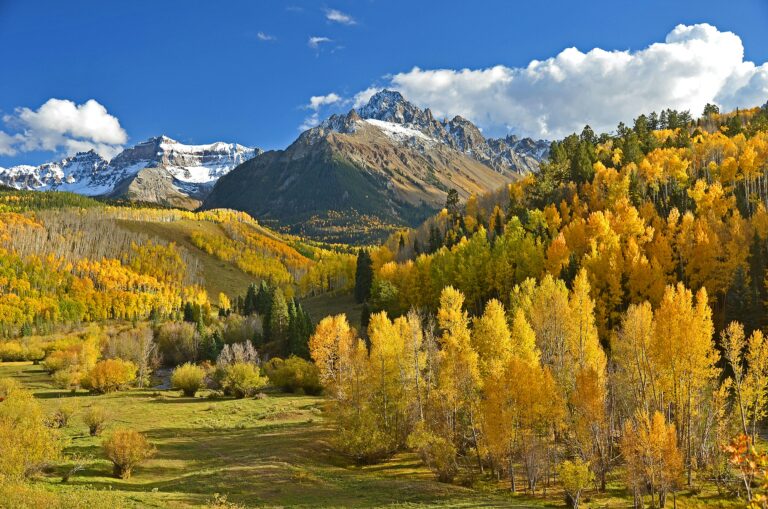
Full-time RV living in Colorado is legal but heavily regulated by local city and county zoning laws that vary significantly across the state. Most urban areas like Denver prohibit RV parking on streets for more than 72 hours and restrict on-property habitation to just 28 days per year. Rural areas offer more flexibility for property owners who comply with local zoning regulations. Colorado requires motorized RVs to carry a minimum liability insurance policy, and trailer towing laws mandate that trailers over 3,000 pounds have brakes. The combined vehicle-trailer length cannot exceed 70 feet; the maximum width is 8.5 feet; the maximum height is 14.5 feet; and safety chains and proper lighting are required. Colorado offers exceptional boondocking opportunities on public lands, including national forests and BLM regions, where you can camp for up to 14 days within any 28-day period before relocating. There are popular sites in the San Juan National Forest, the Pike National Forest near Colorado Springs, and the White River National Forest that provide free dispersed camping with stunning mountain views. Most full-time RVers in Colorado avoid restrictive urban ordinances by staying at long-term RV parks offering monthly or annual rates, frequently moving between campgrounds, or boondocking on public lands while adhering to Leave No Trace principles.
Colorado RV Living: Legal and Illegal Locations At a Glance
| Location Type | Legal Status | Typical Cost/Duration | Restrictions | Best For |
| Long-Term RV Parks | Legal | Varies by park, monthly/annual rates | Some parks have 6-month to 1-year limits | Most practical full-time option |
| Urban Areas: Private Property | Highly Restricted | 28 days maximum per year (Denver); varies by city | Strict enforcement in Denver, Colorado Springs, Fort Collins, Boulder | Short-term only; not viable for full-time |
| Urban Areas: Street Parking | Restricted | 72 hours maximum (24 hours for RVs over 22′) | Must move after time limit; towing enforced | Emergency parking only |
| Rural Areas: Private Property | Generally Legal | Varies by county | Must comply with county zoning regulations | Property owners in rural counties |
| National Forests/BLM Land | Legal | Free, 14-day limit | Must move 25+ miles after 14 days | Boondockers, budget travelers |
| State Parks/National Parks | Legal | $36-41/night typical; permits required | Designated campgrounds only, advance booking recommended | Scenic camping with amenities |
Why Full-Time RV Living Laws Matter in Colorado in 2026
Colorado presents unique challenges and opportunities for full-time RVers. The state’s stunning natural beauty, from the Rocky Mountains to vast high desert, makes it incredibly appealing, but understanding local regulations is crucial since laws vary dramatically from one municipality to another.
Why Colorado is attractive for full-time RVers despite restrictions:
- Unparalleled scenery: Rocky Mountains, national parks, forests, and high desert provide endless exploration
- 300+ days of sunshine annually: Coloradans like to brag that they have more sunny days than San Diego or Miami Beach
- Abundant boondocking: National forests (Pike, San Juan, White River, Roosevelt) and BLM lands offer free dispersed camping
- Outdoor recreation paradise: World-class skiing, hiking, mountain biking, fishing, and climbing
- Central location: Easy access to surrounding Western states
Key challenges:
- Strict urban ordinances: Major cities severely limit RV parking and habitation
- High demand for campgrounds: Popular areas require advance reservations
- Altitude adjustments: RVs may experience reduced power and fuel efficiency at high elevations, people may experience headaches or shortness of breath
- Winter weather: Mountain passes can close, and some campgrounds shut down October-May
- Cost of living: Higher than many states, especially near urban areas
Where Can You Legally Park an RV Long-Term in Colorado?
The rules regarding RV parking vary across Colorado’s cities and counties. Most urban areas, such as Denver, have ordinances prohibiting RV parking in city streets for more than 72 hours. Parking your motorhome in residential zoning areas is unlawful if you don’t have a special permit. However, some rural areas are more lenient. You can park on personal land for longer periods, as long as your RV complies with safety and zoning regulations.
Some counties, including Jefferson County, may allow RVs on private property in specific zoning districts or with temporary use permits. Residential zones often prohibit RV habitation, even with utilities. Be sure you know the rules so you don’t get fined.
What Types of Properties Can You Live on Full-Time in an RV in Colorado?
Here are some of the places you can live in an RV in Colorado.
- Long-term campgrounds: RV parks in Colorado permit longer stays with full hookups and facilities.
- Private land: If you own land in the countryside, you may be allowed to permanently reside in an RV, given that you adhere to the zoning regulations.
- BLM or national forest land: Although these public lands do not grant occupants the right to inhabit them for an extended period, boondocking is possible for shorter periods.
What Are Colorado’s Boondocking and Public Land Camping Regulations?
Boondocking is a popular way to enjoy Colorado’s vast wilderness. The state provides numerous sites for boondocking on public land, especially in national forests and BLM regions. However, you must observe some guidelines. You can’t remain in a single location for more than 14 days within a period of 28 days. After this time, you need to move at least 25 miles away from your original site.
Colorado has abundant boondocking sites from the San Juan National Forest in the southwest to the Pike National Forest near Colorado Springs. These spots offer scenic views, seclusion, and the chance to get close to nature. However, boondocking comes with responsibilities: You must adhere to the Leave No Trace principles, take all your garbage with you when you leave, and ensure your actions do not negatively affect wildlife or the surrounding environment.
Public lands are one of the biggest draws for RVers in Colorado. Sites like the White River National Forest permit free camping in dispersed zones, but individual zones may have their own rules. Some areas may have restrictions due to events like wildfires or droughts, or where there’s a fire risk.
For instance, backcountry camping in Rocky Mountain National Park is permitted but restricted to specific campgrounds and may require a permit, usually during the summer months. It is always wise to book popular places, such as national parks, well in advance.
What Are Colorado’s RV Insurance Requirements?
In Colorado, motorized RVs, like motorhomes, are required by law to carry liability insurance. The minimum coverage you need is $25,000 for injury and for each person, $50,000 for total bodily injury, and $15,000 for property damage. This insurance is required to legally use your RV on the road, and lacking the proper policy may lead to fines or other penalties.
If you are RVing full time, consider getting full-time RV insurance instead of just standard vehicle insurance. This type of coverage protects the RV and the driver, passengers, and belongings inside the RV — factors that are critical if you wish to live in your RV.
What Are Colorado’s Trailer Towing Laws?
State laws require any trailer weighing more than 3,000 pounds to have brakes on all wheels. Furthermore, your trailer should have taillights, reflectors, and other safety signals necessary for visibility on the road.
Colorado allows a maximum towing length of 70 feet, including the towing motor vehicle and the trailer or RV. Failure to comply with these laws can lead to fines and potentially dangerous driving conditions.
Full-Time RVing in Denver
Denver is a great base from which to explore sites like Rocky Mountain National Park and has world-class museums, top-notch restaurants, and various nightlife options. Permanent residency in an RV on the grounds of a property in Denver is not allowed for more than 28 days a year, and parking an RV on a street for more than 72 hours is unlawful.
RVing in Denver FAQs
Denver has designated areas where you can park your RV, but in most places you cannot park your RV on public streets for more than 72 hours. Check signs and local ordinances to be sure.
Denver generally prohibits long-term habitation in vehicles outside of permitted RV parks. Time limits and enforcement vary by zoning district and ordinance, and residents should verify current rules with Denver’s zoning or code enforcement offices.
Full-Time RVing in Colorado Springs
Colorado Springs allows RV parking on private property only where zoning permits, and long-term habitation in RVs is generally restricted outside of licensed RV parks. Staying on private land is allowed if it adheres to city laws. However, you’re still limited to a short amount of time if you park your RV on the street.
RVing in Colorado Springs FAQs
No, RV parking on public roads is not allowed, and one cannot leave an RV stationed for a long time without moving it.
Colorado Springs permits RVs to park on private land if the location is zoned for such use.
Full-Time RVing in Fort Collins
Fort Collins is home to Colorado State University, and has a vibrant downtown with plenty of local breweries. The city’s proximity to the Cache la Poudre River and nearby camping opportunities make it great for RVers.
RVing in Fort Collins FAQs
RV parking is allowed in some residential areas, but only temporarily. Check with local regulations to determine your parking options.
Fort Collins does not permit long-term living in an RV on residential properties.
Full-Time RVing in Boulder
Boulder is an outdoor lover’s paradise, with miles of hiking and biking trails and a laid-back atmosphere. The city is RV-friendly, and several nearby campgrounds are available.
RVing in Boulder FAQs
You cannot park your RV overnight on city streets, but several long-term RV parks in the area accommodate full-time residents.
Boulder’s zoning laws restrict long-term RV living on private land.
How Do You Establish Your Colorado RV Domicile?
You’ll need to handle a few logistical challenges to live full time in an RV in Colorado. You’ll want to set up mail-forwarding services, obtain appropriate health insurance, and learn to manage your RV’s needs, like dumping waste and filling water tanks. Many RV parks offer full hookups, making it easier to manage these tasks, while boondocking requires more planning and self-sufficiency.
Key Takeaways
- Living in an RV in Colorado is legal but varies by local zoning laws—urban areas have stricter regulations than rural ones.
- Colorado requires RVs to have liability insurance and follow specific trailer towing laws.
- Full-time RVers can find long-term options in RV parks, on private land, or through boondocking on public lands.
- Boondocking allows camping for up to 14 days within a 28-day period, with regulations to follow.
- Cities like Denver and Colorado Springs have severe restrictions on RV parking and habitation, making it essential to understand local laws.
RVing in Colorado FAQs
Passengers may sleep in an RV while the driver is driving through the U.S. Passengers must be buckled and in seats, they can’t be in the back laying on beds or couches.
As of 2025, there are no new statewide RV-specific laws. Nevertheless, local ordinances remain dynamic, so it is advisable to consult your city or county.
Yes, but local zoning laws may restrict where you can park your RV for extended periods.
Yes, but there can be some issues with local zoning rules, which might limit where you can leave your RV for a long period of time.
It depends on the city or county. Some areas allow it while others have restrictions.
Most RV parks in Colorado offer year-round accommodations, but some have six-month to one-year restrictions.
Living in an RV in Colorado means lots of independence and stunning views, but you have to be aware of the laws and requirements. Also, you could rent an RV and live in it for a while before you commit to anything more permanent. Whether you’re parked at an urban lot in Denver or roaming free in the wilderness of the Rockies, we hope this guide helps you maximize your RV experience in Colorado.