Winter is in full swing, and if you know anything about me at all, you know I can’t stand to be cold. That’s why my family and I usually head south for the season. There, we find places where we can continue to have adventures without freezing our toes off, including the best warm-weather national parks to visit in winter.
The good news is, there are lots of wonderful places to enjoy warm(ish) weather and sunshine in the great outdoors, right through the coldest months of the year. Many of these are national parks. Often, these parks are more comfortable during the winter months than they are during the summer, and generally speaking, winter means fewer crowds to contend with.
Warmest National Parks to Visit in Winter
Everglades National Park, Saguaro National Park, and Joshua Tree National Park all top the list of national parks with the warmest weather to visit in winter. We’ve also included a few bonus options such as Big Bend National Park, where temperatures can dip but the sun shines all year long.
Without further ado, here are our favorite national parks for warm-weather camping in the winter and beyond.
Big Bend National Park (TX) – Sunny Winter Hiking & RV Options
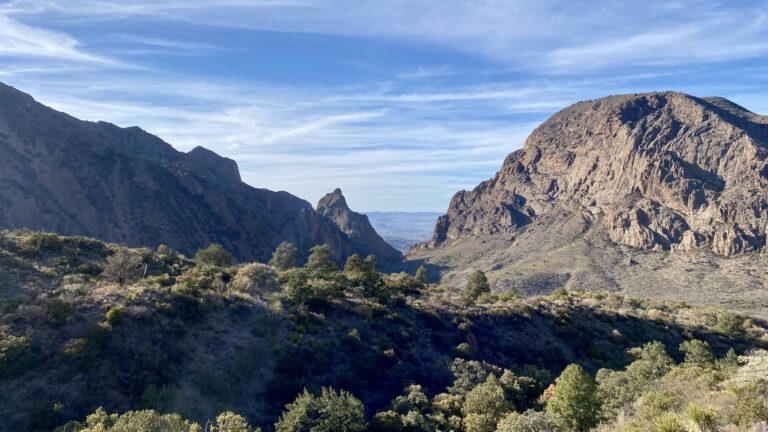
This winter we decided to spend most of our time in the great state of Texas, and one of my favorite stops so far has been Big Bend National Park.
Because we happened to be there during the winter holiday break, it was a tiny bit crowded in places, but the park is so big that it hardly even mattered. We enjoyed hiking in Chisos Basin, hiking through Boquillas Canyon, wading in the Rio Grande, and even soaking in a natural hot spring that we accessed via a walking trail.
On top of all that, we attended two different ranger programs. One was a talk about the history of the park and was pretty good, but the nighttime “star party” was definitely the better of the two. At this second talk, we learned about the planets, constellations, and more. They had high-quality telescopes set up and let everyone have a chance to look at various planets through them. It was definitely a memorable experience.
Warm-Weather Snapshot
We’ll be honest: This park doesn’t have the warmest weather on the list. But it more than makes up for chillier temperatures with its stunning views, sunny skies, and endless hiking trails. We also love the stargazing opportunities here, which are some of the very best in the country, and the opportunity to soak in a natural hot springs. Talk about staying warm and cozy!
Average winter temps:
- Daytime: 50–65 degrees Fahrenheit
- Nighttime: 35–50 degrees Fahrenheit
Best for:
- Families with curious kids eager to learn about nature
- Couples looking for a romantic stargazing-and-hot-springs getaway
- Anyone willing to go off the beaten path
Where to Stay
We stayed in the Rio Grande Village Campground. This is an in-park campground run by the NPS, and it does not offer any hookups at the sites. For this reason, we invested in a portable solar panel and a better battery bank, as well as an inverter. We had also borrowed a portable generator from my mom prior to the trip, which helped a lot here. For the most part, we didn’t have any trouble keeping everything charged and were very comfortable the whole time.
Bathrooms with flush toilets are available in the campground, as are some potable water spigots (though these aren’t meant for filling tanks, so I recommend filling before you arrive) and a dish washing sink (cold water only). There are pay showers and a laundry room at the camp store, along with essentials such as propane, gasoline, diesel, and some food items available for purchase. A dump station is located nearby.
This campground is large but it does book up, as do the other two in-park campgrounds. For this reason, you will either want to book six months in advance when reservations open up, or try your luck 14 days out to see if you can snag one of the sites that is released then. There are no first-come, first-served sites available. I was able to get a site 14 days out, but it required being online and ready to click right at 9am central the day the site was released.
Everglades National Park (FL) – Dry Season RV Travel
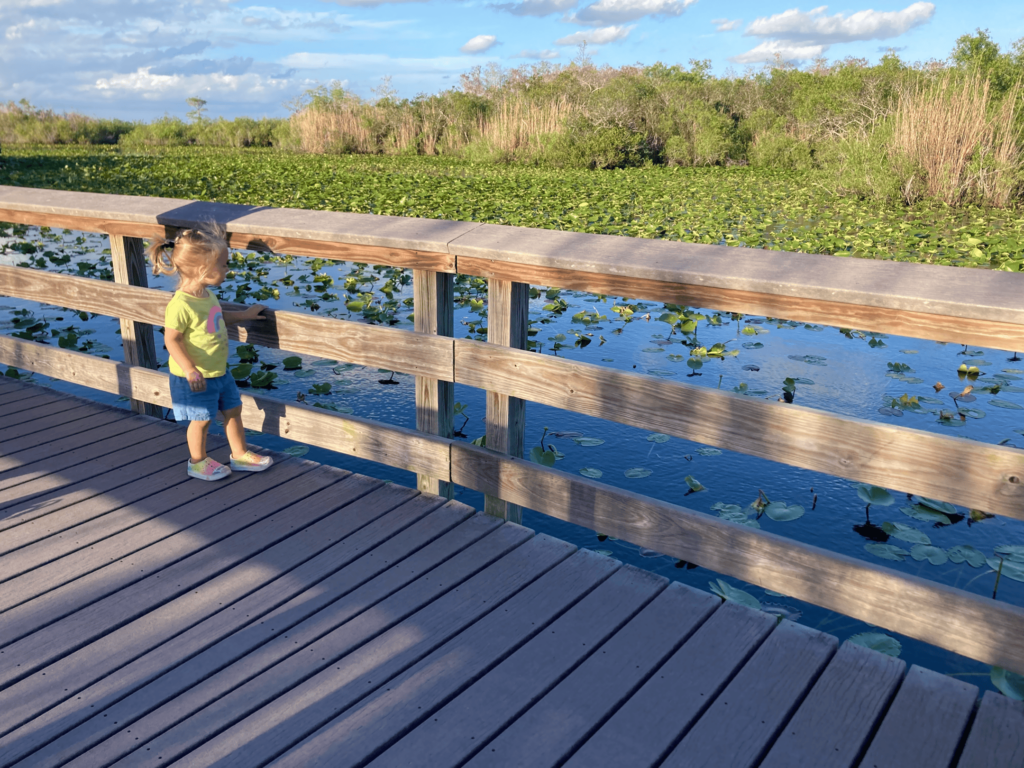
Our favorite place to spend the winter is definitely Florida. Because of this, we have spent many cold months down in the Sunshine State, with many visits made to the wonderful Everglades National Park.
This park is pretty spread out, meaning you can spend several days exploring it all. I highly recommend visiting as many visitor centers as you can. Each one is unique and they all offer wonderful exhibits with great information on the park. I also highly recommend walking some trails. The Anhinga Trail is a favorite of our crew, as it is an easy walk that allows you to see a huge number of beautiful birds, as well as some gators. We have friends who also love biking the Shark Valley Tram Road. We have yet to try it for ourselves though.
One thing we have tried and loved is the nighttime ranger talk, which gives you a chance to walk the Anhinga Trail after dark and see alligators moving around and even hunting. Just make sure to wear long sleeves, long pants, close-toed shoes, and bug spray!
Warm-Weather Snapshot
If you want a warm-weather winter spot, Florida tops just about any list, and the Everglades offer a completely irreplacable Floridian experience. With airboat rides, alligators and endless stars across the humid night air, you’ll feel like you’ve been transported to a different planet in the best way.
Average winter temps:
- Daytime: 72–85 degrees Fahrenheit
- Nighttime: 57–65 degrees Fahrenheit
Best for:
- Reptile lovers (including, maybe, your kids!)
- Dark-sky enthusiasts who want to stay closer to the east coast
- Birders
- Kayakers, canoers, and paddlers
Where to Stay
We haven’t had a chance to stay in the park itself. The sites book up super quickly and I’m just not fast enough. Instead, we have always stayed at Miami Everglades Encore RV Resort.
This campground is included in our Thousand Trails membership with the Trails Collection upgrade, so we only pay $20 a night to stay there. That said, I’d gladly book the place for full price. Either way, make sure you book early; the place always seems busy as far as we can tell.
The campground is in a perfect location that makes it easy to reach Everglades National Park, Biscayne National Park, or the city of Miami. The bathhouses are clean and well kept, as is the laundry room. There is a unique and well-maintained outdoor play area for the kids, and the pool is lovely. Of course, the full-hookup sites are nice as well.
Another option is to stay at the NPS-run Midway Campground. This one is located in Big Cypress National Preserve and does not book up as quickly as the Everglades campgrounds. It’s about half an hour outside of Everglades National Park. Prices are very reasonable, sites include electric hookups, and potable water and a dump station are available onsite.
Saguaro National Park (AZ) – Mild Desert RV Camping
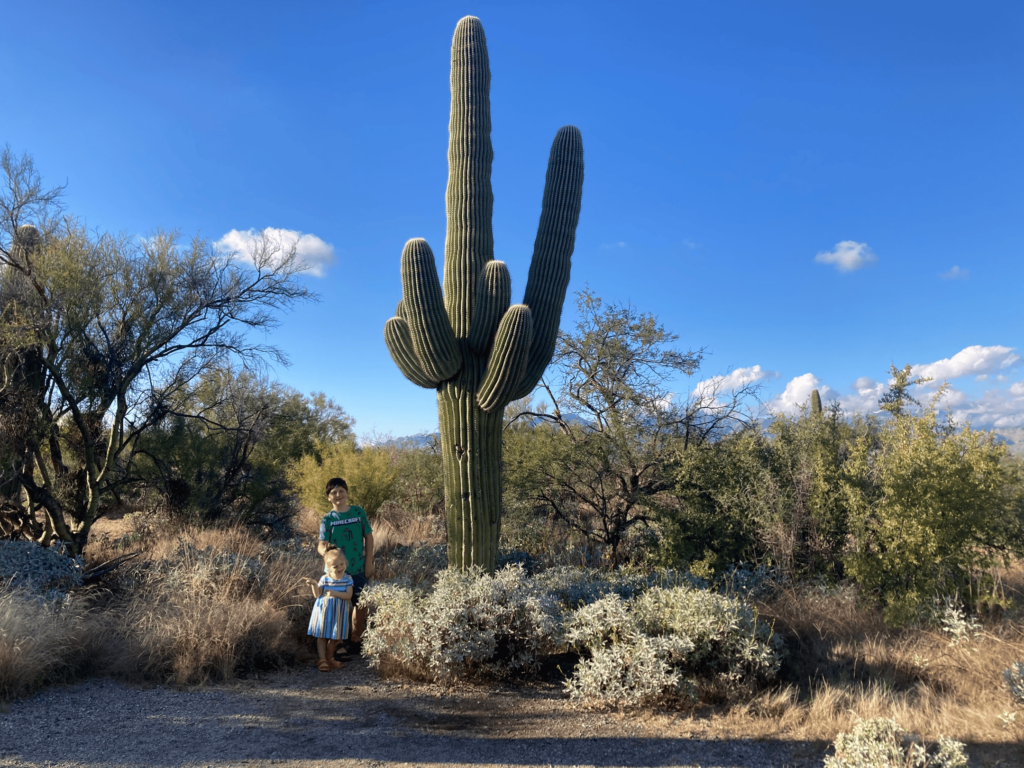
We haven’t spent a ton of time in Arizona. That said, based on the small amount of time we have spent there, I do like the state and wouldn’t hesitate to spend the winter hopping around the Arizona deserts. One of the best places we’ve visited in the state? Tucson and Saguaro National Park.
Unfortunately, we only had a couple of days to explore the park. That said, we thoroughly enjoyed the scenic drives on both sides of the park. We stopped to walk several small paths and read the signage near many of the plants. We also really loved both visitor centers, where we were able to learn a lot about the saguaro cacti, as well as the area.
If we go back, I will make sure to attend a ranger program of some sort. Still, I don’t regret our short visit and I recommend going even if you only have a day or two.
Warm-Weather Snapshot
Southern Arizona is one of the most reliably warm areas in the entire country, and the otherworldly landscape of Saguaro National Park never fails to please. Most families are surprised to learn exactly how tall these towering cacti can grow, and the Arizona-Sonora Desert Museum makes it easy to learn even more about the area. Plus, it’s all just 30 minutes outside of Tucson.
Average winter temps:
- Daytime: 57–69 degrees Fahrenheit
- Nighttime: 40–50 degrees Fahrenheit
Best for:
- Beginning hikers (many easy to moderate trails)
- Urban adventurers who want to day-trip to a wilderness
- Photographers
Where to Stay
Finding a place to stay near Saguaro proved more difficult than one might imagine. The problem with RV parks in Arizona (and one of the reasons we haven’t spent a lot of time in the state) is that many do not allow anyone under 55. Obviously this is a problem for younger people, especially those with kids.
There are a couple of family-friendly private RV parks in Tucson, but the cost to stay at those was way outside of our budget. On top of that, there is no place to camp in an RV within the national park itself. At the time, we had a motorhome with a nice solar setup, so we ended up choosing to boondock just outside of Tucson, where there is a surprising amount of government-owned land.
This was an interesting boondocking experience for us. The sheer number of people parked in the boondocking area made it feel like a sort of community. There were some people who obviously stayed far longer than their 14-day limit, but also some vacationers. Of course, there were also plenty of full timers like us.
It was neat to see how everyone kind of came together. People were having campfires together, sharing generators, and there was plenty of chatting happening all over the little pop-up community.
Joshua Tree National Park (CA) – Boondocking & Clear Skies
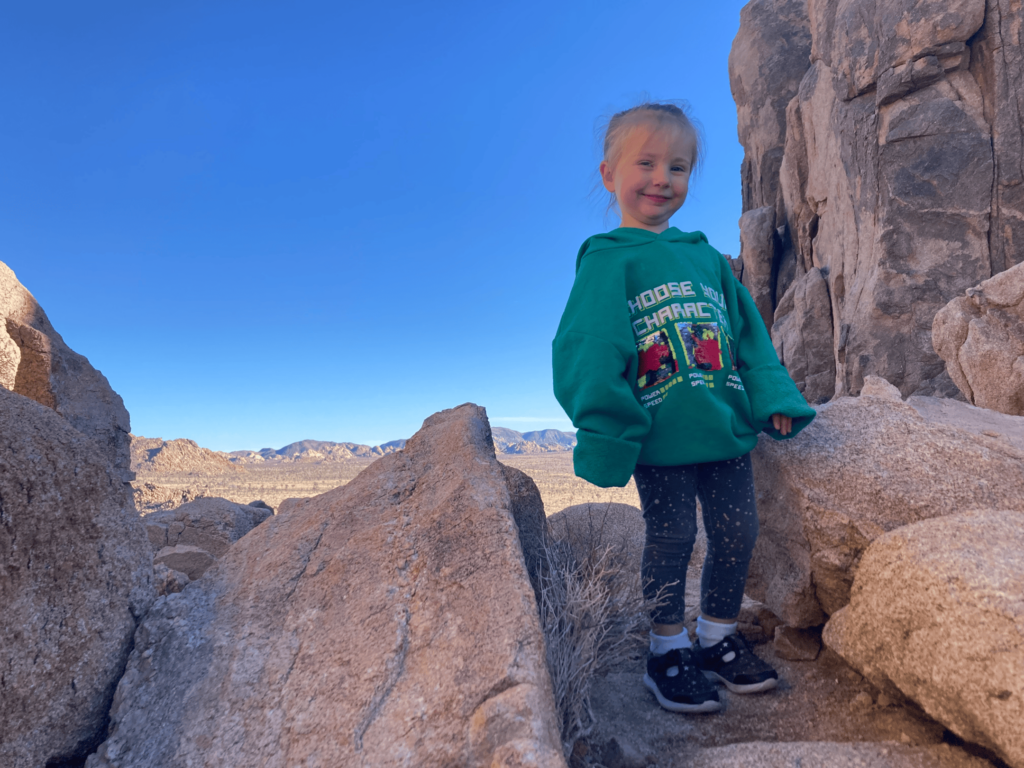
Another park we’ve visited many times during the winter months is Joshua Tree National Park. Located in southern California just outside of Palm Springs, this park is absolutely stunning and a favorite of kids who like to climb. (My kids definitely fall into this category.)
We love driving through the park and admiring the many rock formations, stopping to climb the ones that look most appealing—and yes, this is allowed. Personally, I also find the cactus garden particularly beautiful and love wandering through it, admiring the different cacti there. We haven’t done it yet, but the Fortynine Palms Oasis Trail is supposed to be amazing and is definitely on my to-do list for the next time we get to SoCal.
All that said, our absolute favorite thing to do in Joshua Tree is head there just before sunset, enjoy a picnic dinner while watching the sun go down, and then do some stargazing. Like Big Bend, Joshua Tree is an officially recognized Dark Sky Park, meaning there is very little light pollution there. This makes for some amazing stargazing, especially if you have a telescope. Make sure you go when the moon is new for the best view!
Warm-Weather Snapshot
Southern California is a well-known haven for types who don’t enjoy the cold, and Joshua Tree is a can’t-miss destination for its namesake trees (that are actually a type of large succulent related to yucca). For outdoorsier families, there are plenty of hiking and rock-climbing opportunities, along with ranger-led programs that bring this alien landscape to life for campers of all ages. However, it’s important to understand that in the desert, nighttime temperatures can drop, and even daytime temperatures may feel brisk to some.
Average winter temps:
- Daytime: 60–65 degrees Fahrenheit
- Nighttime: 33–40 degrees Fahrenheit
Best for:
- Rock climbers and bouldering enthusiasts
- Stargazers and night-sky lovers
- Those who don’t mind some chill at night
Where to Stay
Generally, we visit Joshua Tree when staying at Thousand Trails Palm Springs. This campground is included with our Thousand Trails membership, meaning we don’t pay anything to stay there, thus making it a great place to hang out during the winter months.
We like this campground and would recommend it to anyone looking to stay with full hookups in the area of Palm Springs and Joshua Tree. Amenities here include bathhouses with showers, laundry rooms, a playground, a clubhouse, and a pool with a lovely hot tub.
That said, this is far from the only option in the area. Many people we know have boondocked for free on the BLM land just outside of Joshua Tree. Others have stayed at the in-park campgrounds, though it’s worth knowing these can only accommodate smaller rigs. If you’re set up for boondocking and are visiting the area just to see the national park, this might be the way to go.
Now that we have a solar setup, we might give one of those dry camping options a try next time.
White Sands National Park (NM) – Endless Dunes and BLM Camping
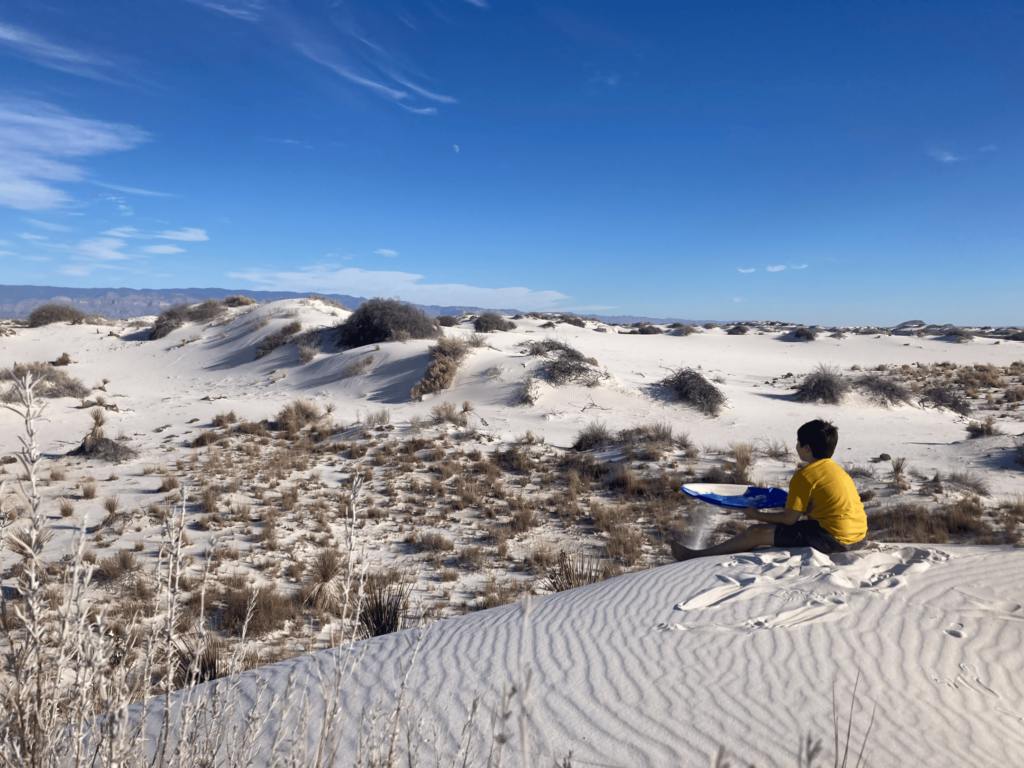
Last on my list is White Sands National Park in New Mexico. This is a small park, and really there aren’t a whole lot of different things to do here. That said, the main thing to do is unique and well worth experiencing.
Our family only spent a single day in White Sands and we felt that was plenty of time. We started at the visitor center, where we watched the park video (highly recommended) and read some displays about how the enormous, soft, pure white sand dunes in the park came to be.
After doing a bit of learning, we grabbed our sled discs, bought a bit of wax, and headed out to the dunes. We found the highest dune we could bring ourselves to climb (this is hard work), waxed the discs, and went sliding down the soft sand. Our kids did this again and again. We also spent a bit of time climbing huge sand structures that were carved by wind and rain but looked like enormous sandcastles.
By the end of the day, we were all thoroughly exhausted—in the best way.
Warm-Weather Snapshot
Another desert destination, White Sands also experiences large diurnal temperature swings, which basically means the daytime highs can be substantially higher than the nighttime lows, which often dip below freezing. First thing in the morning, you may want to bundle up, while at mid-day you may find yourself shedding layers. Still, this one makes our list for its truly incredible scenery, along with the opportunity to sled down gypsum sand dunes. It’s probably not an experience you’re going to have anywhere else!
Average winter temps:
- Daytime: 50–60 degrees Fahrenheit
- Nighttime: 22–35 degrees Fahrenheit
Best for:
- Southwesterners curious to see a unique part of the country
- Those who can handle some cold weather overnight
- Photographers—this truly is a totally unique landscape!
Where to Stay
We needed hookups during the two nights we were in Alamogordo to visit White Sands, so we chose to stay at Oliver Lee Memorial State Park. We had water and electric hookups at our site, as well as access to clean bathrooms with warm showers. It is worth noting though that this is the one place our Starlink internet had issues. I imagine this is because the park is right next to the face of a mountain.
During our stay in the state park, we did notice there were a number of people boondocking right next door. I imagine this is BLM land, and the fact that it is right by the state park dump station is really handy. This could be a good option if you’re looking for dry camping near the national park.
Bonus: Padre Island National Seashore (TX)
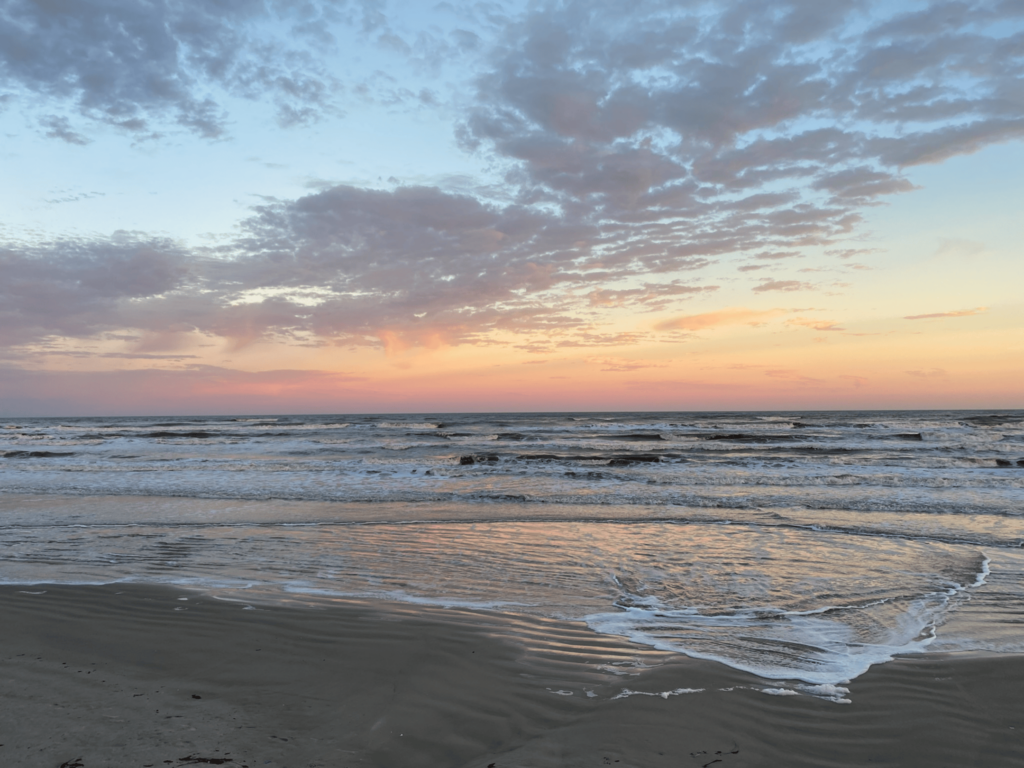
So technically, this isn’t a true national park and I’m not going to spend a ton of time on it, but I had to quickly mention Padre Island National Seashore. We just left this beautiful park a few days ago and we had an absolutely amazing time.
We were able to park right across from the beach, meaning we could actually see the water from our RV! There were a couple of cold days while we were there, but most of the time we were there, the sun was shining and it was warm enough for playing in the super soft sand. One day it was warm enough—despite being in the middle of winter—that people were actually swimming in the ocean.
We went to one visitor center, which was dated but informative, and the ranger there was absolutely fantastic. He chatted with our kids for a solid hour and they learned all about the things that wash up on the beach, the animals that call the island home, and the shipwrecks that happened near the island.
Warm-Weather Snapshot
Mild temperatures, calm waters, and proximity to population centers like Corpus Christi make Padre Island National Seashore the perfect place to enjoy a beachfront holiday season. Along with simply sunbathing and swimming, the area is excellent for fishing, bird-watching and more.
Average winter temps:
- Daytime: 65–75 degrees Fahrenheit
- Nighttime: 54–63 degrees Fahrenheit
Best for:
- Wildlife lovers (birding is popular, and it’s the biggest nesting site of Kemp’s ridley sea turtles)
- Those with 4-wheel drive (who can drive on the beach)
- Anyone who wants to spend the holidays by the ocean
Where to Stay
There are two campgrounds in the park: Malaquite Campground (pronounced “MAL-ah-keet”) and Bird Island Basin Campground. We stayed at the former option, and as I mentioned above, we were literally steps from the beach. There were flush toilets in the campground and cold-water showers were available. There was also a dump station nearby.
It is also possible to boondock on the beach, but many say this is risky due to soft sand and a beach that isn’t necessarily wide enough to avoid high tide.
These are, in my opinion, the best national parks to visit in winter. Obviously, these aren’t the parks to visit if you enjoy true winter weather, but if you’re looking for warm weather and sunshine, these are the winter national parks for you!
Essential Gear for Warm-Weather Winter RV Trips
The right gear can make (or break!) any RV trip. If you’re traveling during the winter, perhaps from a snowier climate to a more mild one, the following gear can help.
- Lightweight clothing along with heavier layers keeps you ready, whatever the weather
- Swim suits for enjoying a dip in the ocean or a hot spring. (These are easy to forget if you’re coming from somewhere cold!)
- High-SPF sunscreen and hats keeps your family’s skin sun-safe.
- Extra water is imperative in warm-weather spots, especially if you’re boondocking.
- Electrolytes are also important to help you stay balanced in hot weather. You can get packets that are easy to add to a bottle of water.
- Hiking gear including boots, poles, and the right clothing will ensure you can make the most of the sunshine.
- Extra propane is another warm-weather winter RV essential if you’re off-grid camping.
FAQ: Winter RV Camping in Warm-Climate Parks
Everglades National Park and Saguaro National Park are usually reliably warm during the daytime, even in the winter. Other desert-area parks, such as Death Valley National Park and White Sands National Park, can get very hot during the daytime but experience major downward temperature swings come nightfall.
Saguaro National Park offers a variety of trails suited for beginner and moderate-level hikers, and daytime temperatures are warm in the summer. There are also nice walking trails (and paddling opportunities) in Everglades National Park.
Inside Everglades National Park, Flamingo Campground has RV sites (T-Loop) with electric hookups, and it’s open all year round. Big Bend’s Rio Grande Village Campground is also open year-round and has full RV hookups.
There you have it: Our very favorite spots to ride out winter weather in warmth. Enjoy the journey!