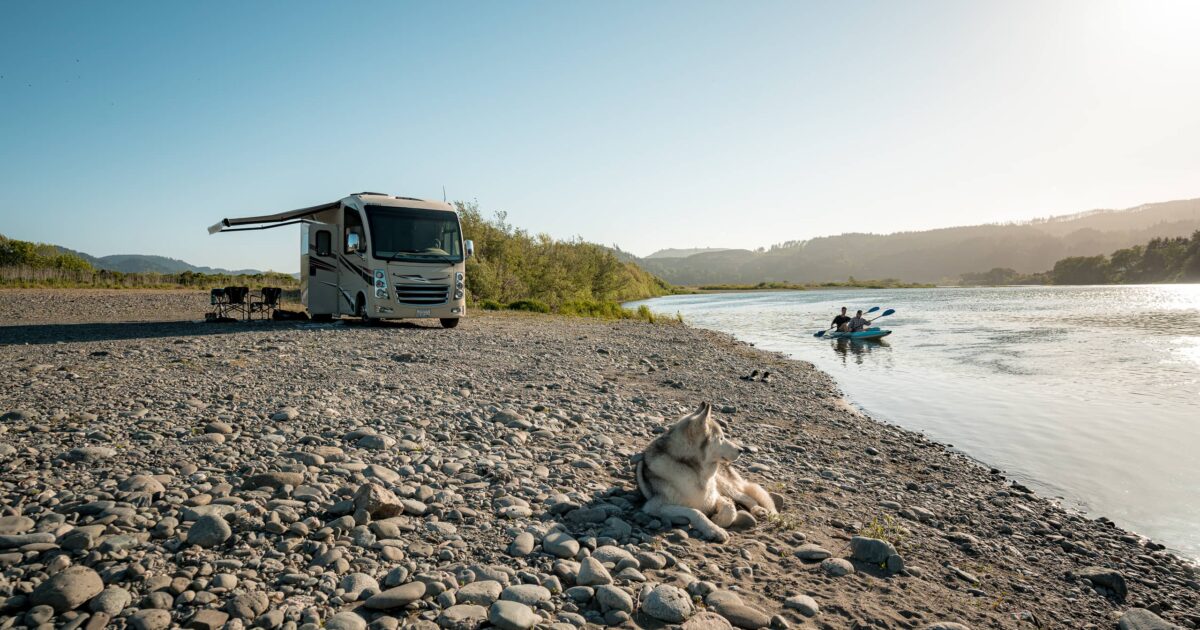
Whe you’re RV camping with pets, be sure to bring your pet’s food and bowls, a leash and collar with current ID tags, a bed or crate, waste bags, up-to-date vet records, and any medications your pet takes. You’ll also want a way to monitor the temperature inside your RV and a plan to keep your pet safe in the heat. Traveling with a pet takes some extra preparation, but with the right gear and a few simple precautions, your dog or cat can be a comfortable, happy road trip companion.
Key Takeaways
- Pack the essentials first: food, bowls, leash, ID tags, a bed or crate, waste bags, and vet records.
- Never leave a pet alone in a hot RV or vehicle. Use a temperature monitor if you need to step away.
- Confirm each campground’s pet policy and any pet fees before you arrive, since rules vary by park.
- Most national parks allow dogs in campgrounds, on roads, and in paved areas, but not on most trails.
- On RVshare, pet policies are set by each owner, so filter for pet-friendly rentals and message the owner before you book.
What Should You Know Before RV Camping With Pets?
RVing camping with your pets is amazing, but there are few things to keep in mind when bringing along your four legged friends. Many of these happen even before you leave on your trip.
Check With Your Vet
Before you head out, stop by the vet to make sure your pet’s vaccinations are all up to date. If you’re traveling to an area that’s known for ticks (who love tall grass and trees), talk to the vet to see if your pet needs flea and tick or heartworm prevention medication.
Get a copy of your pet’s medical records – especially their rabies vaccine – as some pet daycares, groomers, and vets won’t accept new clients without proof of rabies vaccination. It’s best to be prepared in case your pet needs to be groomed or has a medical emergency on the road. Additionally, make sure your pet’s tags are up to date with the correct contact number. Or have them microchipped in case they get lost. If you’ve ever had to deal with a pet emergency on the road, you know it’s not fun. So check for vets near your campground ahead of time just in case.
How Do You Keep a Pet Safe in Hot Weather?
If you’re traveling in summer keep an eye on the temperature, both outside and inside vehicles. Never leave your pet unattended in a car during the summer if it’s not running. The temperatures inside vehicles rise much faster than the outside temperature and can lead to a pet’s death. If you’re going to leave your dog in your RV while you’re gone, use a temperature monitoring tool like these to keep an eye on the inside temperature of your rig. Also, be aware of the outside temperature and the sun if you’re hiking during the hotter months of the year. Bring things like extra water and a collapsible bowl and take breaks in the shade.
Practice Good Pet Camping Etiquette
Make sure to practice good etiquette while RV camping with your pets. First, always clean up after them. While many places have doggie clean-up stations with waste bags, make sure you have a few of your own with you so you’re not caught without them. We want pets to be allowed in campgrounds and on trails, so make sure you’re picking up after them!
If you’re planning to hike with your dog (or cat!), be sure to check that the trails are pet-friendly and if there are leash requirements. Many trails in national parks are not pet-friendly, so respect the rules and find hikes that you all can go on. Check out more tips on how to travel with your dog and 8 Tips for RVing with Your Dog.
What Should You Pack for RV Camping With a Dog?
Packing for an RV camping trip with humans is one thing, but bringing along pets means extra stuff to remember. But don’t worry, we’ve got an RV camping checklist for your pets to help you bring everything you need. Depending on your pet, you might not need everything on this list. And while this is our dog camping essentials list, you can swap out the dog gear for cat gear (or bird or reptile or whatever your pets are).
| Category | What to pack | Why it matters |
| Food & feeding | Pet food, food and water bowls for the RV, collapsible water bowl for hiking, treats | Keeps feeding routines consistent and your pet hydrated on the trail |
| ID & restraint | Collar with current ID tags, leash and harness, travel crate | Required at most campgrounds and keeps your pet safe and secure |
| Rest & comfort | Pet bed, favorite toys | Helps your pet settle into an unfamiliar space |
| Cleanup | Poop bags, towel for muddy paws, pet shampoo and brush, de-skunking shampoo | Good etiquette and easy cleanup after outdoor adventures |
| Health & safety | Vet records, any medications, canine first aid kit | Prepares you for grooming needs or a roadside emergency |
| Monitoring | Pet monitoring camera that connects to your phone, temperature monitoring tool | Lets you check on your pet when you step away from the RV |
| Weather & outdoors | Portable pet fence for outside your rig, jacket and booties for cold weather, dog life jacket for camping near water | Covers changing conditions and keeps outdoor time safe |
Here’s a printable version as well.
How Do You Find Pet-Friendly Campgrounds?
Once you’re packed, it’s time to find a campground. Most RV parks and campgrounds allow dogs, but a few still don’t, so check with the park before you arrive. For those that do welcome pets, confirm any pet fees and ask about amenities. Dog runs, fenced off-leash areas, dog washing stations, and welcome bags are becoming more common, and it pays to know what’s available before you book.
Need inspiration for where to stay? Read about the best campgrounds for dogs, or the top pet-friendly campgrounds in the U.S.
And if you’re planning to visit a national park, keep in mind that most national parks allow dogs only in developed areas such as campgrounds, parking lots, paved roads, and scenic pullouts. They’re not allowed on most hiking trails or in the backcountry. Only two national parks prohibit dogs entirely: Channel Islands in California and Isle Royale in Michigan. A few parks are unusually welcoming, including Acadia in Maine, which has more than 100 miles of pet-friendly trails. Many parks also run a B.A.R.K. Ranger program, where you and your dog take a pledge to follow park rules, including: bag your pet’s waste, always leash your pet, respect wildlife, and know where you can go. Always check the specific park’s website for its pet rules before you go.
Expert Tip
Give your pet a few “practice runs” in the RV before your trip. Let them explore the parked rig with the engine off, feed them a meal inside, and take a short local drive so the space and motion feel familiar. Pets that have already spent calm time in the RV tend to settle faster once you’re on the road. If your pet is anxious about driving, an RVshare delivery rental lets the owner bring the RV to your site so your pet skips the drive entirely.
Common Mistakes to Avoid
- Not telling the RV owner you’re bringing a pet – On RVshare, pet policies are set by each owner, and they vary. Bringing an undisclosed pet can violate the rental terms and lead to extra cleaning or deposit charges. Confirm the policy and message the owner before you book.
- Assuming national park trails are dog-friendly – Most parks keep dogs out of the backcountry and off most trails. Check the park website first so you’re not turned away at the trailhead.
- Leaving a pet in a hot RV without monitoring. Interior temperatures climb fast. Use a temperature monitor and never leave a pet in a vehicle that isn’t running in warm weather.
- Forgetting vet records – Some campgrounds, groomers, and emergency vets ask for proof of rabies vaccination before they’ll help.
- Skipping the campground pet-policy check – Confirm pet fees, leash rules, and any breed or size limits before you arrive.
Frequently Asked Questions About RVing With Pets
Yes, in many cases you can bring your pet along. Pet policies are set by each RV owner, so filter your search for pet-friendly rentals and read the listing carefully. Message the owner to confirm their policy and share details about your pet before you book.
Extra fees for a pet depend on the owner. Some charge a pet fee or deposit, and some don’t. Check the listing details and ask the owner directly so there are no surprises.
You can only leave your dog alone in the RV briefly and safely. Use a temperature monitor to watch the interior temperature, and never leave a pet in an RV or vehicle that isn’t climate-controlled in hot or cold weather.
Dogs are welcome in most parks in developed areas like campgrounds, parking lots, and paved paths, but not on most trails or in the backcountry. Two parks – Channel Islands and Isle Royale – prohibit dogs entirely, while Acadia is unusually dog-friendly. Always check the specific park’s website.
To help an anxious pet ride in an RV, introduce the RV gradually with the engine off, then take short drives before your trip. If driving with your pet feels stressful, consider a delivery rental so the owner brings the RV to your campsite.
Yes, you need your pet’s vaccination records. Bring current records, especially proof of rabies vaccination, in case you need a groomer, daycare, or emergency vet on the road.
Ready to Hit the Road? Search pet-friendly RV rentals on RVshare and find a rig that welcomes your whole family.