Connecticut has a surprising amount of fishing spots for a small state. In a couple of hours, you can go from a cold, world-class trout tailwater in the northwest hills to the largest lake in the state, then out to the tidal edge of Long Island Sound. That variety makes Connecticut a great spot for a fishing trip.
However, these spots are spread across the state, and many of the best ones sit near small New England towns rather than big cities. That’s where an RV comes in handy. You can camp on the riverbank where the trout are, keep your rods, waders, and coolers organized in one place, fish first thing in the morning without a long drive, and move your whole base camp from the hills to the shoreline when you want.
Below are seven of Connecticut’s best fishing destinations, each with an honest look at what the RV camping is really like nearby.
Best Places for RV Fishing in Connecticut
| Fishing spot | Best for | RV camping experience | Good to know |
| West Branch Farmington River | Trophy trout, fly fishing | Riverside state-forest sites at Austin Hawes; dry camping, rigs to ~35 ft | Cold tailwater fishes well all summer; catch-and-release and barbless sections |
| Candlewood Lake | Smallmouth & largemouth bass, trophy trout | No lakeside camping; base at a nearby private RV park | State’s largest lake; public access at Squantz Pond and boat launches |
| Quinnipiac River | Stocked trout (Meriden gorge); tidal bluefish & perch | Urban river; day-trip from a nearby base camp | Trout upstream in Meriden; saltwater species near New Haven Harbor |
| Bantam Lake | Northern pike, bass | Rustic lakeside sites at Point Folly; better for smaller rigs | Largest natural lake; pike run 10–15 lb; seasonal pike rules |
| Mill River (Fairfield) | Wild-trout fly fishing, catch-and-release | No riverside camping; day-trip from a Fairfield-area campground | Two year-round Trout Management Areas; barbless, artificial-only upper section |
| Mashapaug Lake | Bass, trout, walleye | Day-use park; base at nearby Quiet Corner RV parks | Remote Bigelow Hollow; mostly boat-access shoreline; bass slot limit |
| Quinebaug Lake | Largemouth bass, clear-water fishing | Day-use; rough launch road; base at Killingly-area parks | Electric motors only; car-top boat access |
Fishing Spots in Connecticut
Here are some of the best fishing spots in Connecticut. You’ll find a variety of fish to catch in the state, and you can enjoy the beautiful New England scenery and Connecticut campgrounds as well.
West Branch Farmington River
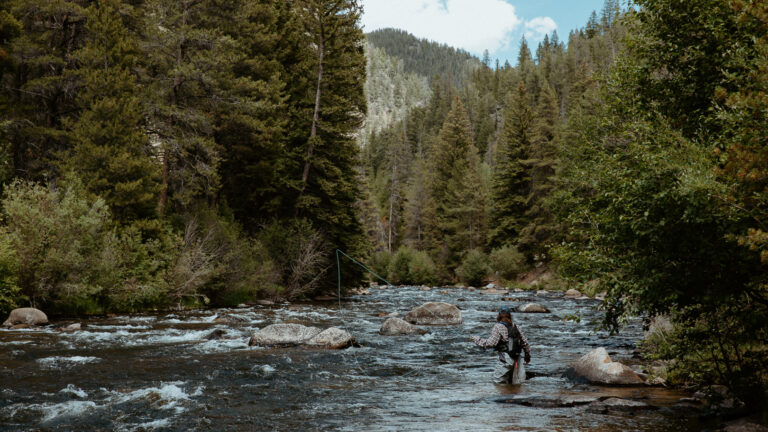
The West Branch of the Farmington River, from Riverton down to New Hartford, is Connecticut’s premier trout stream and one of the best in the Northeast. It’s a tailwater, so a roughly 200-foot-high dam releases a steady flow of cold water year-round and keeps the river near 50 degrees even in summer. That makes the trout fishing consistent through spring, summer, and fall, when most other Connecticut rivers get too warm.
The river is heavily stocked and also holds wild fish, with plenty of browns in the 12- to 14-inch range and others that run much larger. Fly anglers dominate here. Match your dry fly to what’s hatching that day — sulphurs, Hendricksons, and small patterns like the Griffith’s gnat are all worth carrying. Be aware that parts of the Trout Management Area have special rules, including catch-and-release stretches and a section that requires barbless hooks, so check the signs and the current regulations before you fish.
You’ll find campgrounds in Hartford that are great choices for RVers.
RV Trip Snapshot
- Base camp: Austin F. Hawes Memorial Campground, in American Legion State Forest in Barkhamsted, sits right on the West Branch, so you can camp within walking distance of the water.
- Fishing access: Excellent. Some sites are steps from the river, and the surrounding state forest offers miles of access.
- Hookups: This is dry camping, so sites have no electric, water, or sewer hookups. There’s a dump station and water spigots on the grounds, so plan to arrive with full fresh water and be self-contained.
- Access & size: Two gravel loops handle RVs up to about 35 feet. The season runs roughly mid-April through Columbus Day.
- Best for: Trout anglers who want to fish first thing in the morning and don’t mind trading hookups for a riverside site.
Candlewood Lake
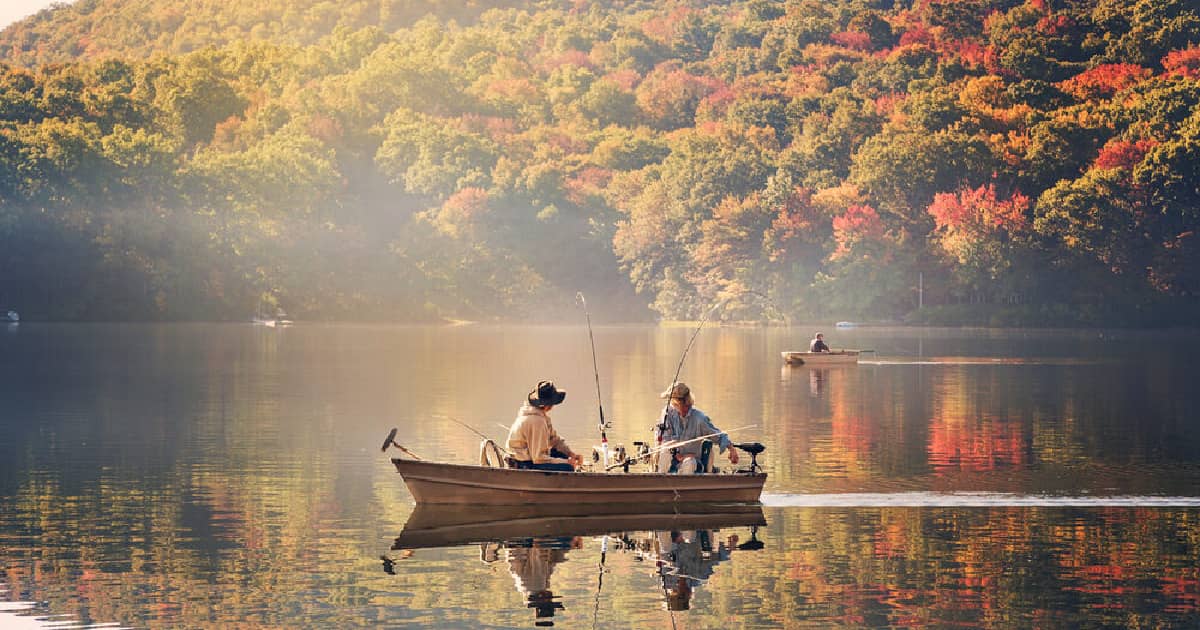
Candlewood Lake near Brookfield is the largest lake in Connecticut, and it’s bordered by Brookfield, Danbury, New Fairfield, New Milford, and Sherman. It is also consistently ranked as one of the top bass lakes in the state. It’s especially known for smallmouth bass, thanks to a lake bottom full of submerged roadbeds, foundations, ledges, and other structures left over from the town that was flooded to create the reservoir in the 1920s. The lake also has excellent largemouth fishing.
Candlewood is also one of Connecticut’s Trout Management Lakes. The state stocks it with brown and rainbow trout, and the deep, cold water grows some large fish.
RV Trip Snapshot
- Base camp: There are no campgrounds on Candlewood itself because the roughly 75-mile shoreline is almost entirely private homes and utility land. The nearest currently open state campground is Lake Waramaug State Park in New Preston (about a 30-minute drive). It has tent and RV sites, showers, and a dump station; the closer Kettletown State Park in Southbury is closed through the 2026 season after flood damage. Several private full-hookup RV parks in the Danbury and New Milford area are the other option.
- Fishing access: From your base, launch at the public boat ramps like Lattins Cove in Danbury and the Squantz Cove launch in New Fairfield. Squantz Pond State Park is the main public shoreline access, with a boat launch and a fishing platform, but it’s day-use only.
- Hookups: Full hookups at the private parks; nothing lakeside.
- Access & size: Standard for a commercial RV park. Squantz Pond’s day-use lot fills fast on summer weekends, so arrive early.
- Best for: Anglers who want big-lake bass and trout with full-service camping and don’t mind putting the boat on a trailer to take to launch.
Quinnipiac River
The Quinnipiac gives you two different fishing experiences on one river. Upstream around Meriden, the state stocks the river gorge, from Carpenter’s Dam down to the Red Bridge, with trout each year. That makes this a popular spring trout run with easy trail access along the Quinnipiac River Gorge Trail. Farther downstream toward North Haven and New Haven, the river changes. Anglers will find white perch and striped bass, and where the river turns tidal near New Haven Harbor, bluefish fishing can be outstanding.
Because the trout water and the saltwater species are in different stretches, it helps to decide which fish you want before you go. The upper gorge is the trout destination, while the lower, tidal river is the bluefish-and-perch destination.
You’ll also find campgrounds in New Haven that put you close to the river.
RV Trip Snapshot
- Base camp: This is an urban and suburban river, so you can’t camp on its banks. Treat it as a day trip from a regional base camp in central Connecticut.
- Fishing access: Good and walkable in the Meriden Gorge via the riverside trail; bank and boat access toward New Haven for the tidal stretch.
- Hookups: N/A at the river. Hookups depend on the park you base from.
- Access & size: City parking and trailheads; not an RV-in-the-lot situation. You’ll likely want a tow vehicle so you can park the rig at camp and drive in.
- Best for: Anglers already touring central Connecticut who want an easy spring trout morning or a shot at tidal bluefish.
Bantam Lake
Bantam Lake, near Litchfield, is the largest natural lake in Connecticut. Its claim to fame is northern pike. The state considers Bantam one of its most successful pike projects, and people regularly catch fish in the 10- to 15-pound range. It’s also strong bass water for both largemouth and smallmouth and hosts numerous bass tournaments each season, plus crappie, perch, and panfish for anyone who just wants steady action.
Pike fishing here follows specific seasonal rules, with a closed period in early spring and size and creel limits that change through the year. Be sure to check the current pike regulations before you target them. The Route 209 state boat launch is one of Connecticut’s designated accessible fishing sites.
RV Trip Snapshot
- Base camp: Point Folly Campground, run by the White Memorial Foundation, sits on a peninsula that juts right into Bantam Lake. It’s about as close to the water as camping gets in Connecticut. A second White Memorial campground, Windmill Hill, is about a mile away in pine woods.
- Fishing access: Excellent. You can fish from the shoreline, tie a canoe or kayak up at the water’s edge, or launch from the on-site marina and boat launch. Motorboats are allowed on the lake.
- Hookups: Limited and rustic, and facilities are basic, with pit toilets, a dump station, and a small camp store. This suits smaller, self-contained rigs rather than big rigs needing full hookups. Confirm exactly what your site offers when you book.
- Access & size: Peninsula sites, early May through Columbus Day. Reserve ahead since weekends sell out.
- Best for: Pike and bass anglers who want to camp on the water and don’t need full hookups.
Mill River
The Mill River in Fairfield County is a small, pretty fly-fishing stream with two distinct Trout Management Areas, both open year-round. Like the Farmington, its upper reaches are a cold tailwater, fed from the bottom of Easton Reservoir, which keeps water temperatures trout-friendly.
The upper Wild Trout Management Area, in Easton, is catch-and-release only, with a single barbless hook and artificial lures only. It holds wild, spooky brown and brook trout that need a careful approach. The lower Trout Management Area is more forgiving: from September 1 through the third Saturday in April it’s catch-and-release with artificial lures or flies, and after opening day anglers can use bait and keep fish. It’s a compact, popular stretch, so expect company while you fish.
RV Trip Snapshot
- Base camp: There’s no camping on the river. Fish it as a half-day outing from a base camp in the Fairfield County area.
- Fishing access: Good foot access along both TMAs; the lower section sits within open space that’s also popular with walkers and cyclists.
- Hookups: N/A at the river.
- Access & size: Small roadside pull-offs and trailheads. You’ll want to leave the rig at camp and drive a tow vehicle.
- Best for: Fly anglers who want quiet, technical wild-trout water and are camping near the coast anyway.
Mashapaug Lake
Mashapaug Lake is a 287-acre lake inside Bigelow Hollow State Park near Union, and is one of the quietest, most scenic places to fish in Connecticut. It’s managed as a bass lake, and the clear, deep water also holds trout and walleye. The state stocks brown and rainbow trout in spring and walleye in the fall, and yellow perch are plentiful.
Much of the shoreline is only reachable by boat, so a canoe, kayak, or small boat is the best way to fish. There are two boat launches in the park.
RV Trip Snapshot
- Base camp: Bigelow Hollow is a day-use park with no camping. Base at a Quiet Corner RV park a short drive away. Beaver Pines Campground, a small family-run park on Route 198 in Woodstock, has electric-and-water sites, showers, laundry, and a camp store. Larger full-hookup parks are available elsewhere in the Woodstock area.
- Fishing access: Two boat launches in the park; bank access is limited because most of the shoreline is undeveloped and boat-only.
- Hookups: None in the state park; nearby private parks offer electric and water, with full-hookup options a bit farther out in the Woodstock area.
- Access & size: Bring a paddlecraft or small boat to reach the good water. The park itself is remote, with spotty cell coverage.
- Best for: Anglers who want a peaceful, scenic day of bass, trout, or walleye fishing and a full-service campground within a short drive.
Quinebaug Lake
Also in the Quiet Corner, Quinebaug Lake is a small, exceptionally clear 88-acre lake managed for bass. Largemouth are the main draw, with chain pickerel, bluegill, and a few smallmouth as well. Because the water is clear and the bottom is mostly sand and gravel with sparse weeds, fish are less tied to heavy cover — anglers often do well working crankbaits and topwater plugs across open water. The state also stocks brown and rainbow trout here on occasion.
RV Trip Snapshot
- Base camp: Quinebaug Lake State Park is day-use only, with no camping or swimming. Base at one of the area’s full-hookup private parks, such as Stateline Campresort in East Killingly or Gibson Hill RV Park in nearby Sterling.
- Fishing access: Car-top boat launch only. The lake is for non-motorized and electric-powered boats, and doesn’t allow gas engines. Plan on a canoe, kayak, or a boat with an electric motor.
- Hookups: Full hookups at the nearby private parks; none at the lake.
- Access & size: The access road to the boat launch off Shepard Hill Road can be rough, especially after rain, and isn’t suited to towing a big rig down to the water. Leave the RV at camp and bring a car-top boat.
- Best for: Anglers who like small, quiet, clear-water bass fishing from a paddlecraft and are already exploring the Quiet Corner.
How to Plan an RV Fishing Trip in Connecticut
Here are a few tips for planning an RV fishing trip in Connecticut.
Choose an RV-Friendly Base Camp
Connecticut’s public and private campgrounds mean very different trips, and it’s worth knowing the difference before you book. State park and forest campgrounds, like Austin Hawes, tend to be rustic. Expect dump stations, restrooms, and limited or no electric and water at the site rather than full sewer hookups. They also often restrict RV length, usually to around 35 feet, and limit the season to spring through mid-fall. The trade-off is that they’re the way to camp right on the water. Private parks, common in the Litchfield Hills and the Quiet Corner, often have full hookups, big-rig access, and longer seasons, but are usually a short drive from the fishing.
Book state campgrounds and popular lakeside sites well ahead, since riverside and peninsula spots sell out fast on summer weekends. If you want to visit several fishing areas in one trip, a full-hookup base camp in a central spot can be easier than moving the rig every night.
Pack Your RV for a Fishing Trip
Connecticut’s mix of cold trout tailwaters, big warmwater lakes, and tidal saltwater means doing a little planning before you pack will pay off later.
- Two setups if you can – You’ll want a light fly rod for the Farmington and Mill River, and a spinning/baitcasting rod for lake bass, pike, and the tidal Quinnipiac.
- Waders and layers – The tailwaters run cold (around 50 degrees) even in summer, and mornings in the hills are chilly.
- A canoe, kayak, or car-top boat – It’s almost essential on Mashapaug and Quinebaug, where the best water is boat-access, and useful on Candlewood and Bantam.
- An electric trolling motor for Quinebaug, where gas engines aren’t allowed.
- A cooler and cleaning setup so you can keep and grill your fish back at camp.
- Bug spray – Riverside and lakeside sites can attract bugs in summer.
- The current regulations and your license
Know Before You Go
Anyone 16 or older needs a valid Connecticut fishing license, available online through CT DEEP. Trout and salmon waters, including the Farmington, Mill River, and Quinnipiac Trout Management Areas, also require a separate Trout and Salmon Stamp on top of the basic license. Regulations vary by water and even by section. Some stretches are catch-and-release with barbless, artificial-only rules; pike and other species have seasonal closures and size limits; and tidal water near Long Island Sound follows marine fishing rules. Seasons, limits, and stocking change year to year, so confirm the current rules for your specific spot with CT DEEP before you go.
Two programs are worth knowing about if you’re traveling with kids or new anglers. DEEP’s Community Fishing Waters program stocks lakes and ponds in urban neighborhoods across the state. You’ll find trout in spring and channel catfish by early summer, and many of these spots are easy to reach, some even by public transit. And if you want to try something unusual, Connecticut has two designated Atlantic Salmon Management Areas on the Naugatuck and Shetucket rivers, where the state stocks surplus broodstock salmon.
Find an RV for Your Connecticut Fishing Trip
Connecticut’s best fishing is from the Litchfield Hills to the Quiet Corner to the Long Island Sound shoreline, and an RV makes it easy to get to those places. It lets you camp on the riverbank at the Farmington, park a full-service base camp near Candlewood or in the Quiet Corner, and carry every rod, wader, cooler, and paddlecraft you need without cramming it into a car trunk. You can fish without a long drive, cook your catch at the site, hit several areas on one trip, and bring the whole family along.
When you’re ready to plan the trip, rent an RV in Connecticut and set up your camp near the water. For more help, check out RVshare’s guide to RV camping in Connecticut.