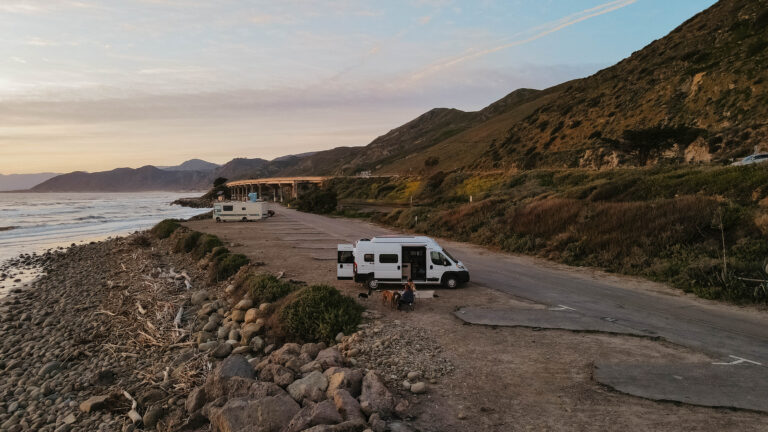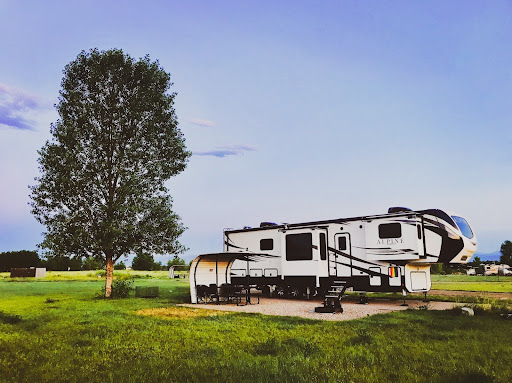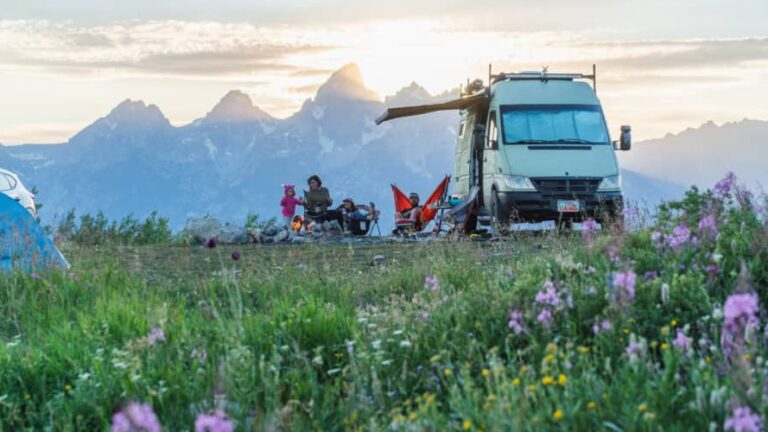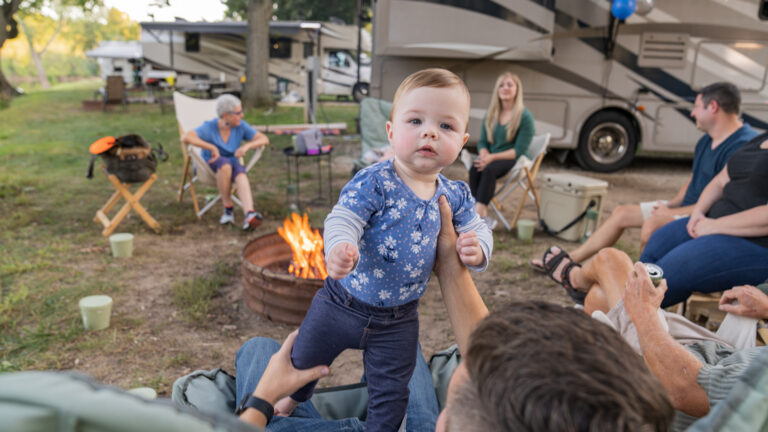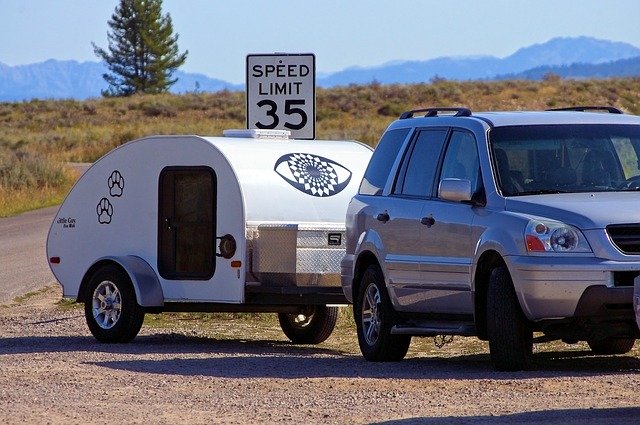
Teardrop campers combine the basic comforts of RV travel — a real bed, shelter from the elements, and a camp kitchen — in a package small enough to tow behind almost any vehicle. They were enormously popular from the 1930s through the 1960s before oversized motorhomes took over the market. Now, the minimalism movement, the rise of van life culture, and a renewed taste for vintage aesthetics are driving a genuine teardrop resurgence — and modern versions far outperform their predecessors.
Teardrop Camper Features At A Glance
| Feature | Entry-Level Teardrop | Mid-Range Teardrop | Premium Teardrop |
| Price (new) | $5,000–$15,000 | $15,000–$30,000 | $30,000–$55,000+ |
| Weight | 400–1,500 lbs | 1,500–2,500 lbs | 2,500–3,500 lbs |
| Sleeping | 2 people | 2–3 people | 2–3 people |
| Kitchen | Rear galley only | Galley + fridge | Full indoor kitchen |
| Bathroom | None | Some include wet bath | Full wet bath + shower |
| Tow vehicle | Car, motorcycle, small SUV | SUV or light truck | SUV or half-ton truck |
What Is a Teardrop Camper?
Teardrops are lightweight, towable travel trailers built around a distinctive teardrop-shaped profile. Classic models are 8–10 feet long and 4–6 feet wide — essentially a sleeping compartment with a rear hatch kitchen, but modern teardrops have grown considerably. Premium models like the TAB 400 stretch to 18 feet with a wet bath, full kitchen, and dinette.
What all teardrops share is a focus on simplicity. There’s no slideout to deploy, no leveling system to fiddle with, and no canvas to dry out before storage. You back into a campsite, open the rear hatch, and you’re done. Inside, most teardrops offer a comfortable mattress, LED lighting, electrical outlets, and enough storage for everything you actually need. The rear hatch opens into a galley kitchen — typically with a camp stove, cooler or fridge, and storage — allowing you to cook without going inside the trailer at all.
Pros of Teardrop Campers
There are plenty of pros of teardrop campers:
- Easy towing: Entry-level and mid-range teardrops are towable by standard cars, crossovers, and small SUVs. You won’t need a truck. The aerodynamic teardrop profile also reduces drag compared to boxy trailers, which means a smaller hit to your fuel economy.
- Simple setup: There’s nothing to assemble. Park, open the hatch, and start cooking. Teardrops are the fastest-setup RV type on the market.
- Low cost of entry: Basic teardrops start around $5,000 — far less than any Class B campervan or Class C motorhome. Even mid-range models with wet baths and full kitchens run $15,000–$30,000.
- Easy storage: A small teardrop fits in a standard garage. No storage unit fees, no worrying about exterior exposure.
- Hard-sided comfort: Unlike pop-up campers, teardrops have hard walls — which means better insulation in cold weather, better heat management in summer, and a lockable space for your gear.
- Aesthetics: The retro teardrop silhouette is a fun look, and pretty cute to boot.
Cons of Teardrop Campers
While the size does have its benefits, it also has a few disadvantages that are dealbreakers for some people.
- Limited sleeping space: Most teardrops sleep two comfortably, three at a stretch. If you’re traveling with a family or a group, a travel trailer or Class C will serve you better.
- No bathroom on many models: Basic and mid-range teardrops don’t have onboard bathrooms. You’ll need to plan for campground facilities or choose a premium model with a wet bath.
- What you see is what you get: Unlike pop-ups, there’s no fabric expansion to create more living space. Interior dimensions are fixed — typically 4–5 feet of interior height on entry models, although premium models can be 6–7 feet.
What Does a Teardrop Camper Cost?
Teardrop camper prices vary more than most people expect and are influenced by the camper’s size, amenities, and materials. Here’s a range of camper prices:
- Entry-level – Entry-level campers can range from $5,000–$15,000. These are basic models with a sleeping space for two, a rear galley kitchen, and LED lighting. They’re most often ultralight builds under 1,000 lbs that tow behind a car. These campers are best for minimalists, solo travelers, and weekend campers.
- Mid-range – Mid-range campers run $15,000–$30,000. They have more interior headroom, better insulation, small kitchenettes, and some models even have wet baths or dinettes. Weights on these campers typically run 1,500–2,500 lbs.
- Premium – Premium campers are $30,000–$55,000 and up. You’ll find full indoor kitchens, queen beds, wet baths, dinettes, solar power, Bluetooth entertainment, and premium cabinetry. Models like the nuCamp TAB 400 and Little Guy MAX are on par with entry-level travel trailers in terms of features while remaining much easier to tow.
Can You Build Your Own Teardrop Camper?
Yes, you can build your own teardrop camper. In fact, it’s one of the most popular DIY RV projects. YouTube has dozens of complete build walkthroughs, and a bare-bones DIY build can be done for as little as $500. However, $2,500–$3,000 is a more realistic budget for a finished, comfortable result.
If you want a head start, DIY teardrop camper kits include all the materials and instructions you need to assemble your own trailer. Base model kits are available for under $3,000 from builders like Big Woody Teardrop Campers, Chesapeake Light Craft, and The Teardroppers. Most offer options to add extras such as insulation, wiring, and interior finishes so you can build to your exact specs.
Teardrop vs. Pop-Up: Which Is Right for You?
Both teardrops and pop-ups are compact, affordable, and towable by regular vehicles — but they work differently.
Pop-ups collapse flat for towing and expand at camp with a fabric roof and canvas walls. They offer more interior headroom and a tent-camping feel. However, the canvas requires maintenance, can get cold in winter and hot in summer, and must be dried completely before storage in wet weather.
Teardrops are hard-sided and ready to use the moment you park. They’re better insulated, lockable, and require almost no setup. The tradeoff is that the interior dimensions are fixed. Since they’re hard-sided instead of fabric, the space you see in photos is exactly the space you will have.
For families wanting more room, pop-ups win. For couples and solo travelers who want simplicity and all-season comfort, teardrops are usually the better choice.
Do Teardrop Campers Hold Their Value?
Teardrop campers tend to hold their value well – much better, comparatively, than pop-up campers or expensive RVs and motorhomes. In fact, the increasing popularity of teardrop campers is a good thing and could help your teardrop camper hold its value even better.
The Best Teardrop Campers You Can Buy in 2026
Once you start looking at the different teardrop trailers available in the rental or for-purchase market, you’ll notice a wide variety. Although there aren’t as many teardrop trailer manufacturers as there are makers of Class A or Class C motorhomes, there are a growing number of makers who specialize in these popular little trailers.
inTech Luna Rover — Best Panoramic Design
$24,000–$30,000
The inTech Luna’s most distinctive feature is a massive panoramic windshield spanning the entire front of the trailer. It lets in natural light and offers views no other teardrop matches. Built on a fully welded all-aluminum cage frame with a one-piece fiberglass roof, it has a construction quality that’s way above its price point.
At 16 feet and 1,850 lbs dry, this trailer tows behind most crossovers and small SUVs without issue. Standard equipment includes 8,000 BTU AC, MaxxAir vent fan, rear hatch outdoor kitchen with a 40qt 12V cooler and stainless steel cooktop, a 32″ Bluetooth TV, and USB outlets throughout. Sleeps two.
Pros: Unique panoramic windshield; all-aluminum construction; widely available at national dealers; strong value
Cons: No bathroom; 4’7″ interior height means most people can’t stand upright
nuCamp TAB 400 — Best for Extended Trips
$48,000–$56,000 (2026)
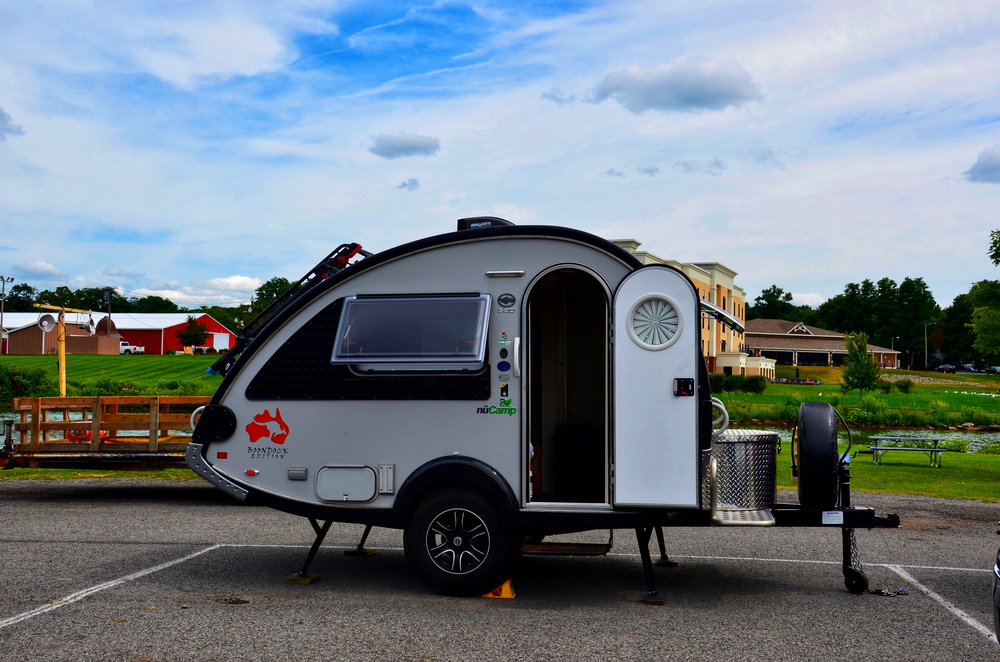
The TAB 400 is nuCamp’s flagship teardrop and the most fully equipped model on this list. The trailer is 18 feet and approximately 2,885 lbs. It includes a full wet bath, queen sleeping area, dinette that converts to a bunk, galley kitchen with 2-burner stove and 4.6 cu. ft. 12V compressor fridge, 310-watt solar panel standard, and an Alde central heating and hot water system. The trailer is built with Ohio-Amish craftsmanship in Sugarcreek, Ohio.
The Boondock package comes standard, adding off-road tires and a pitched axle. The optional Black Canyon upgrade adds a second solar panel, tank heaters, and underglow lights. It requires a capable SUV or half-ton truck.
Pros: Most complete feature set in any teardrop; strong nationwide dealer network; exceptional build quality; excellent resale value
Cons: Heaviest and most expensive on this list; needs a serious tow vehicle
Timberleaf Classic — Best Handcrafted Build
$24,150+
Built one at a time in a Grand Junction, Colorado workshop, the Timberleaf Classic is a great example of handcrafted teardrop quality. The team mills and finishes their own hardwoods, hand-seams every aluminum panel, and assembles each component individually. The result is a 1,500 lb fully insulated trailer with a rear galley kitchen, exterior access hatch, and three suspension packages.
This trailer is available in a range of exterior colors with a clear-anodized aluminum top. Long lead times are common and are a sign of the brand’s reputation.
Pros: Exceptional craftsmanship; genuinely handcrafted one at a time; strong off-road capability with upgraded suspension packages
Cons: Long lead times; no bathroom; rear galley only — minimalists only
Modern Buggy Big Buggy BB17 — Best Value with a Wet Bath
$28,995
The Modern Buggy Big Buggy BB17 is one of the best-priced teardrops with a wet bath standard. The trailer is built for off-road use with a rugged chassis, Dometic climate system, large refrigerator/freezer, and a dinette conversion. It’s inexpensive while still delivering the bathroom most buyers want.
Pros: Wet bath standard at a competitive price; off-road capable; readily available at dealers now
Cons: Less brand heritage than nuCamp or Timberleaf; heavier than comparable teardrops
Bean Trailer (Meaner Bean) — Best Off-Road Capability
$35,000+
Bean Trailer builds the Meaner Bean from a one-piece molded fiberglass shell, and no seams means no water intrusion points. The current redesigned Meaner Bean features a new air suspension system, 21–22 inches of ground clearance, armadillo-coated stand-on fiberglass fenders, rock sliders, a fully articulating hitch coupler, and a reinforced frame designed for serious backcountry use. The dry weight is approximately 2,000 lbs.
Galley options include a premium kitchen with stainless steel counter, a solid surface backsplash, a stainless steel sink with an 18-gallon water tank, and a cooler/fridge rack. Built in Salt Lake City, Utah, with a limited lifetime warranty against water intrusion through the one-piece fiberglass shell.
Pros: Most capable off-road teardrop on this list; one-piece fiberglass construction; lifetime water intrusion warranty; outstanding owner reviews
Cons: No bathroom standard; higher price for the footprint; small operation means longer lead times
Vistabule — Best Interior Livability
$23,995+
Built by a small family-owned operation in St. Paul, Minnesota, the Vistabule takes a fundamentally different approach to the teardrop interior. Six windows — including a massive front panoramic pane — make the interior feel genuinely open. The sleeping area converts to a daytime living space with a flip-up bed and drop-down table. The rear galley opens wide with side doors for indoor/outdoor use, and windows fold down for blackout coverage at night.
This trailer is custom-built using handcrafted wood elements sourced from Great River Woodworking in Scandia, MN. The Vistabule has an active owner community, regular group rallies, and a newer minimalist DayTripper model for weekend-focused buyers. It’s available in multiple colors and is made to order.
Pros: Most livable interior layout on this list; exceptional craftsmanship; strong owner community; more affordable than the nuCamp and Bean
Cons: Small operation means longer lead times; no bathroom; limited dealer availability
Vintage Overland Great Escape — Best Ultralight Minimalist
$21,000+
Vintage Overland hand-builds three teardrop models — the Tuco, Great Escape, and T.E. Lawrence — in Grand Junction, Colorado. The Great Escape is the mid-tier option at approximately 750 lbs, towable by virtually any car with a hitch. It has a Danish-inspired minimalist design with an anodized aluminum exterior, Baltic birch plywood interior, memory foam mattress, LED lighting, solar panel, and Goal Zero generator standard.
This is genuinely bare-bones camping — there’s no galley or bathroom. The philosophy that the trailer is your bedroom and the outdoors is everything else. For solo travelers and couples who want the lightest possible rig and spend their time outside rather than inside, it’s an excellent option.
Pros: Ultra-lightweight at ~750 lbs — tows behind almost any car; handcrafted in Colorado; solar and Goal Zero generator standard; one of the most affordable options here
Cons: No galley, no bathroom — absolute minimalists only; small production volume
Key Takeaways
- Teardrop campers offer the core comforts of RV travel — a real bed, shelter, and a camp kitchen — in a lightweight, hard-sided package that most cars and crossovers can tow without a truck.
- Setup is the simplest of any RV type: park, open the rear hatch, and start cooking. There’s no canvas to dry out, no slideout to deploy, and no leveling system to manage.
- New teardrops range from around $5,000 for basic entry-level models to $55,000+ for premium units with wet baths, full kitchens, and solar. DIY builds are possible for as little as $500–$3,000.
- Most teardrops sleep two comfortably — if you’re traveling with a family or need a bathroom on board, a pop-up or travel trailer is likely the better choice.
- Teardrops hold their value significantly better than pop-up campers and most motorhomes, and their growing popularity is strengthening resale value further.
- For off-road capability, the Bean Trailer Meaner Bean leads the list with 21–22 inches of ground clearance, air suspension, and a lifetime water intrusion warranty on its one-piece fiberglass shell.
- For the most complete feature set, the nuCamp TAB 400 is the standout — wet bath, queen bed, full kitchen, 310-watt solar, and Alde heating in an 18-foot package built with Ohio-Amish craftsmanship.
- Renting a teardrop before buying is one of the best ways to confirm whether the size, layout, and galley setup actually work for how you travel.
Frequently Asked Questions About Teardrop Campers
A teardrop camper is a small, lightweight, hard-sided travel trailer named for its distinctive aerodynamic profile. Most feature a sleeping area inside and a galley kitchen accessible through a rear hatch. They range from super lightweight 216-lb builds to fully equipped 3,000-lb models with bathrooms and full kitchens.
New teardrop campers range from about $5,000 for basic entry-level models to $55,000+ for premium units with full kitchens, wet baths, and solar systems. Used models are widely available at big discounts. DIY builds can be done for $500–$3,000.
The vehicle you will need to tow a teardrop camper will depend on the model. Ultra-lightweight teardrops under 500 lbs can be towed by a standard car or even a motorcycle. Mid-range models (1,500–2,500 lbs) tow well behind a crossover or small SUV. Premium models like the TAB 400 (~2,885 lbs) and Little Guy MAX (~2,320 lbs) are best suited for a capable SUV or half-ton truck.
Most entry-level and mid-range teardrops do not have bathrooms. Premium models — including the TAB 400 and Little Guy MAX — include a full wet bath with toilet and shower. If a bathroom is essential, budget for a premium model or plan to camp at sites with restroom facilities.
Teardrop campers are better than pop-ups in cold weather. Hard-sided construction provides much better insulation than canvas, and premium models include furnaces and four-season packages. Entry-level teardrops are best suited for three-season use.
Yes, you can rent a teardrop camper before buying. Renting before buying is one of the best ways to test whether the size, layout, and cooking setup actually work for how you travel before committing to a purchase.
Ready to try teardrop camping? You can browse teardrop camper rentals on RVshare and find the right rig for your next adventure — search by date, location, and price range, then filter by “teardrop” to see what’s available near you.