Your RV door and RV door locks may not be the most exciting accessories to shop for, but they’re some of the most important. A good-quality door keeps your belongings safe, maintains your RV’s insulation, and gives you peace of mind. This guide covers everything you need to know about RV doors, locks, screen doors, and what to do if something goes wrong with the door.
This post contains affiliate links. RVshare may receive compensation if you make a purchase after clicking on a product or service link.
RV Door Parts At A Glance
| Component | Common Issue | DIY Fix? | Typical Cost |
| Entry door latch | Wear, sagging, breakage | Yes | Low |
| Door hinge | Sag over time | Yes | Low |
| Door holder/catch | Frequent wear | Yes | Low |
| Screen door slide | Cracking, weathering | Yes — no tools needed | Low |
| Screen door latch | Breaking from daily use | Yes — screwdriver only | Low |
| Screen door mesh | Tears and holes | Yes — screen rolling tool | Low |
| Entry door lock | Rekeying, replacement | Yes/No | Varies |
| Full door replacement | Cracks, major damage | Professional recommended | $100–$350+ used |
Understanding Your RV Door Options
RV doors come in more variety than most owners realize. The two most common styles feature either square or radius (rounded) corners. Doors can be fully enclosed or include a glass panel to let in natural light. Knowing your door type matters when you’re shopping for replacements or upgrades.
RV Entry Door
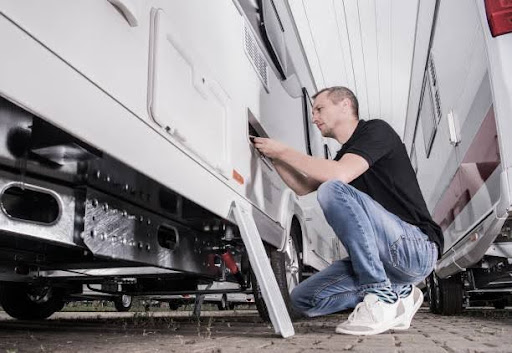
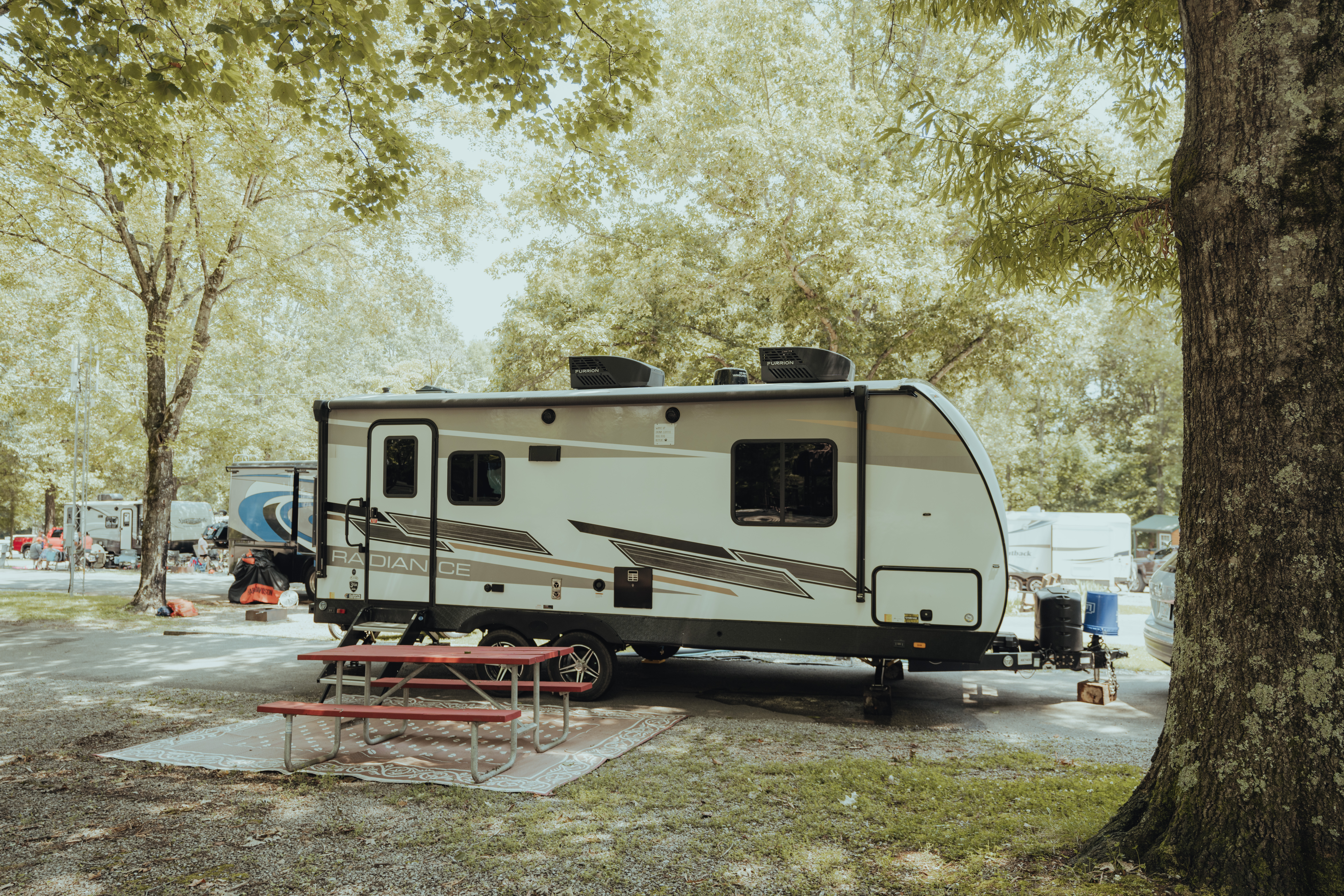
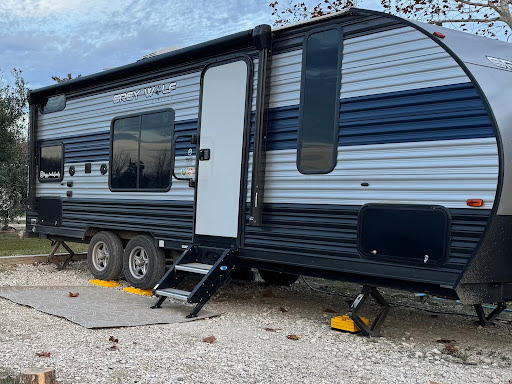
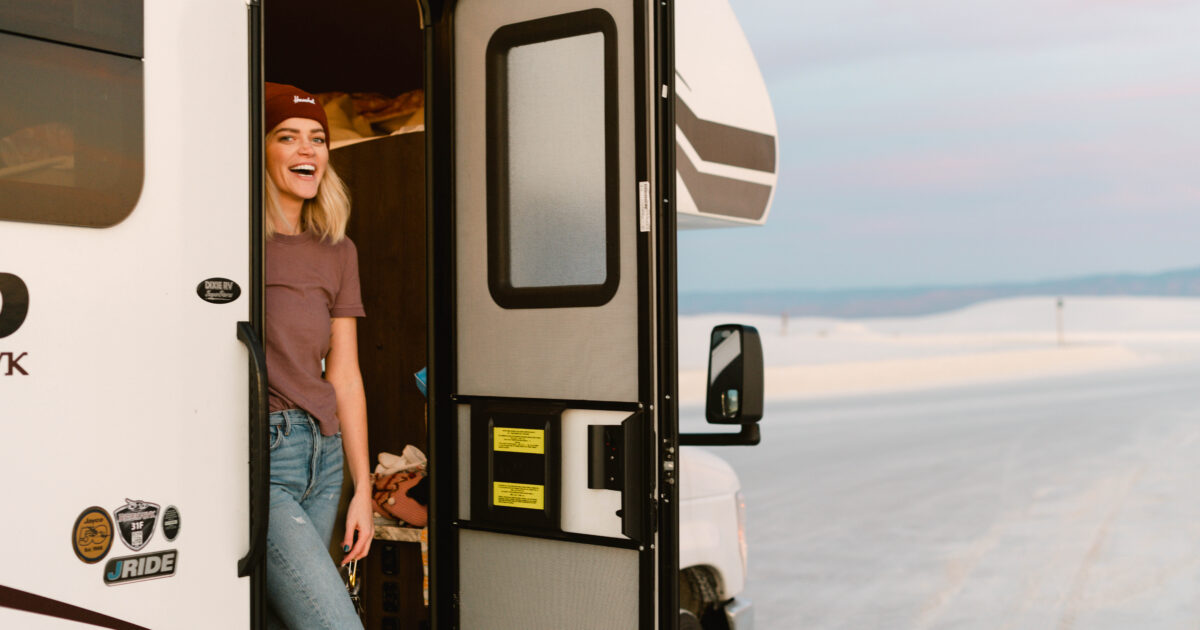
The RV entry door is the main door on your RV — typically located on the passenger side. Most are made of fiberglass, which is lightweight but not the most durable material over time. Upgraded entry doors are available, and there are also better locking options worth considering.
One common complaint among RV owners is the entry door latch. If yours feels flimsy or has worn out, some RVers switch to a magnet closure for easier day-to-day use. Magnets create a strong hold for keeping the door shut, though they shouldn’t replace your actual locking hardware — those are separate systems.
Fiberglass entry doors also tend to sag over time, usually due to hinge wear. Replacement hinges and entry door hardware are widely available online and are generally an easy fix.
One of the most commonly replaced parts on an RV entry door is the door holder — the sliding piece that props the door open, so you’re not wrestling with it every time you load groceries or carry gear. These see a lot of use and wear out quickly, but replacement parts are inexpensive and easy to find online.
The RV Access Door
RVs also come with what’s known as an RV access door. Not to be confused with the front door of an RV, an access door provides access to the small cargo area on your trailer or RV. An RV access door needs to be both secure and easy to get to. It’s vital that it comes with a lock and key. These doors are often made from heavy-duty materials such as steel to provide durability against weather conditions. Generally speaking, an RV access door usually ranges in size from 14 inches to 70 inches.
RV Door Holder
An RV door holder (also referred to as an RV door catch) does just as the name suggests: it holds the door open to prevent it from automatically closing or slamming in the wind. Holding your RV door open can be handy when expecting guests, carrying things in or out of your RV, or even just letting a cool breeze in. While many RV models might come with a plastic door holder already in place, stainless steel or metal (like this one) is the way to go for extra strength and durability.
RV Door Handles
RV door handles come in a range of styles: folding handles, paddle handles, swing handles, grab handles, L-handles, and T-handles. The right one for your rig depends on your door’s material and style, as well as your own preference. Handles are easy to swap out and can make a real difference in the feel of your entry door.
RV Storm Door
Along with a sturdy RV door, some models also come with a screen door. These screen doors can be unstylish and hard to care for, not to mention prone to rips and tears. This is why many RV owners have opted for an RV storm door instead. These are made from durable, yet see-through materials such as plexiglass. Not only can the door withstand the extreme weather conditions that come with storms (such as hail or heavy rainfall), but they’re also great for providing clear and uninterrupted views from inside your RV.
Replacement RV Doors
Over time, you may need replacement RV doors, particularly if yours becomes loose or the RV door glass has cracked.
Several companies specialize in RV door repair and replacement. Before you buy, be sure to measure the space accurately and note down the particular style or material you have in mind. You can even have RV doors custom-made to fit your particular model of RV, camper, or trailer. If you are looking for a ready-to-go, high-quality solution, Amazon has RV doors you can check out.
Used RV doors are a budget-friendly option and can be found on Facebook Marketplace, eBay, Craigslist, and local classifieds. Prices vary depending on the condition and type of door, so shop around and compare before committing.
RV Door Locks: What You Need to Know
Here’s what to know about the different kinds of RV door locks.
Standard Entry Lock
The standard RV door lock combines a handle lock and a deadbolt. The handle lock prevents the latch or knob from turning, while the deadbolt slides a bolt through the door into the door frame for added strength. Together, they provide two separate layers of security.
One important consideration is your door latch material. Latch kits typically come in plastic or metal. If you camp in cold climates, metal is the better choice. Plastic latches can freeze and crack, leaving you with a lock that won’t work when you need it most.
Keyless Entry Locks
Keyless entry locks with digital keypads are an increasingly popular upgrade. They require a numeric code to open, which you can program and share with anyone who needs access. The big advantage here is that you can’t lose a code the way you can lose a key. Most keyless locks also include a physical backup key for situations where the battery dies or everyone forgets the code.
RV Security Systems
For added peace of mind, consider an RV security system. These range from basic alarms that chime when someone tries to enter, to more sophisticated systems that record and store footage of any intrusion. There are options at a wide range of price points, so you can find something that fits your budget.
Entry Door Windows: A Security Note
If your RV entry door includes a window, it’s worth thinking about security as well. Windows can be seen as a weak point for anyone looking to break in. If you don’t need the window, replacement doors without glass are easy to find. If you want to keep it, a privacy screen is a good solution — it also helps reduce heat buildup inside the RV.
RV Door Lock Replacements
You have a few options for RV door lock replacements. The first is to purchase a proprietary replacement from the manufacturer of your vehicle or trailer. While this is typically the more expensive option, it also ensures that the replacement part you receive will fit your vehicle exactly. Be sure to purchase a replacement for the same make, model, and year of your RV as these features change from one version to the next.
Another option is to upgrade with a third-party manufacturer. Many of these companies will make universal-style locks and latches for your motorhome that fit no matter the brand.
How to Install an RV Door Latch
Installing a replacement RV door latch is a manageable DIY job for most RV owners. Before you start, make sure you have your new latch kit and a screwdriver on hand. Most kits include all of the hardware you need, plus instructions on how to install it.
- Inspect the door before you do anything else
Check the condition of your door before removing the old latch. Look for cracks, soft spots, warping, or damage around the latch cutout. A new lock is only as strong as the door it’s mounted in — if the door is worn or damaged, address that first. Installing a new latch on a failing door is a wasted effort.
- Remove the old latch
Using a screwdriver, remove the screws securing the old latch to the door and door frame. Keep the screws in a safe place in case they’re needed for the new installation. Gently pull the latch assembly out of the door cutout.
- Compare the old and new latch
Before installing, hold the new latch up against the old one to confirm that the size and cutout dimensions match. This is especially important if you bought a universal third-party replacement rather than a manufacturer-specific part.
- Insert the new latch into the door
Seat the new latch assembly into the door cutout. Align it carefully so the bolt or paddle sits flush and the screw holes line up with the door.
- Secure the latch to the door and frame
Drive the screws in to secure the latch. Don’t overtighten — snug is sufficient, and overtightening can crack the door material or strip the screw holes.
- Test the latch before closing up
With the door open, test the latch mechanism several times — both the handle lock and the deadbolt if your kit includes one. Make sure both operate smoothly, and the bolt extends and retracts cleanly.
- Test the latch with the door closed
Close the door and test locking and unlocking from both inside and outside. Confirm that the door seals properly and that the latch works without resistance.
- Rekey the lock
Once the latch is installed and working, strongly consider rekeying it. Many RV locks are manufactured with the same key cut, meaning another RVer with the same lock brand could technically open your door. Manufacturers often use different combinations of handle lock and deadbolt keys to reduce this risk, but rekeying eliminates it entirely. A locksmith familiar with RV hardware can handle this quickly and inexpensively.
The CH751 Key: A Security Issue Worth Knowing About
Here’s something many RV owners don’t find out until they’re already on the road: a significant percentage of RV storage compartments — estimates range from 60 to 90 percent — use the same factory key, stamped CH751. This key is so widespread that it’s sometimes called the “everything key.” It works on RV storage compartments, tool boxes, truck bed boxes, and other applications across many manufacturers and brands.
This doesn’t mean your entry door is at risk — RV entry door keys are not the same as CH751 compartment keys. Entry door key systems like TriMark have around 1,000 unique cut combinations. But your exterior storage bays may be accessible to other RVers, campground neighbors, or even someone who owns a toolbox that uses the same key.
The fix is to replace your CH751 locks. A locksmith or RV specialty supplier can set you up with a full set of replacement cam locks, all keyed alike to a single unique key. It’s a relatively low-cost upgrade that significantly improves your storage security.
RV Screen Door Repairs and Replacement
Fortunately, repairing parts of a screen door and putting in a replacement RV screen door are both fairly easy jobs. The average handyman should be able to get their door up and running again in no time.
RV Screen Door Slide
The most commonly broken part is the RV screen door slide. This is the plastic bit that slides back and forth. It’s meant to keep bugs out of the rig when closed while still allowing the user to open the latch by sliding it. Unfortunately, because these are 1) plastic, 2) exposed to the elements, and 3) used often, they become weathered, warped, and cracked over time.
Replacing your RV screen door slider is no big deal. The plastic parts come in clear, white, and black colors, and as long as you purchase one that fits your door properly, you’ll find it pops right in without any tools at all. You can find a screen door slide for your RV on Amazon or at any place that sells RV parts.
RV Screen Door Latches
RV screen door latches are another thing that can break easily. After all, they are used every day, and honestly, very few campers are gentle with them.
While replacing an RV screen door latch does take a bit more effort than replacing the slide, it still isn’t difficult. Generally, a few turns of a screwdriver are enough to remove the old latch, and installing a new one is just as simple. Plus, you are looking at an average $10 piece, so it’s a cheap replacement!
The one thing you’ll want to be aware of when replacing your screen door latch is the fact that these parts come in right- and left-handed models. To determine which one you need, stand inside your camper and face the door. If your latch is on the right-hand side while doing this, you need a right-hand latch (and vice versa).
RV Screen Door Mesh
Sometimes the screens in RV screen doors end up being damaged. This is annoying but totally fixable, and in most cases, it doesn’t even require an entire door replacement. If you’ll be replacing your screen door, be sure to consider all of your options. Since you’ll be doing the work of putting in a new door anyway, you may want to think about upgrading to an RV retractable screen door or a nicer version of a screen door.
Most RV door screens are held in place by a rubber strip that fills a channel in the door frame. By pulling the rubber out, you can easily remove the entire screen. Another piece of screen and another rubber strip can then be placed in the channel using a special screen rolling tool made specifically for this job. You can find a screen repair kit on Amazon for under $20.
RV Screen Door Upgrades
For some RVers, even if their door is in perfect working order, it’s still not quite what they want or need. In these cases, an upgrade is in order. Problems keeping bugs out or a desire to keep kids in definitely contribute to the need for an upgrade! Once you have the door you really want and need, you’ll be so glad you took the leap and changed it out.
RV Screen Door Closer
An RV screen door closer uses a spring to ensure the door closes behind you every time you go in or out of your rig. It’s perfect if you have kids or tend to walk in or out with your hands full regularly.
RV Screen Door Guard
If you have pets or young children, you may find yourself fearing for your screens. An RV screen door cover will protect your screens from accidents. These come in a solid plastic form as well as RV screen door grill style, and are the perfect RV screen door protector.
RV Screen Door Handle
An RV screen door handle is a great way to make your door a bit sturdier, and gives you a way to close the door from the inside without pulling on the plastic slide. It’s a great addition to every RV.
RV Screen Door Lock
An RV screen door lock is a great addition to prevent young children from leaving your RV unnoticed and to help campers who enjoy leaving their door open feel more secure. These locks are easy to install and can really help give you some peace of mind while camping.
RV Screen Door Opener
Finally, there’s the screen door opener. This handy gadget lets you open the screen door from the inside without moving the slider, making it much easier to keep bugs out. These are super easy to install and can be purchased individually. However, many campers prefer to purchase an RV screen door slide with an attached opener, making installation even simpler.
How to Unlock Your Camper Door Without a Key
Getting locked out of your RV is frustrating, but there are a few things worth trying before you call for help.
Check if You Have a CH751 Key
If you haven’t changed your factory locks, there’s a good chance your storage compartments use the standard CH751 key (see the security note above). A fellow RVer or campground host may have the same key. This won’t help with your entry door, but it can get you into exterior storage where a spare key might be kept.
Call a Locksmith
If you haven’t recovered your key and still can’t get in, you can call a locksmith to help. This is certainly more expensive, but it’s cheaper than breaking the door or window to get inside. If you rent an RV with RVshare, their 24/7 Emergency Roadside Assistance covers a locksmith or towing if your RV needs to be taken to town before it can be unlocked. AAA members may also be covered, and other insurance companies might cover the cost as well.
How to Unlock a Stuck Lock
If you have your key but are having trouble opening the door, try one of these tricks.
Try the Global Lock Trick
If your key is in hand but the door won’t open, and your lock has a “G” on it, you may have a Global Link lock with a jammed lip. This is a known issue with Global Link locks. Try pushing firmly on the left side of the door, near the handle, while turning the key — this often releases the jam and opens the door.
Jiggle the Key and Use Lubricant
On older RVs, locks can stiffen with age. Try gently jiggling the key while turning it. If that doesn’t work, a shot of WD-40 or a dedicated lock lubricant often loosens the mechanism enough to get it moving.
How to Prevent Getting Locked Out Again
A little prevention goes a long way with RV locks.
- Keep locks lubricated – A periodic application of WD-40 or a lock-specific lubricant helps keep the mechanism moving freely and reduces the risk of a jam at an inconvenient moment.
- Use a lockbox — A small combination lockbox mounted in a discreet location, like near your propane compartment or battery bay, lets you store a spare key outside the RV. Punch in the code, and you’re back in business.
- Upgrade to a keypad lock– A keyless entry system eliminates the risk of losing your key entirely. Most models include a physical backup key in case the battery dies, giving you two ways in at all times.
Key Takeaways
- RV entry doors are typically made of fiberglass and prone to sagging, latch wear, and hinge deterioration over time — all of which are inexpensive, manageable DIY fixes.
- Standard RV locks use a handle lock and deadbolt combination; keyless-entry locks are a worthwhile upgrade that eliminate the risk of losing a key and make it easy to share access with travel companions.
- A significant percentage of RV storage compartments use the universal CH751 key, meaning neighbors, fellow campers, or anyone with a compatible toolbox could access your storage bays. Replacing these locks with uniquely keyed alternatives is a low-cost security upgrade worth doing.
- If you camp in cold climates, choose metal door latches over plastic. Plastic latches can freeze and crack, leaving you locked out when you need access most.
- Screen door repairs are among the easiest DIY fixes in RV ownership. Slides snap in without tools, latches require only a screwdriver, and mesh replacement requires nothing more than a screen-rolling tool and an inexpensive repair kit.
- When replacing a screen door latch, handedness matters — stand inside the RV facing the door to determine whether you need a right- or left-hand latch before ordering.
- After installing any new lock, strongly consider rekeying it — many RV locks are manufactured with identical key cuts across brands, and rekeying eliminates that shared-key vulnerability entirely.
- RVshare’s 24/7 roadside assistance covers locksmith dispatch for lockouts at no additional cost to renters — no need to break a window or force the door.
Frequently Asked Questions About RV Door Locks
Most RVs come with a standard keyed lock that includes both a handle lock and a deadbolt. Many owners upgrade to keyless entry locks with numeric keypads, which eliminate the need for physical keys and allow easy code sharing with travel companions.
Check the face of your storage compartment locks. If the lock is stamped with “CH751” or “751CH,” your storage compartments use the universal key. If that’s the case, consider replacing the locks with a more secure, uniquely keyed alternative.
Whether you can rekey your RV door lock yourself depends on the lock type. Some aftermarket locks can be rekeyed with a simple kit, while others require a locksmith. When in doubt, a qualified locksmith can help you change your locks.
Screen door latches are inexpensive and easy to replace with a screwdriver. Just make sure you order the correct handedness — right-hand or left-hand — by standing inside the RV and noting which side the latch is on.
Door sag is usually caused by worn hinges. Replacement RV door hinges are widely available online and at RV parts retailers, and swapping them out is a manageable DIY job for most owners.
Yes. RVshare’s 24/7 roadside assistance includes locksmith dispatch for lockouts at no additional cost to renters.
Ready for your next adventure? Browse RV rentals on RVshare and find the right rig for your next trip.