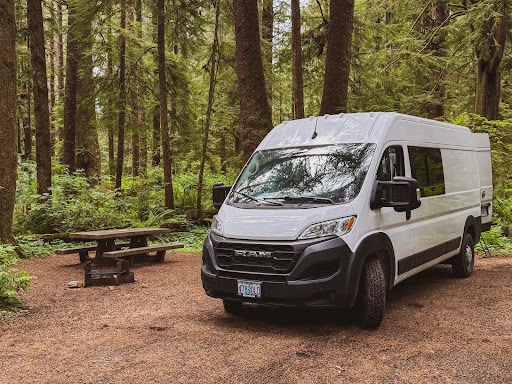
There’s something thrilling about hitting the road with no set campsite booked — just you, your rig, and a plan to land somewhere beautiful for the night. First-come, first-served camping keeps the spontaneity of the outdoors alive, allowing last-minute travelers and off-the-beaten-path adventurers to find a place to rest without relying on reservations made months in advance.
First-Come, First-Served Campsites: At a Glance
While we’ll dive into the tips and tricks below, here are some at-a-glance facts about some of the most common places to enjoy first-come, first-served camping.
| Location Type | Typical Rules & Restrictions | Tips for Success |
| National Parks | Usually only allow one vehicle per site | Arrive early; mid-week is best if possible |
| National Forests | Often have more FCFS sites than National Parks | Look for free dispersed camping areas; double-check length of stay restrictions |
| BLM Lands | “Boondocking,” or dispersed camping without hookups, often free for up to 14 days before you need to move | Be prepared to be self-sufficient; fill potable water tank and empty wastewater tanks before arrival |
| State Parks | Each have their own FCFS policies and restrictions | Check the park booking website ahead of time to learn how many sites are reserved for first-come, first-served camping |
| County Parks | Hidden gems; often less crowded and more flexible | Google “county parks near [destination]” to see what’s available in your travel area |
What Is First-Come, First-Served Camping?
First-come, first-served camping (FCFS) means that campsites are not reservable in advance—they’re available to whoever shows up and claims them first. These types of campsites cannot be reserved online or in advance. Instead, they are claimed in person, usually on the day of arrival. Campers show up, check for available sites, and either self-register or talk to a camp host to secure their spot.
Many campgrounds have a hybrid system, where some sites are reservable and others are FCFS. Knowing how to identify and target these FCFS spots can give you flexibility and an edge.
How It Works:
- No Reservations: You can’t book these sites online or by phone.
- Claim in Person: You must physically arrive at the campground and claim a site.
- Early Arrival Recommended: These sites often fill up quickly, especially during weekends, holidays, or peak season.
- Payment: You typically pay by placing cash/check in a fee envelope at the campground entrance or use an onsite kiosk or app, depending on the location.
- Self-Registration: Many of these campgrounds use a self-registration system where you write down your name, license plate, and site number.
But FCFS camping isn’t as simple as showing up and hoping for the best — especially in popular areas like national parks or during peak seasons. If you’re planning to camp in national parks, national forests, or state and county parks, here are the best tips to help you succeed in snagging a FCFS site, along with how to use Recreation.gov to plan your journey.
How Does First-Come, First-Served Camping Work?
First-come, first-served camping varies by site (more on that in just a second). But in general, this style of camping is characterized by a few key shared factors.
- No Reservations: You can’t book these sites online or by phone.
- Claim in Person: You must physically arrive at the campground and claim a site.
- Early Arrival Recommended: These sites often fill up quickly, especially during weekends, holidays, or peak season.
- Payment: You typically pay by placing cash/check in a fee envelope at the campground entrance or use an onsite kiosk or app, depending on the location.
- Self-Registration: Many of these campgrounds use a self-registration system where you write down your name, license plate, and site number.
But FCFS camping isn’t as simple as showing up and hoping for the best — especially in popular areas like national parks or during peak seasons. If you’re planning to camp in national parks, national forests, or state and county parks, here are the best tips to help you succeed in snagging a FCFS site, along with how to use Recreation.gov to plan your journey.
Where are the Best Places to Find First-Come, First-Served Campsites?
National Parks and Forests
- Most National Park Service (NPS) campgrounds allow only one vehicle per FCFS site.
- Sites are typically held for the night once you’ve paid and placed a permit or tag on the post.
- You may be able to find real-time availability updates for individual parks through recreation.gov.
- Forest Service campgrounds often have more FCFS sites than national parks and are generally less crowded.
- Look for dispersed camping areas (also FCFS) where you can camp for free with minimal amenities.
BLM Lands
BLM lands are one of the best places to look for first-come, first-served campsites. However, bear in mind that this will be a more rugged boondocking adventure, rather than finding a last-minute site at a developed campground.
Boondocking means camping without hookups in some of the most remote and wild parts of our country. Boondocking is often free, and you may be able to stay in your campground for up to 14 days before you need to move. However, you’ll need to be ready to sustain yourself without water or electric hookups for as long as you’ll be at the campsite. Filling up your potable water ahead of time, stocking up on food, ensuring you have warm clothes and bedclothes, and emptying wastewater tanks ahead of time are all key. Also, be sure to double-check any posted restrictions regarding the length of your stay, generator use, fire policies and more.
State and County Parks
Each state manages its own parks, and their FCFS policies vary. For example:
- Washington: Most state parks are reservation-only, but a few have FCFS sites. Look at parks.wa.gov.
- Oregon: Most Oregon State Parks fill quickly, but some smaller campgrounds are FCFS-friendly.
Pro Tip: County Parks are hidden gems. They’re often less busy and more flexible. Check the local county websites or use Google Maps to search “County Campground near [destination].”
How to Enjoy FCFS Campsites Like a Pro
Here are our best tips as experienced travelers with FCFS camping.
1. Arrive Early — Especially Midweek
Most campers leave in the morning (usually by 11 AM checkout), so arriving by 8–9 AM gives you the best shot at grabbing a vacated site.
Best Days to Arrive:
- Tuesday through Thursday are the golden days.
- Fridays and Saturdays fill up fastest.
- On holiday weekends, consider arriving a full day early if possible.
Pro Tip: If you’re targeting a high-demand location (think Yosemite, Glacier, or Olympic National Park), people often line up before sunrise to score a spot.
2. Research FCFS Campgrounds in Advance
Just because you can’t reserve FCFS sites doesn’t mean you can’t plan ahead. Use these tools to find and evaluate FCFS campgrounds before your trip:
This is the official reservation portal for federal lands (National Parks, Forest Service, BLM, etc.).
How to Use It:
- Visit www.recreation.gov.
- Search your destination (e.g., “North Cascades National Park”).
- Choose a specific campground if the destination offers multiple options.
- Look for first-come, first-served campsites (often labeled “FF”), which are separate from reservable campsites on the platform.
- Read campground descriptions. They often include:
- Total number of FCFS sites
- Amenities (toilets, water, etc.)
- Accessibility info
- Season dates and road conditions
- Check visitor reviews for insights about how early people arrive and how fast the sites fill.
Pro Tip: Navigate to the “Facility Information” tab and scroll down to “Need to Know” to find important notes about closures, construction, or updated FCFS policies.
3. Be Prepared to Be Self-Sufficient
Not all FCFS sites come with the full suite of amenities. Especially in national forests or BLM lands, you might find:
- No potable water
- Vault toilets (or none)
- No trash service
- No cell signal
Bring:
- Extra water
- Trash bags
- A printed or downloaded map
- A backup battery for navigation
4. Have a Backup Plan (or Two)
Even with research and early arrival, it’s possible a campground will be full. Always have a backup plan:
- List 2–3 alternate campgrounds nearby, preferably ones with FCFS or dispersed options.
- Check apps like Campendium, iOverlander, and The Dyrt for real-time user reports.
- Know the boundaries of nearby dispersed camping areas, which are typically available on National Forest lands. These can be a lifesaver.
Pro Tip: Use Gaia GPS, onX Backcountry, or Avenza Maps for offline maps showing public land boundaries.
5. Track Trends Over Time
If you find a campground you love, take notes:
- What time did you arrive?
- How many sites were open?
- What day of the week?
- What was the season/weather?
Keeping a simple camping journal helps you plan better next time — especially in high-demand areas.

What to Do When You Arrive at an FCFS Campground
Here’s a step-by-step guide for claiming your spot:
- Drive through the campground and look for sites without tags on the post (or check if there’s a “Site Available” sign).
- Snag it! Park your vehicle or place gear (like a camp chair) to claim it.
- Pay and register immediately, either at a kiosk, pay box, or with a host. Most accept cash or check only — bring small bills.
- Place your permit visibly on the site post or dashboard.
How to Respect FCFS Etiquette
- Don’t “ghost” sites: You can’t claim a site without being physically present.
- One site per party: Don’t hold spots for friends arriving later.
- Leave No Trace: Especially important at unmanaged or minimally managed FCFS sites.
- Be neighborly: If someone is packing up, wait until they leave before hovering too close.
How Much Does FCFS Camping Cost?
One of the primary attractions of first-come, first-served camping is the fact that it’s budget friendly. In some cases, such as BLM camping, you may actually be able to camp for free, so long as you observe posted rules such as length-of-stay maximums.
Of course, that doesn’t mean there are no costs associated with FCFS camping. You’ll still want to factor in a few important items, such as:
- The cost of the RV itself. Whether you’re renting or if you’re already an RV owner, the vehicle itself does come with a cost. Pro-Tip: Renting from the peer-to-peer market at RVshare can help you save costs and also enjoy a greater range of vehicle types by renting directly from an RV owner!
- The cost of the campsite. While some first-come, first-served campsites, such as boondocking options on BLM land, are free, others come with per-night costs that can range from about $15 to $50 per night.
- The cost of fuel. RVs are large vehicles that can burn a lot of gas or diesel. However, you can save fuel costs by exploring camping destinations closer to your place of residence (or where you pick up the rental RV).
- Food, entertainment and other vacation-related costs. These will vary substantially depending on the type of vacation you’re after and what your preferred activities are, but it’s still worth factoring them in while planning!
First-Come, First-Served Campsites: Frequently Asked Questions
First-come, first-serve campsites are those set aside for campers who show up without reservations. They’re often a limited number of campsites in a campground with reservable sites, such as a state park campground or national park campground.
Some of the best places to look for first-come, first-served campgrounds are national forests, state parks and county parks. Boondocking on BLM lands can also unlock lots of camping options without making a reservation, but you won’t have campground amenities like water and power hookups.
Yes, some national parks offer first-come, first-served campsites. However, because national parks are so popular and reservable sites often book up months in advance, it’s a good idea to have a backup plan in case you don’t find a FCFS campsite when you arrive.
It depends on the campground. In many cases, you’ll fill out a self-pay form and leave cash or credit information in an envelope. Some campgrounds have also implemented digital ways to pay for first-come, first-served campsites.
First-come, first-served camping is perfect for the spontaneous traveler, the van lifer, and anyone looking to immerse themselves in nature without strict schedules. With a little preparation, flexible timing, and the right tools (hello, Recreation.gov), you can discover some of the most stunning campsites in the country — no reservation required.
So gas up, grab your morning coffee, and hit the road early. The perfect site is out there waiting.