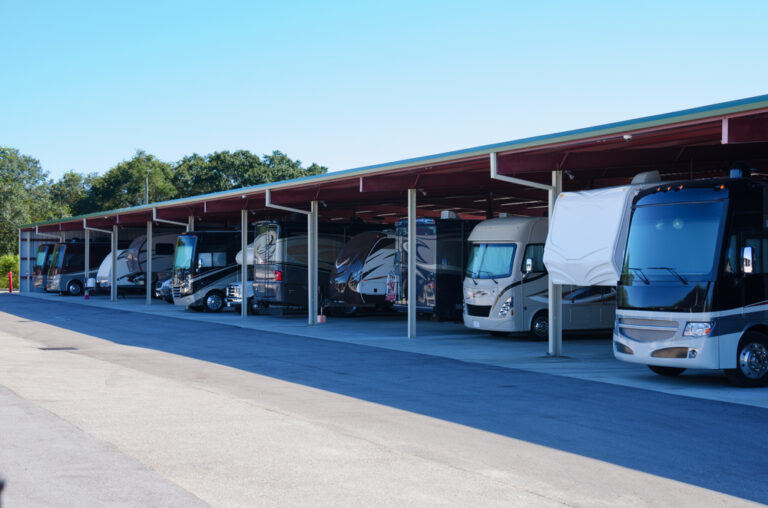
RV storage may not be foremost in your mind when you purchase an RV. You bought it to go out and travel! Why would you store it?
There are actually many reasons you may need to store your RV, both for the short-term and for the long-term. In this article, we’ll look at the different types of RV storage so you can determine what’s right for you. We’ll also look at what you can expect to spend on the different types and at RV storage tips for owners.
Factors That Impact RV Storage Prices
There are several factors that will influence your RV storage prices. As a general rule, the more elaborate the RV storage facilities, the more expensive they will be. Here are a few other factors to consider when pricing RV storage.
Summary of Factors Influencing RV Storage Prices
| Factor | How It Influences Price | Key Details |
|---|---|---|
| Location of RV Storage Facility | Major pricing driver; urban areas are more expensive than rural areas | – Cities like NYC, LA, Denver cost more due to limited land – Rural areas are cheaper and have more available space – Storing your RV outside the city (even 1 hour away) can save money – High-RV-demand regions (e.g., Florida, Arizona in winter) see seasonal price increases |
| Type of RV Storage | More amenities = higher cost | – Outdoor, no-frills storage is cheapest – Indoor, covered, climate-controlled options are more expensive – Facilities may offer dump stations, wash areas, electricity, battery charging – Security levels vary: locked gate → surveillance → 24/7 security patrols |
| Size of the RV | Larger RV = higher storage cost | – Bigger rigs require larger, more expensive spaces – Storage lots often charge by space size category – Height matters for covered/indoor storage—must ensure RV clearance |
Table summarizing RV storage prices
Location of the RV Storage Facility
The location of your RV storage facility is going to affect how much it costs. If you live near a major city like New York City, Los Angeles, or Denver, you will likely find yourself paying more than if you live in a rural area. Along with having a generally lower cost of living, rural areas have a lot more land at their disposal. Building an RV storage facility won’t be the challenge there that it would be to find land in, say, San Francisco. Even if you do live in a big city, you may find it cost-effective to store your RV an hour away in a less-populated area.
You may also find that some areas of the country are affected by how popular RVing is in that area. Regions like Florida and Arizona may have more expensive RV storage during certain seasons, as snowbirds head to these areas in the winter. Anywhere there is a high demand for RV storage, especially if the supply is lower, is going to have higher costs.
Type of RV Storage
The type of RV storage is also going to affect the cost. If you’re storing your RV outdoors, at a facility with no amenities, you’ll pay a lot less than if you’re storing your RV indoors with climate control and 24-hour security. The more perks, the more you’ll pay.
RV storage lots can have a number of upgrades – you may find storage facilities that have dump stations, a wash area, electricity, battery charging, and more. Security at these facilities can also vary, from a simple locked gate to video surveillance to a 24-hour security guard patrol. All of these amenities cost extra, and you’ll want to consider which are important to you and which you can do without.
Size of the RV
The size of your RV will also affect the cost of storage. A smaller RV will take up less space and cost less than a larger one. In fact, when looking for RV storage, you should know the size of your rig. Many RV storage sites have different-sized spots for different RVs, and you’ll be charged more for the larger spots. If you’re looking for covered or indoor parking, you’ll also want to know the height of your RV to be sure it will fit.
What is RV Storage?
RV storage is where you’re keeping your rig when it’s not being used! This can be anywhere from a professional lot, where you pay a monthly fee, to your own backyard or garage. You may consider a lot of factors when deciding on RV storage. RV storage when you live in New York City is going to look different than storage in the desert in Arizona. You’ll want to consider the weather where you’re storing your RV, whether the facility is convenient for you, what amenities are available at the facility, the size of your rig, and the age and cost of your RV as well as the cost of the storage facility when you’re looking for a place to store it.
Types of RV Storage
The two main types of RV storage are indoor storage and outdoor storage. Within those two categories, there can be a wide range of options!
How to Find RV Storage Facilities Near You
There are several types of RV storage facilities near you. The two most common are sites that just do RV storage, and public storage sites that offer a variety of types. Public storage sites often have units where people can store their belongings, plus parking spots for vehicles like RVs and boats. Places that specialize in just RV storage can run the gamut from a dirt lot with a fence to indoor, climate-controlled, security-patrolled parking spaces for RVs.
If you’re wondering how to find RV storage near me, a good place to start is checking RVshare’s comprehensive list of options in every state. You can also ask RVing friends for recommendations. You can also post in a forum or Facebook group and see if anyone has recommendations.
Tips to Save on RV Storage Costs
There are a few things to investigate if you want to save money on RV storage costs. Here are some questions to ask when you’re looking for a storage facility.
- Do they offer long-term storage discounts? If you’re storing your RV for six months or longer, you might find a facility that will discount your monthly rent. This will bring down your overall cost.
- Do they offer a discount for bundling? If you have an RV and a boat or other vehicle that needs storing, some places will offer a discount on each item if you store them both there.
- Can you find cheaper storage farther away? As we mentioned above, if you live in a big city, you may find less expensive RV storage outside the city. You’ll have to weigh a cheaper rent against the cost of gas and the inconvenience, but the savings could be worth it!
- What amenities do you need? Some more expensive storage places come with a variety of amenities. They can be convenient, but when you’re looking at your budget, you may decide you don’t need them all.
- What kind of storage do you need? In some parts of the country, extreme cold makes indoor storage well worth the expense. But if you live in an area with mild weather, you may be able to cut costs by storing your RV outdoors. Using an RV cover can also protect your RV while saving on covered or indoor storage over time.
- Do you really need to store your RV? If you sign up with RVshare, you can rent out your RV when you’re not using it yourself. Not only will you save on storage, you’ll actually make some money!
FAQs:
Still have questions about storing your RV? Here are a few frequently asked questions you may have about RV storage (and their answers!).
How do I prepare my RV for long term storage?
You’ll need to prepare your RV if you plan to store it for a long period of time. Here’s what you’ll need to do:
- Clean the exterior thoroughly: Wash and wax your RV. Take down awnings and clean and repair them if they need it. Check seals and make any other exterior repairs that need to be done. Cleaning and drying your RV will not only make you happy when you pull it out to use again, it can also help prevent rust, mildew, and other decay from spreading while it’s not being used.
- Check tires: Putting your RV in storage is a good time to inspect the entire rig and fix anything from your season on the road. Check tires to make sure they’re properly inflated, and that the tread isn’t worn. Clean and seal the tires when you clean the RV. Then, cover your tires to prevent sun damage.
- Clean the interior thoroughly: Wash bedding, towels, dishes, and everything else that has been used on your road trip. Clean the bathroom and kitchen (including deep cleaning appliances!), check and wash walls, windows, and other surfaces. Remove all food and other smelly items, and vacuum and mop your RV carefully so rodents don’t come looking for food. Close curtains and shades to prevent sun damage. Cover the front windows as well. Close off propane lines, furnace exhaust lines, and any other pipes that could allow bugs in. You may also want to leave repellent in your RV to keep bugs and rodents out.
- Open vents: Leave vents open to allow air circulation throughout your RV. However, you’ll want vent covers to keep out rain, moisture, and bugs.
- Empty your tanks: Be sure to empty and flush out your black, gray, and freshwater tanks.
- Disconnect your RV battery: Many small things can drain your battery, even if you have shut off all the lights and other devices. If you disconnect the battery, you prevent it from being drained while the RV is not in use.
What is RV pass-through storage?
RV pass-through storage is the storage area under an RV that stretches from one side of the RV to the other without obstructions. This allows you to access whatever you’re storing under your RV from either side.
Should you leave your RV plugged in while in storage?
You should not generally leave your RV plugged in while in storage. Although most newer RVs have a charging system that prevents overcharging, some older RVs do not. If you overcharge your battery, you could deplete its electrolyte levels and shorten its capacity. Also, many RV refrigerators need to be occasionally turned off and thawed.
Should you store your RV with full tank of gas?
You should store your RV with a full tank of gas. This prevents moisture buildup inside the gas tank which can lead to rust and corrosion. When you fill the tank with gas, you can also keep the fuel system from drying out and getting damaged.
There are a lot of factors to consider when you’re looking for RV storage! Hopefully, this article has helped you to understand how RV storage is priced and what you need for your own rig.
Want to avoid storage and make the most of your RV when you aren’t using it? List it for rent with RVshare and start earning income.