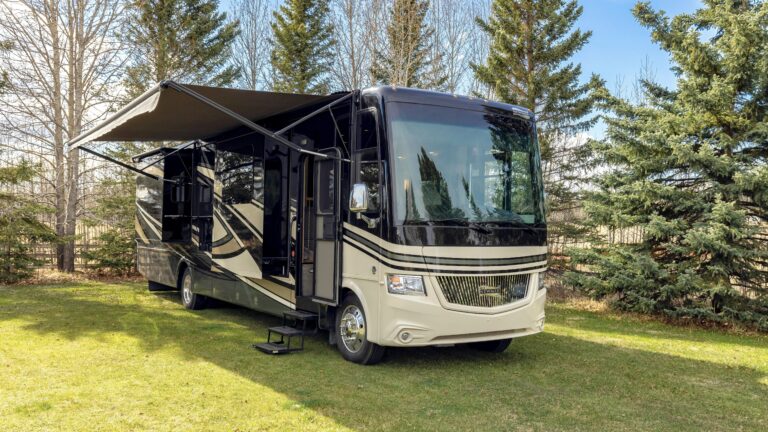
Selling your RV successfully requires strategic timing, honest disclosure, competitive pricing, and professional presentation to attract serious buyers and close the deal quickly. The best time to sell an RV is late January through March, when buyers are actively shopping for summer camping trips, and competition from other sellers is lower. However, warm-climate regions such as Arizona, Florida, and Texas experience strong year-round demand.
Price your RV competitively using J.D. Power (formerly NADA) RV value guides and comparing similar listings on platforms like RVTrader and Facebook Marketplace. Be honest about your RV’s condition, as buyers may discover hidden defects during an inspection and lose trust if you’ve been deceptive. Prepare your RV for sale by making affordable repairs, thoroughly cleaning inside and outside, removing personal belongings, and taking high-quality photos of every feature. This includes any defects – transparent listings with detailed images sell faster than vague or misleading advertisements. Advertise your RV on multiple platforms, including RVTrader, Craigslist, Facebook Marketplace, and specialized RV publications, to reach the broadest audience. Also, never accept personal checks or share banking information with buyers — use wire transfers or cashier’s checks for secure payment.
RV Selling Strategy Quick Reference
| Strategy | Why It Matters | Action Steps | Common Mistakes to Avoid |
| Best Selling Season | Late January-March sees 40% higher buyer activity | List in late winter when buyers plan summer trips | Selling during Thanksgiving-Christmas or peak summer |
| Honest Disclosure | Buyers will discover defects; deception kills deals | Show water damage, outdoor storage, mechanical issues in photos and description | Hiding defects, sugarcoating problems, hoping buyers won’t notice |
| Competitive Pricing | Overpricing scares buyers; underpricing raises suspicion | Use J.D. Power guides + compare 5-10 similar listings | Pricing based on what you paid vs. current market value |
| Professional Photos | First impression determines whether buyers contact you | 20-30 high-quality photos: interior, exterior, engine, basement, defects | Dark photos, messy interiors, hiding problem areas |
| Multi-Platform Advertising | More exposure = faster sale | List on RVTrader, Facebook Marketplace, Craigslist, RV publications | Limiting to one platform or local-only advertising |
| Secure Payment | Protects against fraud and identity theft | Accept wire transfer or cashier’s check only; verify funds clear | Accepting personal checks or sharing bank account details |
Why Selling Your RV Correctly Matters
The RV market in 2026 has normalized after post-pandemic volatility, creating both challenges and opportunities for sellers. Understanding current market conditions helps you price competitively and time your sale for maximum return. In many areas, supply exceeds demand so buyers have some negotiating power.
You’ll want to understand the depreciation of your RV in order to price it correctly. New RVs lose 15-30% of their value in the first year, and most RVs lose 36-38% of their value over the first five years. So a $100,000 Class A motorhome typically loses $20,000-$30,000 in year one, is worth $50,000-$60,000 after three years, and is $30,000-$40,000 after five years. Travel trailers depreciate more slowly, losing 15-20% year one versus 20-30% for Class A motorhomes.
More than 85% of buyers begin their search online, so quality photos and detailed listings are critical for success.
Why strategic selling matters:
- Avoid leaving money on the table: Proper pricing based on current market comparisons ensures competitive positioning without undervaluing
- Attract serious buyers faster: Honest, well-documented listings with quality photos get more qualified inquiries
- Build buyer trust: Transparency about condition prevents deals from falling apart during inspection
- Reduce time on market: RVs listed for months lose perceived value; fresh listings at fair prices sell faster
- Protect yourself from fraud: Understanding secure payment methods prevents scams targeting private sellers
When Is the Best Time to Sell Your RV?
The best time to sell an RV is late January through March, when buyers are actively planning for the summer camping season and competition from other sellers is lower. This creates a seller’s advantage with motivated buyers and less marketplace saturation. This period captures buyers researching purchases in winter, who are ready to act before prices rise in spring. RV sales can increase by up to 40% during peak months compared to slower seasons.
Why late winter/early spring works
- Tax refund season: Many buyers receive tax returns in February-March and have cash available
- Pre-summer planning: Families are booking summer vacations and want RVs ready for Memorial Day
- RV show excitement: February-March RV shows generate interest, driving buyers to private sellers seeking better deals than dealerships
- Lower competition: Fewer private sellers list during winter, giving your RV more visibility
- Motivated buyers: Buyers shopping in winter are serious—not just browsing
Spring and summer selling
Spring brings peak demand as camping season starts, but it also brings peak competition from other sellers. Summer sustains strong demand, though slightly lower than spring. Prices remain relatively strong, but your RV competes with many other listings.
Fall selling advantages
- End-of-season deals: Some buyers look for RVs in fall, anticipating lower prices after peak travel season
- Less competition: Fewer RVs listed as owners pull listings for winter storage
- Avoid winter storage costs: Selling before winter saves winterization, storage fees, and maintenance
- Tax purposes: Some buyers purchase before year-end for potential tax deductions
Winter selling challenges
December is typically the slowest month for RV sales. Cold weather makes RV travel less appealing, and post-holiday budgets are tight. However, warm-climate regions experience year-round demand from full-timers, snowbirds, and retirees seeking to escape the cold.
Geographic considerations
Rural areas: More seasonal variation; fewer year-round buyers
Warm southern states: Strong year-round market; winter may be optimal as snowbirds arrive
Northern states: Distinct seasonal patterns; spring is a crucial selling window
Populated urban areas: Larger buyer pools extend the selling season
What Are the Biggest Mistakes to Avoid When Selling Your RV?
Never hide defects or damage from buyers because this can destroy trust and kill deals. Don’t overprice your RV based on what you paid or sentimental value, as overpricing scares away serious buyers. At the same time, don’t underprice drastically, as this raises suspicion about undisclosed defects. Never accept personal checks or provide buyers with your banking information.
Don’t Hide Anything or Be Deceptive
Don’t be deceptive and try to hide defects in your RV. If there’s water or body damage, then show it in the pictures and disclose it in your description. If you parked your rig outdoors for several years, don’t try to spin or sugarcoat it.
Remember, buyers don’t like surprises or deception. If they are interested in your offer but discover that you are hiding something, they won’t trust you, and the deal will be harder, if not impossible, to close.
Don’t Overprice or Underprice the RV
Don’t overprice your RV because you think you’ve successfully hidden defects or damage. If you’re honest about its condition, you can be completely candid when answering questions from a prospective buyer. On the other hand, don’t undervalue your RV. Doing so could lead buyers to question if there are undisclosed defects.
Not sure what your RV is worth? Find its true value.
Don’t Accept Personal Checks
When it’s time to complete the sale, don’t accept a personal check or provide the buyer with your banking information. If the buyer needs to do a wire transfer, that can be accomplished without you divulging your bank information.
How Should You Prepare Your RV for Sale?
Clean the inside and outside of the RV thoroughly, make all repairs you can reasonably afford, especially those that prevent further damage like sealing leaky seals. Remove all personal property to help buyers visualize themselves in the space, write a complete description for advertising that honestly discloses the condition and operational details, and locate the title if you own the RV outright. Many buyers prefer RVs that are ready to use immediately rather than “fixer-uppers,” so affordable repairs can be a worthwhile investment.
Preparation checklist
Clean thoroughly
- Exterior: Wash, wax, clean roof, windows, awning
- Interior: Deep clean carpets, upholstery, kitchen, bathroom
- Engine/mechanical: Clean engine compartment and undercarriage
- Basement storage: Remove debris, clean compartments
- Staging: Remove clutter, organize neatly for photos
Make affordable repairs
- Seal leaks: Water damage is RV buyers’ biggest concern; seal any loose or leaky seals
- Fix operational issues: Repair appliances, slide-outs, awnings, and lights
- Replace worn items: Tires, batteries, or other safety components if needed
- Address cosmetic damage: Small fixes like broken cabinet latches or torn upholstery
- Focus on high-impact repairs: Those that prevent further damage or improve safety
Document everything
- Maintenance records: Compile service history, receipts, manuals
- Operational instructions: Document any quirks or special procedures new owners need to know
- Original equipment: Keep receipts for upgrades (solar panels, lithium batteries, etc.)
- Title and registration: Locate and organize ownership documents
Remove personal belongings: Buyers need to visualize the RV as theirs, not as your home. Remove family photos, personal items, and excessive decorations.
How Do You Take Photos That Sell Your RV Faster?
Take 20-30 high-quality photos covering every area from one end of the RV to the other, on the inside and outside. Use good lighting (natural daylight is best) and show the RV’s best features. Also, photograph any defects or issues honestly, and stage the interior by putting away clutter and personal items so buyers can envision themselves using the space. Open basement doors and engine compartments, photograph the galley, bedroom, bathroom, driver’s area, tires, awning, furniture, floor, slides, and roof to give buyers a complete picture of the RV’s condition.
What to photograph (exterior)
- Front, back, both sides (from multiple angles)
- Roof condition (buyers worry about leaks)
- Awning extended and retracted
- All basement/storage compartments open
- Tires (showing tread wear)
- Hitch, generator, propane tanks
- Entry steps and door
- Any exterior damage or wear
What to photograph (interior)
- Galley/kitchen from multiple angles
- Living area and seating
- Bedroom(s) and sleeping areas
- Bathroom with toilet, shower, and sink visible
- Driver’s area and dashboard (motorhomes)
- Slide-outs extended
- Floor condition throughout
- Appliances, entertainment systems
- Storage spaces and closets
What to photograph (mechanical)
- Engine compartment (motorhomes)
- Underneath chassis (if accessible)
- Control panels and monitors
- Water heater, furnace access
- Electrical connections
Don’t forget defects: Photograph any damage, wear, stains, or issues. Buyers appreciate honesty and will discover these during inspection anyway. Showing them upfront builds trust.
Special considerations: If your rig is a truck camper, take pictures of it both on the truck and freestanding to show versatility.
How Do You Determine the Right Price When Selling Your RV?
Research what the market prices are for similar RVs by using J.D. Power RV Value Guide (formerly NADA guides) to get a baseline estimate. Then, browse used RV marketplaces like RVTrader, Facebook Marketplace, and RVT to see what RVs similar to yours in type, age, style, mileage, and condition are actually selling for in your area. Adjust for your RV’s specific condition, upgrades, and maintenance history. Price your rig competitively based on current market reality — not what you paid or what you think it should be worth — as buyers have access to the same pricing information. They won’t overpay for an overpriced RV regardless of your justification.
Should You Consider Renting Your RV Instead of Selling?
If you aren’t ready to sell but can’t afford your RV, or if your rig is taking longer to sell than expected, renting it out through platforms like RVshare is an excellent option that generates income to offset ownership costs (insurance, storage, loan payments). It also still keeps the RV available for your own use, and many owners discover that rental income covers most or all of their RV expenses, making ownership financially sustainable long-term.
Key Takeaways
- The best time to sell your RV is late January through March, when buyer interest peaks and competition is lower.
- Use competitive pricing based on J.D. Power guides and similar listings to ensure you’re not over- or underpricing your RV.
- Honest disclosure of your RV’s condition, including visible defects, builds buyer trust and prevents deal collapses during inspections.
- Prepare your RV by cleaning thoroughly, making affordable repairs, and taking high-quality photos to attract serious buyers.
- Avoid common mistakes like hiding defects, overpricing due to emotional value, or accepting personal checks for payment.
Selling Your RV: Frequently Asked Questions
Before selling your RV, make any repairs you can reasonably afford to make and go the extra mile to clean up your RV and make it look its best. It’s also a good time to research what the market prices for similar RVs are in your area.
It’s all about the market! Browsing used RV marketplaces online can help you understand how much RVs similar to yours in type, age, style, and mileage are selling for in your area. You can also use the NADA/J.D. Power guides, similar to KBB for RVs, to get an estimate.
Common mistakes during RV sales include overpricing, neglecting cleaning or repairs, hiding flaws, skipping maintenance records, and posting poor-quality photos or listing descriptions. At the end of the day, transparency, thorough cleaning, detailed documentation, and realistic pricing attract serious buyers and also prevent post-sale disputes.
Generally, if they’re affordable, reasonable repairs, yes. Many buyers will be more likely to invest in an RV that’s ready to roll than a “fixer-upper,” and certain types of repairs, such as sealing loose or leaky seals, can help decrease the incidence of further damage.
Start by thoroughly cleaning and detailing your RV and investing in the highest possible quality photos. (It may be worth hiring a professional.) Make sure your listing is both honest and detailed, and adjust your price to your local market. List your rig on multiple platforms to increase your chances, and respond promptly to signal to buyers that you’re a serious seller.
Selling your RV doesn’t have to be stressful or disappointing. By preparing thoroughly, pricing realistically, photographing professionally, and advertising widely, you position yourself for a successful sale that maximizes value while attracting serious buyers.
Not quite ready to sell? List your RV for rent on RVshare to generate income that covers ownership costs while keeping your rig for personal trips — many owners discover that rental income makes RV ownership financially sustainable in the long term.