An essential part of every RV rental and road trip is figuring out where and how to fill and dump your water tanks. Free RV water fill stations and dump stations are available across the U.S. at rest stops, gas stations, city parks, visitor centers, and many state and national parks — often at no cost to travelers. The easiest way to find these stations is through apps like Campendium, iOverlander, and Trucker Path. They show real-time locations, user reviews, and whether facilities offer potable water, dump access, or both. For boondockers and budget-conscious RVers, these free resources mean you don’t need to pay $10-20 per dump at commercial RV parks. Always bring your own hose for water fills and sewer hose for dumps, and clean up thoroughly after use to keep these free facilities available and nice for everyone.
RV Water Fill Station and Dump Stations At A Glance
| Location Type | Water Fill? | Dump Station? | Typical Cost | Best For |
| Highway Rest Stops | Often | Sometimes | Free | Quick stops along interstates |
| City/County Parks | Sometimes | Sometimes | Free | Urban areas |
| Gas Stations/Travel Centers | Rarely | Sometimes | Free-$15 | Fuel + dump combo |
| Visitor Centers | Sometimes | Rarely | Free | Tourist areas, national parks |
| State/National Parks | Often | Often | Free for Campers | Multi-day stays |
| Truck Stops (Pilot/Flying J) | Yes | Yes | Free-$20 | 24/7 access |
Why Finding Free RV Water Station and Dump Stations Matters
For RVers who boondock frequently or travel on a budget, free water and dump stations can save a lot of money. Commercial RV parks typically charge $10-20 for non-guests to use dump stations. If you’re dumping tanks every 3-5 days during a long trip, those fees can add up fast.
Beyond cost savings, knowing where free stations are located gives you:
- Flexibility: You can camp where you want without worrying about having full hookups
- More camp time: You can refill your water and dump your waste and head back to your boondocking site instead of having to end your trip
- Emergency options: If your tanks fill quickly, you have an inexpensive solution
However, free stations aren’t always well-advertised, and availability varies dramatically. That’s why using apps and knowing common locations like rest stops, city parks, and visitor centers ahead of time is essential for successful boondocking.
Finding Free RV Water Station and Dump Stations
Free RV water and dump stations are more available than you might think. Many of them are actually hiding in plain sight, from parks to gas stations, rest stops, and visitor centers.
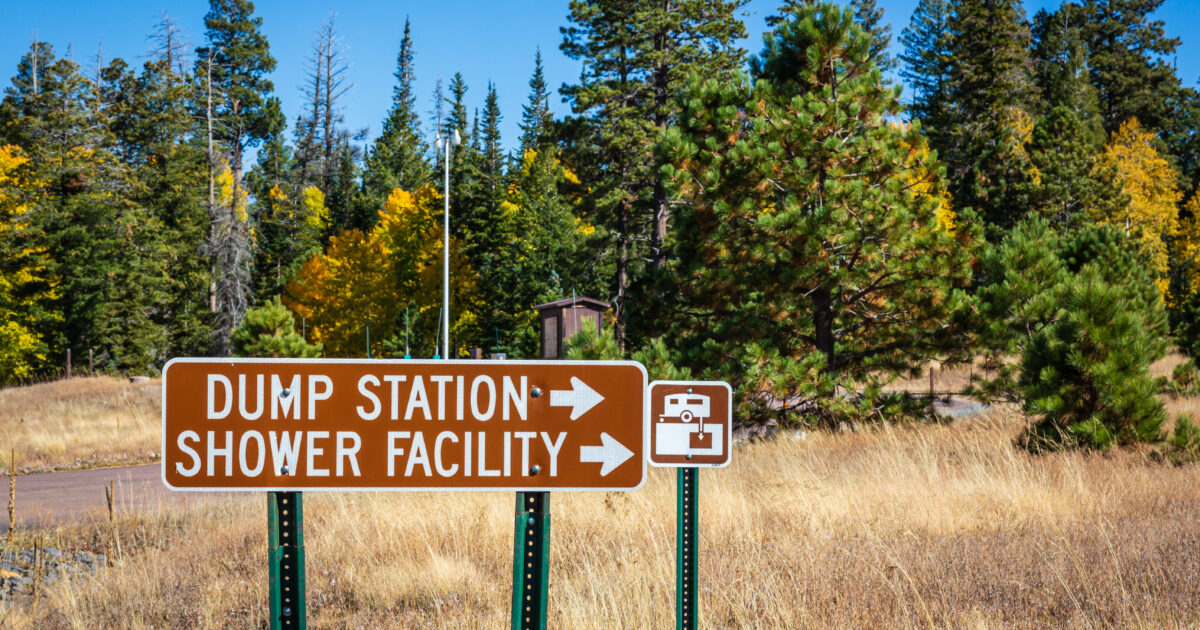
Start by looking for their characteristic signs. Be on the watch for the (usually brown) RV dump station sign or the cup of water icon. You can often find these at rest stops, visitor centers, truck stops, and near main RV attractions like national parks, national forests, and state parks. Some lesser-known locations for these services are gas stations, parks, and storage lots.
To plan your trip and refill stops ahead of time, use phone apps like Campedium, iOverlander, or Trucker Path. Just zoom in on the map to the area you are interested in and look for the water drop or the dump station icon. The best part of these apps is not only that they offer the exact locations but that they have plenty of recent reviews from fellow travelers. Read them through to best prepare for what to expect at your chosen site. You can also check our state-wide comprehensive lists for dump stations.
Where Can I Find Free RV Water Fill Stations?
The usual set-up you’ll find in water refill stations is as simple as a free-standing water spigot. To use, simply connect your hose between the spigot and your water intake. To find an RV water fill station near you, use the apps mentioned above, or stay on the lookout for a spigot.
Common places with free potable water spigots:
- Gas Stations
- Travel Centers
- Rest Stops
- City Parks
Travelers also mention finding free water near them by typing “free RV water fill up” into Google Maps.
Best Practice for Using Free Water Fill-Up Stations
The most important part of using free water fill-up stations is to bring your own hose! There won’t usually be one available, so this is very important. And if you will be resorting to public stations regularly, we recommend getting an extra-long and high-quality one paired with a water filter.
One important thing to mention when it comes to water refilling stations is potable vs non-potable water. Potable water is safe drinking water; this is the water you want to refill your tanks with. Non-potable water is not recommended for your RV tanks, as you will be using it for things like brushing your teeth or cooking. Non-potable water is unsafe for human consumption.
Usually, a blue spigot signifies potable water and a brown/red spigot non-potable water, but you’ll want to check signs to be sure. You can also ask for clarification from employees if you are unsure. Investing in a water filtration system, whether under sink or independent, is a great idea if you plan to use these stations often.
Where Can I Find Free RV Dump Stations?
Free RV dump stations are harder to find but still around. Just two important things to know before using public dump stations: bring your own sewage hose and clean up after yourself!
Common places with free dump stations:
- Gas Stations
- Rest Stops
- Travel Centers ‘
Best Practice for Using Free Dump Stations
To use a free dump station, make sure the sewer opening is unlocked and in working condition before securing your drain hose. A good practice is to run water through the sewer opening before starting to dump your tanks to ensure everything works as needed.
Before you start, get familiar with the establishment. Make sure your connections are secure before draining your waste tanks. Never done it before? No problem. We have an easy video guide for you. Leaks and spills are normal, but try to contain them the best you can. Most importantly, don’t skip the final rinse. Many of the public stations you will come across will have a water hose or spigot nearby. Those are provided to help clean up the area.
Access to free RV water and dump stations is convenient but also vital for some full-time nomads. To ensure their future availability, keep the areas clean and use them responsibly.
Key Takeaways
- Free RV water and dump stations are widely available at rest stops, gas stations, and parks, often at no cost.
- Apps like Campendium, iOverlander, and Trucker Path help locate these stations, showing real-time info and user reviews.
- Bringing your own hose is essential for filling water, while proper sanitation is crucial at dump stations.
- Using free stations saves money for frequent RV travelers, offering flexibility and emergency options during trips.
- Knowing common locations and signs can improve your boondocking experience and ensure stations remain accessible.
FAQs on Free RV Water and Dump Stations
There are actually a wide variety of free dump stations for RV travelers across the U.S., including at rest stops, gas stations, state and national parks, and national forests. Apps like Campendium, and the RV Dump Stations app, along with websites like Sanidumps.com, make it easy to search in your area.
Some popular apps for finding free RV water fill-ups include Campendium and iOverlander, but Trucker Path is a lesser-known option relied on by long-haul truckers that can be useful to help you find amenities, including water fill-up stations.
It depends on the rest stop, but many do! To know for sure, you could spot a few on your route and call ahead, or use an app like Campendium or iOverlander to learn where the free fresh water and dump stations are.
In most cases, potable water is labeled. Perhaps more importantly, non-potable water is also clearly labeled. However, because this is a question of health and safety, if you are unsure, it’s best to ask attendants at the gas station, campground, or rest stop where you are considering filling with fresh water.
At most free dump stations, you’ll need to supply your own sewer hose and coupler. You’ll also want sanitation items such as gloves and a tote in which to store your sewer hose after use. Many dump stations also supply a water source for rinsing the hose once you’re done with it.
If you want to try boondocking before you commit to the lifestyle, check out rentals from RVshare!