Ocala National Forest Guide
- Home
- National Forests
- Florida
- Ocala National Forest
Located in central Florida, Ocala National Forest covers 607 square miles with crystal-clear springs, sandy trails, and diverse ecosystems. It offers numerous opportunities for hiking, fishing, and RV camping. The forest’s unique subtropical environment allows year-round access to its recreation areas, making it an ideal destination for nature lovers. RV camping in Ocala National Forest is a popular choice. Several campgrounds, such as Alexander Springs Campground and Big Scrub Campground, offer facilities for RV travelers. Nearby towns like Ocala, Silver Springs, and Umatilla provide RV rental services via platforms like RVshare, ensuring easy access to this lush wilderness.
Camping in Ocala National Forest
Ocala National Forest offers a variety of camping options, from developed RV campgrounds to budget-friendly dispersed camping sites. Explore the top campgrounds in Florida when planning your trip to Ocala National Forest.
Nearby options include BLM campgrounds that cater to RV travelers and private campgrounds in nearby towns like Ocala and Silver Springs. To enhance your camping experience, you can locate dump stations near Ocala National Forest.
Paid Campgrounds in Ocala National Forest
Alexander Springs Recreation Area
$37–$60 per night
$20 per night
Clearwater Lake Recreation Area
$80 per night
Juniper Springs Recreation Area
Fees: $37–$60 per night
$30-$65 per night
Budget-friendly Campgrounds
$10-$15 per night
Free
Free
Free
Campgrounds by Lakes and Rivers for Water Activities
$20 per night
Fees: $30–$65 per night
Free
$350 per night
RV Rentals Near Ocala National Forest
Ocala National Forest Hiking Trails
With over 600 miles of trails, Ocala National Forest offers options for all levels of hikers.
Easy Hikes for Beginners
Salt Springs Wildlife Observation Trail
Distance: 1.9 miles
Difficulty: Easy
Juniper Springs to Hidden Pond via Florida Trail
Distance: 10.81 miles
Difficulty: Easy
Distance: 3.9 miles
Difficulty: Easy
Distance: 5.59 miles
Difficulty: Easy
Challenging Trails
Florida Trail: Ocala National Forest
Distance: 67.1 miles
Difficulty: Moderate to Difficult
Distance: 38.7 miles
Difficulty: Moderate to Difficult
Salt Springs to Ocklawaha River via Florida Trail
Distance: 19.51 miles
Difficulty: Moderate to Difficult
Lakeside Trails
Clearwater Lake to Alexander Springs via Florida Trail
Distance: 10.63 miles
Difficulty: Difficult
Florida Trail: Rodman Dam to Lake Kerr
Distance: 13.1 miles
Difficulty: Moderate
Buck Lake Loop via Florida Trail
Distance: 6.4 miles
Difficulty: Moderate
Distance: 0.9 mile
Difficulty: Easy
-
St. Francis Trail Loop
The St. Francis Trail Loop takes you through floodplain forest and pine flatwoods. The terrain is uneven, and there are palmettos alongside the log bridge crossings. A wide variety of fungi can be seen along this trail section.
Length: 2.8 miles
Intensity: Moderate
-
Timucuan Trail
The Timucuan Trail takes you past natural springs and scrubs and then down from the Bluffs to the beach by Blackrock Trail. Along the way, you will see a canopy of cabbage palms, Southern magnolia, lots of wildflowers, and driftwood trees. The trail ends with a view of Amelia Island.
Length: 6.3 Miles
Intensity: Easy
-
Davenport Landing Trail
The Davenport Landing Trail is an interpretive trail that leads to a former steamboat port. Enjoy shaded areas as you pass through flatwoods, saw palmetto, longleaf pines, scrub oaks, and bamboo. Bracken fern, blueberries, Southern magnolia, holly, and pignut hickory are some of the plants you will see along the way.
Length: 1.2 miles
Intensity: Easy to Moderate
-
Clearwater Lake Nature Trail
The Clearwater Lake Nature Trail is a loop that begins and ends at the Clearwater Lake Recreation Area beach. The trail passes through pine flatwoods and scrubs along the edge of the lake. The soft and sandy trail offers many opportunities for birdwatching.
Length: 1.3 Miles
Intensity: Easy
-
Yearling Trail
The Yearling Trail is aptly named as it was the site for filming the movie “The Yearling.” There are several historic remains of artifacts and homesteads. You will see a giant sinkhole, scrub jays, and possibly a black bear. Use caution as you will likely encounter a snake or two along the way.
Length: 5.5 Miles
Intensity: Easy
-
Lake Eaton Trail
The Lake Eaton Trail begins from a high point in the Big Scrub and takes you through scrub oak and sand pine scrub to the edge of the lake. Several boardwalks and observation decks allow you the best view of the lake as well as opportunities for birdwatching. Red-cockaded woodpeckers and bald eagles are often sighted, as well as numerous waterfowls.
Length: 2.3 Miles
Intensity: Easy
Activities in Ocala National Forest
Ocala National Forest offers diverse activities for all interests:
Hiking and Backpacking:Ocala National Forest offers over 72 miles of the Florida Trail, a National Scenic Trail that traverses the forest in three directions. The St. Francis Trail provides an excellent overnight loop for those seeking a backpacking adventure.
Mountain biking: Biking enthusiasts can tackle the Paisley Woods Bicycle Trail, a scenic single-track route connecting Alexander Springs to Clearwater Lake Recreation Area.
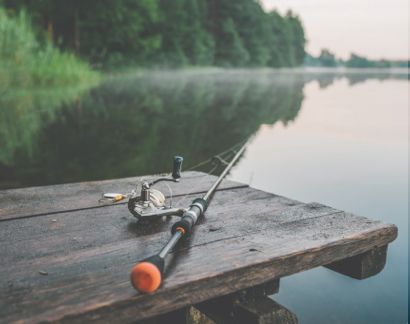
Fishing:The Ocala National Forest is a top destination for bass fishing, with renowned spots like Lake George, Lake Kerr, and Salt Springs Run. Anglers can also enjoy serene river fishing along the Ocklawaha River and Alexander Run.
Boating:Enjoy motorized boating adventures on the St. Johns and Ocklawaha Rivers and tranquil paddling on streams like Alexander Spring Creek and Juniper Creek.
Water Activities:If you are a certified diver, enjoy scuba diving at Alexander Springs Recreation Area. The crystal-clear springs of Alexander Springs and Juniper Springs offer refreshing year-round swimming spots that are perfect for snorkeling. Popular swimming areas include Salt Springs, Silver Glen Springs, and Clearwater Lake.
OHV Trail Riding : Ride across 200 miles of ATV and motorcycle trails and 81 miles of off-road trails for Jeeps and 4WD vehicles. Popular areas include Big Scrub Campground, Ocala Centennial OHV Trail System, and Lake Delancy West OHV Campground.
Wildlife Viewing: Enjoy wildlife watching in the Ocala National Forest, a haven for nature enthusiasts and birders alike. Spot the Florida black bear, catch the Florida scrub-jay or the rare red-cockaded woodpecker. Watch for Sherman's fox squirrel and the unique Florida sand skink as you explore this diverse ecosystem.
-
Identifying Flora and Fauna

There are seven ecosystems in the Ocala National forest although 70% of the forest is scrub. Scrub mint is considered an endangered plant whereas scrub morning glories are considered threatened plants. The other 30% is mostly made up of sandhills, pine flatwoods, longleaf pine, wet prairies, live oak hammocks, and swamps. Other floras include cypress trees, water lilies, and palm trees.
The forest is home to the largest populations of Florida black bears and scrub jays. A variety of other wildlife include alligators, Florida manatees, gopher tortoises, white-tailed deer, wild boar, foxes, raccoons, river otters, and other small mammals.
-
Fishing

Bass are plentiful in the forest lakes, especially in Lake George and Lake Kerr. Trophy-size bass is the norm, and smaller lakes are good for panfish.
-
Geocaching

Geocaching is a popular pastime in Florida with several active caches in the Ocala National Forest. There is an earth cache located in Alexander Springs Recreation area, and this would be a fun way to explore the spring.
-
Nature and Bird Watching

The Florida Trail offers wonderful opportunities for nature watching. You may see American bald eagles, ospreys, everglade snail kites, Florida scrub jays, Southern bald eagles, wood storks, or red-cockaded woodpeckers. The best time for birdwatching is in the early morning as the sun rises. The Florida Black Bear Scenic Byway runs through the forest, and bears are most active at dawn and dusk.
-
Stargazing

The best time of the year for stargazing in Florida is wintertime on a clear night. The nearby Hopkins Prairie campground opens Oct. 1 and offers 21 sites that can be booked for stargazing with low light pollution. Orlando’s Crosby Observatory has a refractor telescope that will enable you to see the planets, Jupiter’s moons, galaxies, and Saturn’s rings.
How to get to Ocala National Forest
Address: 40929 State Road 19, Umatilla, FL 32784
Fee: Entry fee (per vehicle) $5.0
By Car
From Orlando, FL: Ocala National Forest is approximately 73 miles north of Orlando via FL-40 W. The drive takes about 50 minutes.
From Ocala, FL: The forest is 24 miles from Ocala via FL-40 E. The drive takes about 30-40 minutes.
By Air
Orlando International Airport (MCO) : This is the nearest major airport for domestic and international flights, located 83.5 miles away.
Gainesville Regional Airport (GNV) : This airport is located 61 miles away. Take the via US-441 S/N US Highway 441 to get to the forest.
Seasonal Restrictions
Certain trails and campgrounds may be closed during heavy rains or wildfire risks. Check the forest’s official website for updates before your trip.
Fees and Permits
Ocala National Forest does not charge a general entry fee. Camping fees vary by site, and permits are required for group camping, wood collection, and other special activities.
Frequently Asked Questions About Ocala National Forest
Is there a fee to get into Ocala National Forest?
No, there is no fee to get into Ocala National Forest. There may, however, be fees for various recreational activities within the forest, or to use campgrounds, day-use sites, or other spots.
Does Ocala National Forest offer free camping sites?
Yes, Ocala National Forest offers free camping sites. Dispersed camping is allowed in the forest if you are not in the vicinity of developed recreation areas or less than 100 feet from a water source.
Is Ocala National Forest open all year round?
Yes, the Ocala National Forest is open year-round. Due to Florida's mild weather, visitors can hike, swim, and enjoy the forest just about any time of year.
Can you kayak, canoe, or raft in Ocala National Forest?
Yes, you can kayak, canoe, and raft in Ocala National Forest. There are more than 600 lakes, rivers, and springs in the forest so there are plenty of options for water activities.
What type of wildlife lives in Ocala National Forest?
Wildlife living in Ocala National Forest includes alligators, coyotes, white-tailed deer, wild boar, gopher tortoises, river otters, bobcats, and other small animals. The forest is also home to lots of different birds, fish, and reptiles.