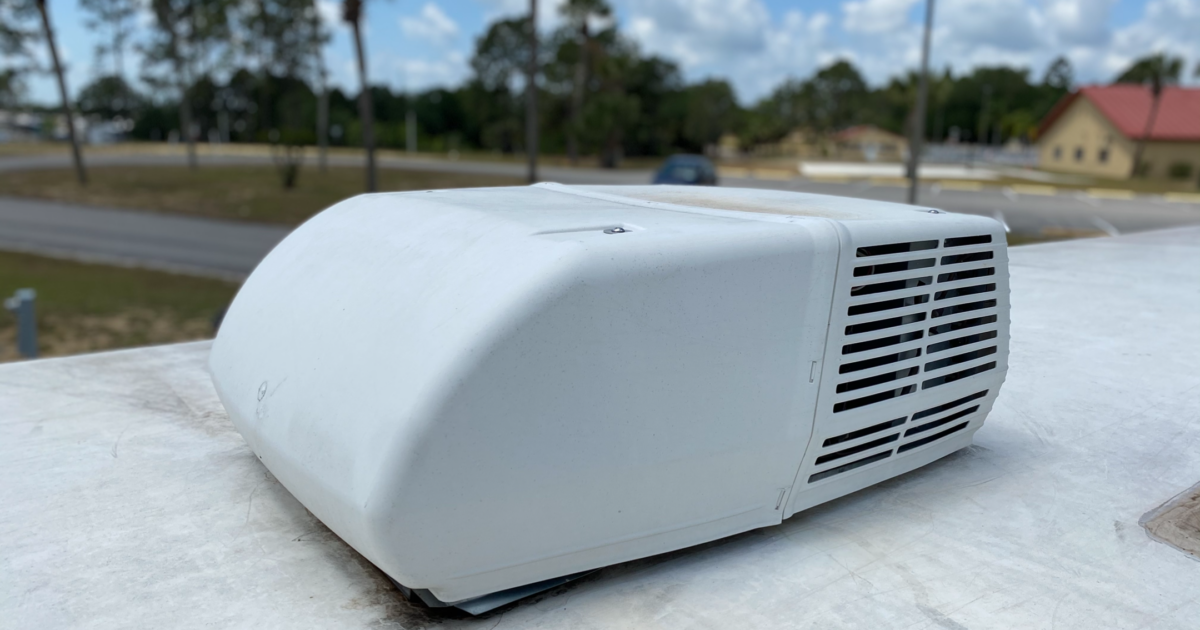
Recently, our RV air conditioner started to act up. At first it was just a little squeak, but soon enough it turned into a full-fledged moan that we couldn’t ignore. Still, we let it go for a couple of weeks…until finally the fan quit working entirely.
Honestly, I couldn’t be too mad. The A/C lasted a good long time and we were running it pretty much constantly, even with it acting up. Still, I wasn’t thrilled to be left with no air conditioner in the summer heat.
The good news? We were actually able to get our A/C up and running again fairly easily. If you’re facing this same problem, I’ve laid out a list of things we have done to attempt to fix RV A/C units, both this time around and in the past.
How an RV Air Conditioner Works
Before we go any further, I feel like I should explain what I know about how RV air conditioners work. Having this information will help you better understand what is going on with your unit and how you might solve the problem.
An RV air conditioner has three systems:
- Electrical System — This provides power, usually 120-volt A/C when plugged into shore power or a generator, sometimes supported by an inverter.
- Refrigerant System — This uses a compressor, condenser, and evaporator coil to circulate refrigerant and transfer heat out of the RV.
- Airflow System — This relies on fans, filters, and ducts to move cooled air inside and hot air outside.
If one of these systems fails, the whole unit can stop cooling effectively. I make it my goal to figure out which system isn’t working properly before I make any repairs.
Common RV Air Conditioner Issues
Some of the RV air conditioner problems we have faced (like last weekend’s problem) have been super simple fixes. Others have been a bit more complex. Below is a list of some of the symptoms we’ve experienced and the issues that can cause each symptom. Hopefully, it helps you narrow down what is wrong with your unit.
The Unit Won’t Turn On
This is often caused by power supply issues, tripped breakers, or faulty wiring. It’s happened to us a few times, and it was always a flipped breaker.
Blows Warm Air
This could be low voltage, a bad capacitor, dirty coils, or refrigerant leaks. Dirty coils were the issue when we had warm air coming from our vents.
Uneven Cooling
We’ve experienced uneven cooling a number of times. Blocked ducts, clogged filters, or weak fans may be the cause of this symptom.
Freezing Up
This is the most common RV A/C issue we’ve had. Typically, it is caused by restricted airflow, dirty filters, or a malfunctioning thermostat. Cleaning our filter tends to solve the problem.
Excessive Noise
Excessive noise was what we were experiencing until our fan stopped. In our case, it was the fan needing some grease. That said, it could also be loose components or worn bearings.
Water Leaks Inside
Generally, we see this after the A/C freezes up, which just means it’s thawing and the thawed ice is dripping inside. That said, if you have a water leak when the A/C is not frozen, it could be condensation drainage issues or clogged drain pans.
Step-by-Step Troubleshooting
So, how do you fix your broken RV air conditioner? Depending on the symptoms the A/C is presenting, I like to try the troubleshooting steps below.
Check the Power Supply
If your A/C unit doesn’t seem to be trying to turn on, you’ll want to make sure it’s actually getting power. Remember that it is pretty easy to accidentally flip a 30-amp breaker—especially when running the A/C—so it should be one of the first things you check out.
- Shore Power or Generator Output: Verify that your RV is plugged into a working 30-amp or 50-amp outlet. If using a generator, ensure that it’s running properly and is producing enough wattage.
- Circuit Breakers and Fuses: Check your RV’s breaker panel. A tripped breaker or blown fuse will shut the A/C down. Reset breakers carefully and replace fuses if necessary.
- Low Voltage Issues: RV parks sometimes have poor electrical infrastructure. If the voltage dips below 105 volts, your A/C can struggle or refuse to run. Use a voltmeter or a surge protector with a display to check.
Inspect the Thermostat
We’ve never actually dealt with thermostat issues, but if your RV air conditioner won’t cycle on or doesn’t respond correctly, the thermostat may be to blame. If you believe the thermostat might be the issue, check the things below.
- Battery Check: Many RV thermostats run on batteries. Replace them if dead.
- Loose Wiring: Remove the cover and check for disconnected or corroded wires.
- Settings: Make sure it’s set to “Cool” and that the desired temperature is below the current room temp.
Clean or Replace the Air Filter
I can’t tell you how many times we’ve forgotten to clean our RV air conditioner air filter. The result? A super dirty filter and a frozen A/C unit. Luckily, this is a super easy fix:
- Remove the filter cover inside your RV.
- Wash reusable filters with warm soapy water or replace disposable ones.
- Clean them every 30 days of use to maintain airflow.
Examine the Airflow
If you’re having issues with poor or uneven airflow and your filter seems clean, you may be dealing with another blockage down the line. We have found blankets blocking vents, crushed ductwork under our bed, and a friend once found a circle of cardboard blocking some of his ductwork.
- Vents and Registers: Make sure they are open and not blocked by furniture or belongings.
- Ductwork: Check for crushed, kinked, or disconnected ducts in ducted A/C systems.
- Fan Operation: Listen for the fan motor. If it’s weak, noisy, or not running, it may need replacement.
Inspect the Coils
RV air conditioner coils will get dirty over time. Dirty coils will cause your unit to freeze up and work inefficiently. For this reason, you’ll want to clean them regularly. Keep in mind, your RV air conditioner has two main coils: the evaporator coil (inside) and the condenser coil (outside, on the roof). Both should be cleaned gently, and bent coils should be combed back into place.
Test the Capacitors
Capacitors are small electrical components that help the compressor and fan motors start up. A weak or failed capacitor is a very common issue in RV A/C units. We are lucky in that we’ve never had this issue, but if you think you might, you can use the info below to diagnose and address the problem.
Symptoms of a Bad Capacitor:
- Humming sound but no fan or compressor start.
- Unit tries to start but shuts down quickly.
- Intermittent cooling.
Testing
Use a multimeter with a capacitance setting. Compare readings to the rating on the capacitor label.
Replacement
Capacitors are inexpensive and relatively easy to swap out if you’re comfortable with electrical repairs.
Safety Note: Capacitors hold a charge even when power is disconnected. Always discharge them before handling.
Look for Refrigerant Problems
Unlike residential systems, most RV air conditioners are sealed units. This means they are not designed to be recharged like a car A/C system, and if your RV A/C loses refrigerant, it will likely need to be replaced.
Signs of Refrigerant Loss
- Warm air despite running continuously.
- Frost buildup on coils.
- Reduced cooling capacity over time.
Unfortunately, if you suspect a refrigerant issue, you’ll need a professional HVAC technician or just replace the unit entirely if you’re comfortable doing so.
Address Excessive Noise
Noisy air conditioners can be irritating, especially in the confined space of an RV. Besides, as we learned recently, some noises can be signs of problems.
Rattling
If your unit is rattling, you’re probably dealing with loose screws or panels. In this case, try tightening hardware.
Grinding and Squealing
Grinding or squealing noises are probably worn fan motor bearings. Motor replacement may be necessary, but if you’re lucky, you can get away with greasing the bearings like we did.
Buzzing and Humming
Lastly, if you hear buzzing or humming you might be looking at failing capacitors or electrical components. As mentioned above, replacing a capacitor isn’t a huge deal.
Fix Water Leaks
Water dripping inside the RV is usually condensation that isn’t draining properly. Unfortunately, a puddle of water on the RV floor is very likely to lead to some water damage. Besides, you do want to make sure the water isn’t getting in due to poor seals.
- Check the Drain Pan: Located under the evaporator coil. Clean it of dirt and debris.
- Unclog the Drain Line: Use compressed air or a plumber’s snake to clear blockages.
- Seal Gaps: Ensure the A/C gasket between the unit and roof is intact to prevent rainwater leaks.
Preventative Maintenance Tips
Preventive maintenance is my best friend. I do my very best to stay on top of all my RV maintenance so I don’t have to deal with unexpected issues while I’m out trying to enjoy a cool destination. My RV A/C is included on my maintenance schedule.
I try to make sure to…
- Clean filters every month during heavy use.
- Inspect and clean coils every season.
- Check roof seals annually to prevent leaks.
- Use a surge protector to avoid electrical damage.
- Run our A/C periodically in storage to keep components lubricated.
- Cover the unit in winter to protect from debris and snow.
When to Call a Professional
I am all about DIY RV repairs. In fact, I’ve fixed almost every issue we’ve had with our rigs. That said, there are a handful of RV air conditioner problems that should be addressed by a professional.
I recommend calling for help if…
- You suspect a refrigerant leak.
- The compressor is not running despite a good power supply.
- You’ve replaced capacitors and checked wiring with no success.
- You’re uncomfortable working with electricity.
Emergency Cooling Alternatives
Being without A/C in the middle of summer was a nightmare. Honestly, absolutely nothing we did came anywhere near matching the cooling power of our air conditioner. That said, we did find some things that helped a bit until we got the A/C up and running again.
We parked in the shade, kept roof vents open, used fans to help improve airflow, and put Reflectix on our windows to block out sunlight. We had considered purchasing a swamp cooler or portable A/C unit, but we didn’t end up needing to do that. It is also possible to put a window unit in an RV window, but it will need to be held up by something, and some RV parks will frown on putting an A/C in the window.
I know from experience that losing your RV air conditioner while you’re out trying to enjoy your travels is a major bummer. Fortunately, we are almost always able to fix the problem on our own. Use the tips above and you might be able to do the same!