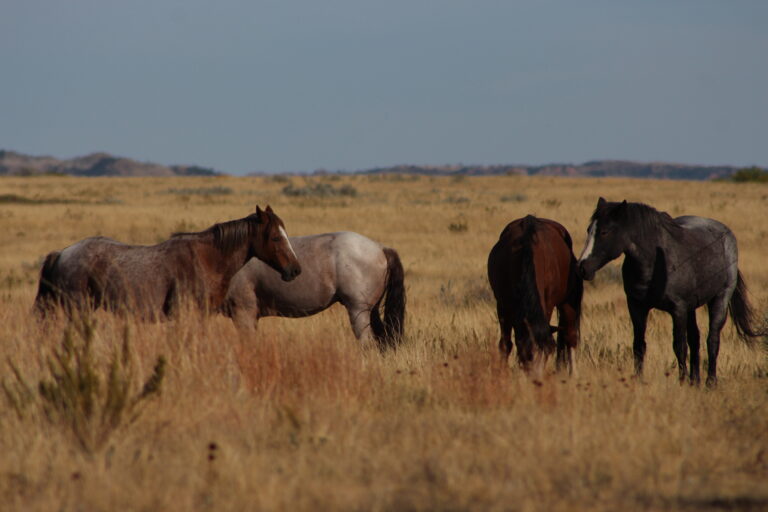
On a recent trip across the country, we stopped by Theodore Roosevelt National Park in search of wild horses. We camped right outside the South Unit so we could head into the park early in the morning. I am so glad we did because it wasn’t more than a few miles into the drive that we spotted two groups grazing in the prairies, and they even had babies with them! We visited in late September, so not only was the wildlife very active, but the park was also covered with beautiful fall foliage.
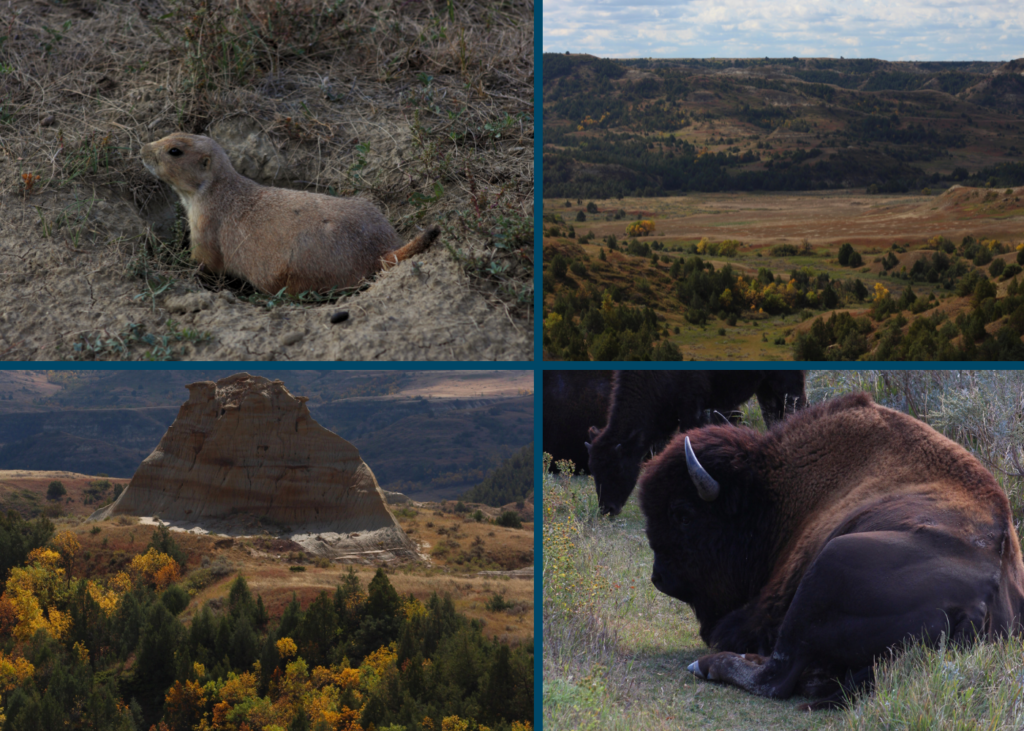
The park itself is stunning and highly underrated, with dramatic cliffs, winding roads, and endless views of colorful prairie and eroded rock formations. As we drove the scenic loop, we stopped often to take in the views and watch for wildlife. In addition to the wild horses, we saw prairie dogs popping out of their burrows, bison strolling along the road, and even a group of mule deer peeking out from behind the brush.
Where to See Wild Horses in T.R.N.P
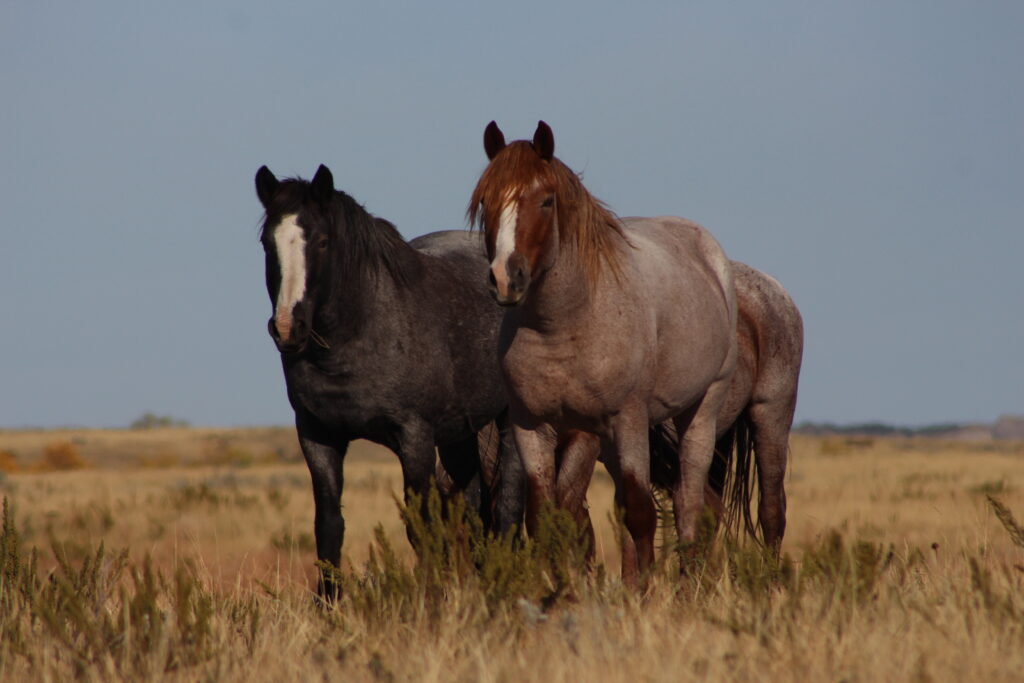
One of the most rewarding parts of our visit was simply sitting quietly and watching a group of horses as they grazed and interacted with one another. I enjoy wildlife photography and have had the chance to photograph wild horses in different areas of the country, but my favorite photos and experiences have been from the horses at TRNP. If you’re hoping to see them, your best bet is to drive slowly along the Scenic Loop Drive in the South Unite early in the morning or later in the evening when they tend to be more active and get closer to accessible viewing spots. Bring binoculars or a zoom lens (I found that in this location, using a 70mm to 300mm is enough to get close-up shots) —you’ll want a closer look without needing to get too close. I’ve had great luck catching them in the valley on East River Road near Peaceful Valley Ranch at sunrise and in the early mornings.
Why Are There Wild Horses in Theodore Roosevelt National Park?
Unlike most national parks, where wild horses are considered non-native and often removed, Theodore Roosevelt National Park recognizes these horses as a historic and cultural symbol. The horses are descendants of ranch stock that once roamed the area freely and are now managed as a free-roaming demonstration herd. Their presence pays tribute to the ranching history of the Badlands and Theodore Roosevelt himself, who credited his time in North Dakota with shaping his conservation ideals and love of the wild.
Theodore Roosevelt National Park: A Home on the Range
Spanning over 70,000 acres, Theodore Roosevelt National Park is divided into three distinct units: the South Unit, North Unit, and Elkhorn Ranch Unit. The wild horses are most often seen in the South Unit, where they roam freely across the open grasslands, rugged hills, and cottonwood-lined river valleys. Visitors might encounter them while driving the scenic loop road, hiking along one of the many trails, or simply gazing out across a vista.
The horses move in bands—small groups typically made up of one stallion, several mares, and their foals. These bands shift and change over time, with foals born in spring and summer adding to the population each year. The park is one of the few places in the country where you can observe wild horses in a natural setting, undisturbed by fences or human interference.
Camping at Theodore Roosevelt National Park
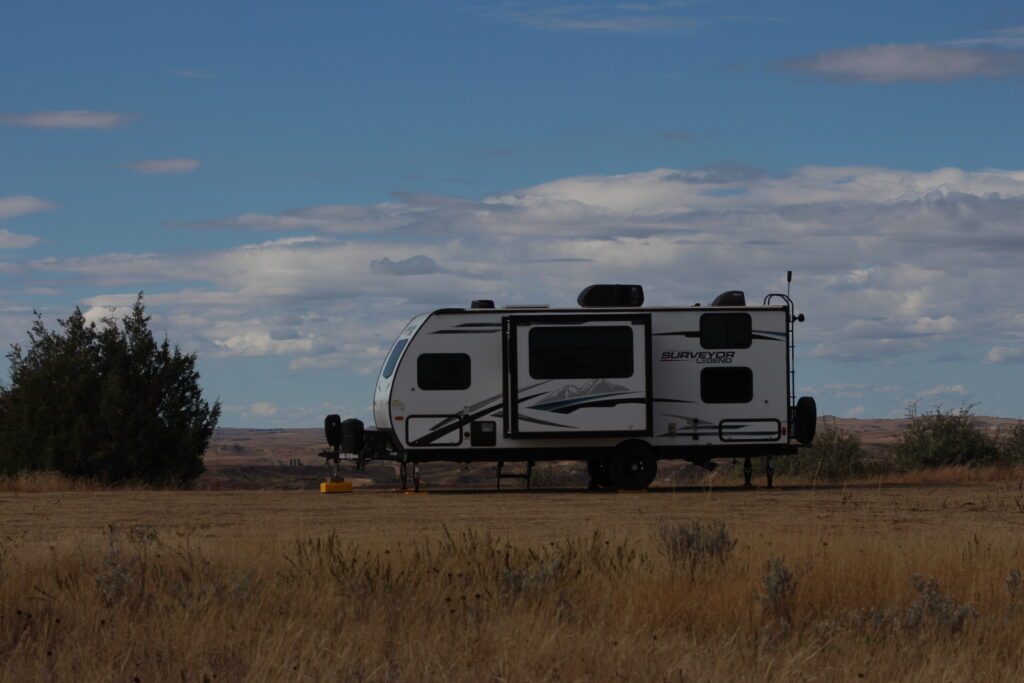
As I mentioned before, we camped right outside the South Unit during our visit so we could be close to the park and make the most of our time. Our RV is equipped to boondock, so we choose to stay in BLM land and dry camp for free. You can find BLM sites that allow free dry camping or boondocking just north of the South Unit entrance off W River Road. Make sure you are familiar with Leave No Trace when opting for dry camping, and always leave it better than you found it!
If you prefer bathrooms and comfortable utilities, there are two main campgrounds—Cottonwood Campground in the South Unit and Juniper Campground in the North Unit— that offer both tent and RV camping. While the sites are rustic, they will still have more services than boondocking. Reservations can be made in advance through the National Park Service website, and both campgrounds are open seasonally.
Wild Horse Populations and Park Management
The number of wild horses in the park varies, typically ranging from 70 to 150. To maintain a healthy population and preserve the ecosystem, the National Park Service periodically uses fertility control and selective removal to manage the herd size. These efforts help ensure that the horses remain a thriving part of the park without compromising the natural resources that support all its wildlife.
Visitor Guidelines for Watching Wild Horses
To keep both visitors and wildlife safe, it’s important to follow a few key guidelines:
- Keep Your Distance: Observe from afar—do not approach or attempt to touch the horses.
- Stay Quiet and Respectful: Loud noises or sudden movements can startle wildlife and disrupt their natural behaviors.
- Stay on Designated Roads and Trails: Venturing off-trail can damage fragile ecosystems and put you at risk.
- Follow All Park Rules: Respect closures, signage, and regulations at all times.
Educational Opportunities
The park offers a variety of ranger-led programs throughout the year, many of which touch on the history of the horses and their role in the park’s story. Stop by the visitor center for information on talks, exhibits, and activities tailored to families and curious travelers.
A Place Worth Returning To
The wild horses of Theodore Roosevelt National Park are a true treasure, and getting to witness them roam free is an experience I won’t forget. I have visited the park twice and can say confidently that my experience wasn’t a fluke. The park is truly a hidden gem location for seeing wild horses, bison, and fall foliage!
Not only are you going to find amazing hikes and wildlife in the park but also an adorable town, Medora. This cute little town is an ode to country music and the untame spirit of the West. You will find live outdoor performances all summer long in their iconic set and venue for the greatest show in the West, the Medora Musical. This historic town has many more fun things to do, including a one-of-a-kind culinary experience: a cowboy cookout buffet of Pitchfork Steak Fondue and so much more!
For more information on planning your visit and tracking wildlife sightings, check out the official National Park Service website.