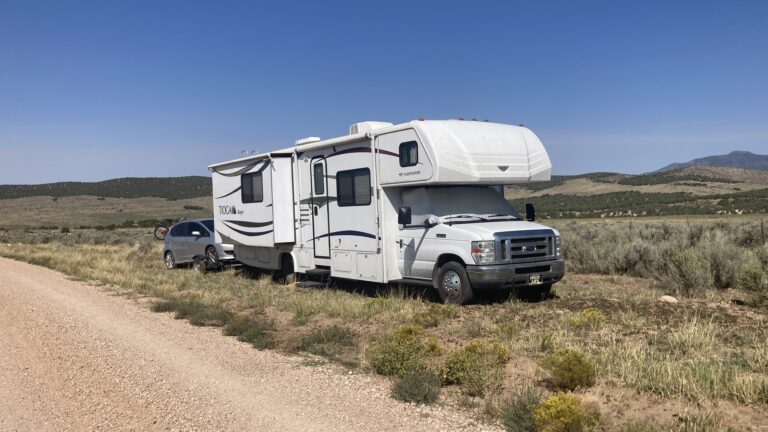
In my opinion, full-time RV living is a dream come true. The freedom to travel wherever I want wherever I want is absolutely magical, and the ability to park my home in the middle of some of the prettiest places in the country is a huge bonus.
Yes, I adore the full-time RV lifestyle. That said, we did have some surprises come our way over the first few years of living the RV life, and they weren’t always good surprises either.
If you’re hoping to hit the road full time, you may be wondering what to expect and how to live in an RV. Read on to learn 15 things you may not have known about full time RV living, so you can decide whether this lifestyle is right for you.
What Is Full-Time RV Living?
As you might have guessed, full time RV living entails living in an RV full time. Some people park their RVs and live a stationary RV lifestyle. That said, I highly recommend traveling as you experience RV life. RV living is ideal for those who work remote jobs, those who have long stints to travel in between contracts, and retirees. It’s best for adventure-focused travelers who understand that living on the road will throw you curve balls from time to time.
15 Things You Didn’t Know About RVing Full-Time
Before you hit the road full time, it’s a good idea to know what to expect. Here are 15 things you’re definitely going to want to be aware of.
1. You’ll Spend More Time Planning Than You Expect
Listen, I cannot tell you how many countless hours I’ve spent sitting in front of a computer planning routes, finding and booking campsites, and adjusting for weather. Fortunately there are plenty of apps and tools that help make this task easier.
I recommend:
- Campendium
- RV Life Trip Wizard
- iOverlander
- RV Life Campgrounds
2. Not Every Campsite Is Created Equal
You might think, “A campsite is a campsite. I’ll just book what I can get.” Unfortunately, you’d be very wrong. Not all campsites are created equal, and it is important to do your research and make sure the campsites you book will work for you.
Make sure your campsite is long enough for your rig and has the hookups you wish to have. You’ll also want to take a peek at the amenities available in the campground.
3. The Way You Travel Will Change
Before we got on the road full-time, we tended to travel fast. We would drive for 12 or more hours in a day and would spend a couple of nights in a place and call it good. Once we moved into the RV, we quickly realized that we could slow down. Now we never drive more than 4–5 hours in a day and we will spend weeks in a single location to make sure we soak it all in.
4. Internet Access Takes Planning
Admittedly, staying connected to the internet while traveling is much easier now than it was when we got on the road over a decade ago. That said, it does still require some planning. Personally, I recommend investing in Stralink for the most reliable internet you can get on the road (and even in the middle of nowhere). That said, if you don’t want to do that, you can definitely get by with a hotspot or two and a cell booster.
5. Limited Storage Space Changes Your Habits
I’ve never really been a hoarder, but living in an RV has made me a true minimalist out of necessity. I think hard before bringing another item into our home-on-wheels, and I always look for stackable, collapsible, and multi-use items whenever I can.
6. Daily Tasks Look Different on the Road
My husband loved that he didn’t have to mow the lawn anymore when we moved into the RV. That said, yard work was replaced by other chores and tasks. Dumping tanks, refilling the fresh tank, and managing power usage all became things we had to think about on a regular basis.
7. You Can Still Cook Real Meals
Yes, RV kitchens are smaller, but that doesn’t mean you have to change the way you eat. Very little changed about what or how we cooked when we started living in the RV. You can absolutely make all of your favorite foods no matter where you roam. Just make sure you have the right tools on hand!
8. Costs Can Be Flexible
Okay, one of my favorite things about RVing full-time is the ability to adjust our living costs from one month to the next. Because we can choose where we stay, we can pick free or inexpensive campgrounds when we’re trying to save money, and splurge when we have the funds to do so. We can also easily adjust our fuel usage and food choices based on what we have to spend.
9. You’ll Discover Places You’d Normally Miss
Because RVing allows us to wander off the beaten path and stop on a whim, we have discovered all kinds of hidden gems and unique places. Small towns have been my favorite stops and we’ve driven some of the prettiest scenic routes out there.
10. Weather Impacts Everything
As a full-time RVer, it is so, so important to keep a close eye on the weather. We won’t travel in heavy rain, high winds, or snow and ice, so we have to plan our travel days accordingly. Additionally, weather can impact when we decide to visit a national park or go on a hike, and we might choose to make certain preparations if a big storm or super cold weather is headed our way.
11. Community Is a Big Part of RV Life
Our first year on the road was a lonely one, but then we discovered just how amazing the RV community is and we haven’t stopped making travel friends since. We make friends with our RV neighbors by inviting them to our campfires. We also attend social events in campgrounds to meet new people, and we have attended several rallies where we have made new friends. Of course, all of this socialization is totally optional, so you can decide to stay inside and keep to yourself if that’s what you prefer!
12. Maintenance Is Part of the Lifestyle
Here’s the thing: RVs see a lot of bumping and bruising. This means they require a lot of maintenance and repairs. Because I can’t afford to take my RV to the shop every time I turn around, I will do most small fixes and regular upkeep myself. I use YouTube videos to learn how and then just dive right in.
13. You Don’t Have to Commit Forever
Choosing to travel in an RV doesn’t have to be a forever commitment. You can start by trying the experience on for size with an RV rental. If that goes well, you can get an RV of your own and start traveling full-time for as much or as little time as you see fit. Only enjoy it for a couple of months? That two months of cool experiences you wouldn’t have had otherwise!
14. The Right RV Setup Makes a Big Difference
Having the right RV matters a lot when you’re living and traveling full-time in your rig. The layout is incredibly important, so make sure you pay attention to how things will work in your day-to-day life as you’re shopping around. Pay attention to the storage space, sleeping spaces, and available workspace.
15. It’s More Comfortable Than Most People Expect
Many people think of camping when they think of RVing, but it’s actually not like camping at all. You’ll have your own private space, which is climate controlled and contains all of the creature comforts you’d have in a house. Additionally, because you have all of your stuff onboard, you’ll be able to maintain familiar routines, despite hopping from one place to another.
Pros and Cons of RVing Full-Time
Still not sure if full time RV living is for you? Consider these RV living pros and cons when making your decision.
Pros
- Flexibility — When your house has wheels, you can move it whenever and wherever you please.
- Scenic travel — You’ll be able to park in some of the prettiest places on earth and call those places your yard.
- Cost control — Your cost of living is totally up to you, and adjusting just requires a change in travel plans.
- Unique experiences — By traveling in an RV, you’ll be able to experience all kinds of amazing and unique things!
Cons
- Planning required — We do a lot of planning. This takes time and effort and can get tedious.
- Maintenance — Obviously, you do have to maintain your home-on-wheels. This can be a pain and can get expensive.
- Limited space — The most obvious drawback? A distinct lack of space. Make sure you’re okay being cozy with those you live with.
Is Full-Time RV Living Right for You?
Of course, those aren’t the only things to consider. Also think about the things listed below.
People who are best suited to full time RV living include the following:
- Those with flexible schedules
- People who love to travel
- Those who can roll with the punches and solve problems on the fly
- People with a remote work lifestyle or retirees
RVing full time is not ideal for the following people:
- Those who prefer routine and stability
- Families who need a large living space
- Those who are tied to a stationary job with little flexibility
How to Try Full-Time RV Living Before Committing
I could list pros and cons and RVing full time tips all day, and it still wouldn’t tell you for sure whether or not full time RVing is for you. The best way to know for sure? Try it for yourself! Don’t worry though, you don’t have to go out and buy an RV right off the bat.
Start with a Short-Term Rental
The first thing I recommend doing is to rent an RV and take it out on a quick trip to learn the ropes and get a feel for what you’re looking for in an RV. This is the best tip I can give about RV life for beginners.
Test Different RV Types
If you enjoy your first trip out, figure out what worked about that rig and what didn’t, and rent another rig that you think might work better. Keep doing this until you find the best RV type and floorplan for you and your family.
Plan a Multi-Stop Trip
Once you know what RV works best for your crew, plan a longer multi-stop trip in a rental rig. This will let you get a better feel for what it’s like to live in an RV full time.
Ready to find the best RV for you? Pick out a rental RV today!
While you’re trying on rigs for size, keep in mind that full time RVing can be flexible. It doesn’t have to be all or nothing, and it doesn’t have to be done a certain way. Instead, RV living is all about putting power into your hands, giving you the option to choose where you live, how long you stay there, and how much you spend on living expenses.
If that sounds like something you want to have, I highly recommend renting through RVshare to give the RV lifestyle a spin and decide whether it’s for you.
FAQs
This is a broad question that is difficult to answer. Basically, you have the power to make it look however you like. Want to travel all over the country? Go for it! Prefer to stay in one region? That’s fine too. Want to spend as little as possible? That’s totally doable. Like to splurge here and there? That’s cool too!
In any case, expect less storage space, more time together as a family, a different set of chores, community when you want it, isolation when you prefer that, an ever-changing view, lots of maintenance, lots of adventures, and lots of problem solving.
This is also totally up to you. You can change your cost of living through your campground, fuel, and food choices. I’ve met families who live on less than $2,000 a month in their RV. I’ve also met families who say they wouldn’t budget less than $8,000 a month. We tend to fall somewhere in between, but our budget does fluctuate with the season because we tend to be more stationary in the winter.
It can be, but it isn’t always. If you’re looking to save money, I recommend sitting down and writing out a list of your current expenses versus what you will spend while living in an RV to figure out if it is actually a cheaper alternative for you.
Constant maintenance, planning, and problem solving tend to be the biggest challenges people face while RVing full-time. These things require a lot of mental energy, and after a while they can definitely get to you. It helps a lot to have a slow season so you aren’t constantly moving and you have time to gather your bearings.
Absolutely! We were total beginners when we moved into our RV full time. Sure, there is a bit of a learning curve, but if you head in with patience and willingness to learn, you’ll be good to go.