Fremont-Winema National Forest Guide
- Home
- National Forests
- Oregon
- Fremont-Winema National Forest
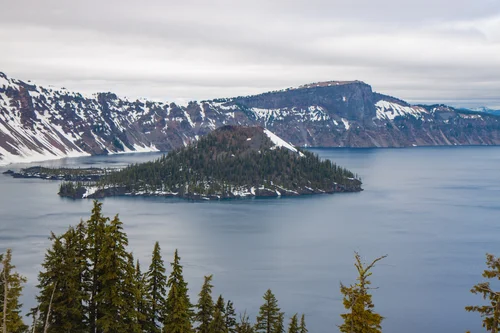
The Fremont-Winema National Forest is a 2.3-million-acre forest that borders Crater Lake National Park and spills into the Klamath Basin. The diverse terrain has marshes, meadows, volcanic areas, and areas of the Oregon Outback. There are four designated Wilderness areas to explore: Gearhart Mountain Wilderness, Mountain Lakes Wilderness, Mount Thielsen Wilderness, and Sky Lakes Wilderness. The forest offers opportunities for fishing, hiking, boating, hunting, and horseback riding. In the winter, you can enjoy skiing, snowmobiling, and ice fishing. There is also a 50-mile recreation trail running through the forest between Government Harvey Pass and Cox Pass.
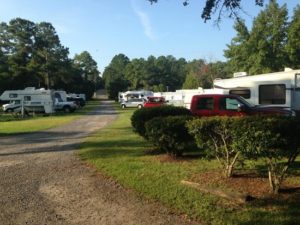
RV Rentals Near Fremont-Winema National Forest
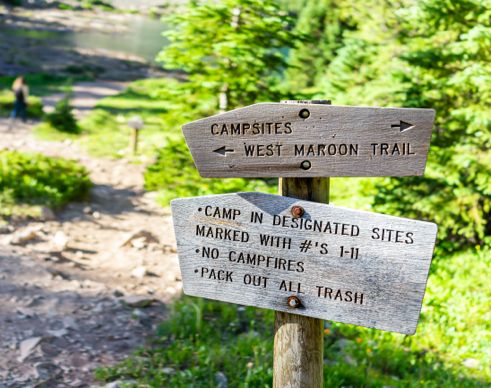
Fremont-Winema National Forest Hiking Trails
-
Lake of the Woods Trail
Lake of the Woods Trail is near Klamath Falls and best used from April until October. The trail takes you through dense woods with lots of wildflowers and a lake for swimming. Three miles in, there is a steep incline where you will see a volcanic lava rock area. During the winter, this is a good trail for snowshoeing, and parts of the lake are frozen.
Length: 6.5 miles
Intensity: Easy
-
Mount McLoughlin Trail
Mount McLoughlin Trail is a steep trail near Butte Falls. Experienced hikers will find the pinnacles on the East ridge worth the climb. The terrain is rocky with lots of rock walls and rock cairns. The best time to hike this trail is during the summer months.
Length: 9.5 miles
Intensity: Hard
-
Yamsay Mountain Trail
Yamsay Mountain Trail offers panoramic views of Three Sisters, Fort Rock Basin, and even Mount Shasta. This hike is most enjoyable when the day is clear so that you can have the best view of the snow-covered peaks of the Cascade Range.
Length: 3.5 miles
Intensity: Intermediate
-
Gearhart Mountain Trail
Gearhart Mountain Trail offers access to the Palisades full of rock outcrops, balancing rocks, and rock mazes. You can still see silhouettes of ancient rock carvings. Continue hiking to catch sight of the Dome, a monolith that is 300 feet high. You can choose to continue to the North Fork of the Sprague River Trailhead or turn around and head back to the start.
Length: 13.5
Intensity: Moderate to Difficult
-
Cherry Creek Trail
The Cherry Creek Trail accesses the east side of Sky Lakes Wilderness with several high mountain lakes. The trail crosses the creek more than once and intersects with Sky Lakes Trail & Trapper Lake. Huckleberries are usually plentiful, and you may see squirrels, deer, or bears.
Length: 6.1 miles
Intensity: Intermediate
-
Brown Mountain Trail
Brown Mountain Trail is located near Butte Falls and is best used from April until October. The trail leads through the forest and flows to Fish Lake, with a splendid view of Mount McLoughlin.
Length: 5.6 miles
Intensity: Easy
-
Cold Springs Loop
Cold Springs Loop is near Klamath Falls, and it offers a one-way or loop option. This trail leads directly to the Sky Lakes Wilderness, crossing Sky Lakes Trail and moving towards the Sky Lakes Area.
Length: 2.7 miles
Intensity: Moderate
Activities in Fremont-Winema National Forest
-
Identifying Flora and Fauna

There are over 300 species of wildlife living in the forest. Big game includes mule deer, elk, and pronghorn antelope. Porcupines, badgers, and coyotes frequently roam within this forest. In the spring and fall, migrating geese, ducks, and swans pass through the forest. Matsutake Mushrooms, a type of highly prized edible mushroom, can be harvested in the fall and early winter. Canadian geese, mallards, and whistling swans are frequently seen in the water. Wildflowers are abundant; among them are the Washington lily, Showy Penstemon, and Lady Slipper. There are also sensitive species, including the Tricolored Monkey Flower.
-
Fishing

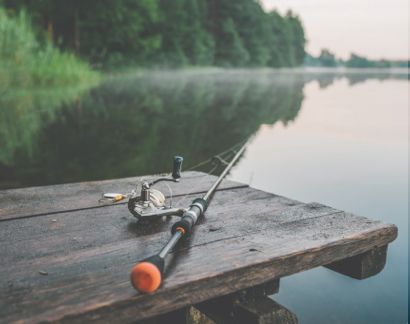
If fishing is your pastime of choice, try one of the high-elevation lakes like Campbell Lake, Deadhorse Lake, or Cottonwood Meadows Lake for trout. Heart Lake offers trout as well, along with salmon, catfish, and steelhead. If you are lucky, you may catch bull trout. Warmer lakes offer large-mouthed bass.
-
Geocaching

If you enjoy the challenge of geocaching, you won’t be disappointed with those available in the forest. Klamath is a trailblazer for geocaching in Oregon.
-
Nature and Bird Watching

The wilderness areas of the forest are the best places to view wildlife. Elk, mule deer, and pronghorn antelope are commonly seen among the trees, along with raccoons, squirrels, and voles. Predators also call the forest home and include black bears, bobcats, cougars, and mountain lions. If you are patient, you may catch a rare glimpse of the protected Canada Lynx or the Oregon Spotted Frog. If you prefer bird-watching, grab your binoculars, and you may spot falcons, American kestrels, bald eagles, or golden eagles. Other birds to see are loons, sandpipers, swans, pelicans, flycatchers, jays, thrushes, or starlings.
-
Stargazing

The best place for stargazing is the remote Hager Mountain Lookout. With an elevation of 7,195 feet, it takes a bit of planning to reach. In winter, the lookout can only be reached on foot with snowshoes or cross-country skis. During the summer, a four-wheel-drive vehicle is needed to drive to the lookout. The beauty of the constellations on a clear night is worth the effort to reach the lookout.
How to get to Fremont-Winema National Forest
Address: 1301 South G Street, Lakeview, OR 97630
Fee: Entry fee $0
The Fremont-Winema National Forest is a trove of never-ending adventure whether you are looking for a wilderness to explore, want to hike, or relax and fish. The beauty of the mountains and the abundance of nature and water take you away from civilization, if only for a brief time. An RV makes it easy to travel to different areas of the vast forest.
Frequently Asked Questions About Fremont-Winema National Forest
Is there a fee to get into Fremont-Winema National Forest?
No, there is no fee to get into Fremont-Winema National Forest. However, there are fees and permits which are required to park in certain areas of the forest, like day-use areas. There are also permits required for recreational activities like cutting down Christmas trees or camping.
Does Fremont-Winema National Forest offer free camping sites?
Yes, Fremont-Winema National Forest offers free camping sites. Dispersed camping is allowed in various parts of the forest. Campers must bring everything with them, including water, and leave no trace when they pack up camp. Also, know the fire restrictions and regulations - there are times when no campfires are allowed in the forest.
Is Fremont-Winema National Forest open all year round?
Yes, Fremont-Winema National Forest is open all year-round. Some activities and areas may not be accessible in winter, but there are parts of the forest which can be used in all seasons.
What type of wildlife lives in Fremont-Winema National Forest?
Wildlife living in Fremont-Winema National Park includes deer, elk, pronghorns, black bears, and mountain lions. The forest is also home to a variety of birds including Canada gees, whistling swans, and ducks, along with fish and other small animals.
What is the closest town to Fremont-Winema National Forest?
Bly, Oregon is one of the closest towns to Fremont-Winema National Forest. There are stores, restaurants, and places to stay or camp. Klamath Falls is a larger town that's about 50 miles from Bly.