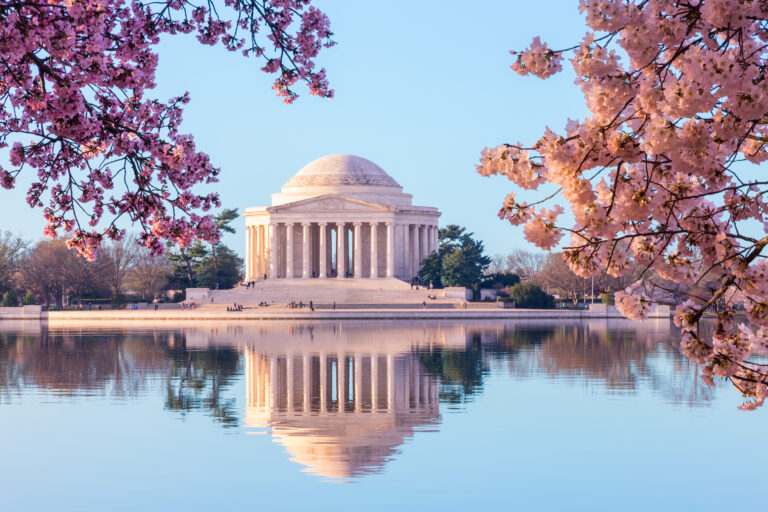
The Perfect 2-Day RV Itinerary for Washington, D.C.

By Chelsea Gonzales
Two-Day Itineraries

Washington, D.C. offers a unique opportunity to experience some of the nation’s most significant artifacts and landmarks. The city boasts numerous museums and memorials, many of which are free. It also gives visitors the opportunity to tour government buildings, savor delicious food, and immerse yourself in the rich history of the United States.

Planning a 2-day RV trip to Washington, DC?

Two days is enough to explore some of the aforementioned monuments and museums. The best option for RVers is to park the rig ata campground outside of the city and use a tow vehicle, Metro, or rideshare to get around. Spring and fall offer the most comfortable sightseeing weather by far. Summer is hot and crowded. 

At-a-Glance Trip Planner

CategoryRecommendation
Best time to visitMarch-May and September-October
Ideal RV sizeClass B, Class C, or smaller travel trailer
Suggested stay2-3 nights
Campground distance10-25 miles from downtown
Pet friendlyYes (where applicable)
Budget$$-$$$
Reservations neededYes, especially during spring, summer, and holidays

RV Planning Essentials for Washington, DC

Best RV Types

Generally speaking, Washington, DC is easier to navigate with a smaller RV, especially if you plan to drive into or near the city. That said, there are campgrounds that will accommodate larger RVs just outside of the city, so if you need more space, a bigger rig should be manageable, especially if you have a toad. 

  • Class B: Best for couples or small families who want the easiest vehicle for city driving and parking. 
  • Class C: A good choice for families who need more space while still wanting a relatively manageable vehicle.
  • Travel trailer: A practical option for people who want to leave their trailer at the campground and use a tow vehicle for sightseeing.
  • Large Class A: Less convenient for a DC-focused trip because of narrow city streets and limited parking, but okay if you won’t be driving the RV in the city. 

Driving Tips

  • If you’re in anything larger than a van, avoid driving a your RV downtown. Washington, DC has busy streets and super limited parking. Besides, many areas are easiest to explore on foot. 
  • If you choose to drive a van or bigger tow vehicle into the city, watch for low-clearance garages. 
  • Keep in mind that rush hour can make the drive into the city long. Early mornings and weekends are generally easier if you’re in a hurry. 
  • When choosing a campground, consider Metro access. If you can easily hop on a bus or train into the city, you may not have to drive much at all. 
  • Don’t rely on GPS alone. Use an RV-specific navigation system or carefully check your route for height and weight restrictions before you head out. 

Budget Snapshot

Washington, DC can actually be a relatively affordable destination because many of the city’s most famous attractions are free. Still, other costs can and likely will add up.

ExpenseEstimated Cost
RV rental$100-$300+ per night
Fuel$75-$150 for a typical weekend trip
Campground$50-$100+ per night
Attraction fees$0-$50+ per person
Parking/transportation$20-$75+ per day

Weekend Itinerary

Day 1: Explore Washington, D.C.

Morning (9:00 AM–12:00 PM)

Visit the National Archives Museum

At the National Archives Museum, you’ll be able to view the Declaration of Independence, Constitution, and Bill of Rights. You can also see exhibits about the American Revolution. Plan to arrive early to beat the crowds; the museum opens at 10:00 a.m.

  • Time needed: 1.5–2 hours
  • Parking: Limited downtown parking; RV parking is not recommended.
  • RV accessibility: Leave your RV at the campground and use a tow vehicle, Metro, or rideshare.
  • Reservations: Timed-entry reservations are recommended.
  • Family friendly: Yes
  • Pet friendly: Service animals only

Afternoon (12:00 PM–5:00 PM)

Lunch at Mars Cafe

Stop by the Mars Cafe on the lower level of the Smithsonian National Air and Space Museum when you’re ready for a bite to eat. It serves sandwiches, salads, pastries, and drinks.

  • Time needed: 1 hour
  • Parking: Limited street and garage parking.
  • RV accessibility: Best visited without the RV.
  • Reservations: Generally not required.
  • Family friendly: Yes
  • Pet friendly: No

Tour the United States Capitol

The United States Capitol building is open to the public for tours until 4:30 p.m., Monday through Saturday. Ensure you book your tour ahead of time to secure a spot. During the tour, your guide will show you the Crypt, Rotunda, and National Statuary Hall.

  • Time needed: 2–3 hours
  • Parking: Very limited near the Capitol.
  • RV accessibility: RV parking is not available; use a tow vehicle or public transportation.
  • Reservations: Recommended.
  • Family friendly: Yes
  • Pet friendly: Service animals only

Check In at Your Campground

Stop by the campground office to speak with a staff member when you arrive. Make your way to your campsite, hook up anything that you need to, and start unpacking your gear. If you’d like to maximize time spent in the city, you can rent an RV from an owner who will deliver the RV to your campground and set things up for you. To take advantage of this feature, filter for delivery options when searching for your RV rental.

Evening (5:00 PM–10:00 PM)

Dinner in Georgetown

Head to Georgetown for dinner and an evening stroll. For a casual meal, stop at Good Stuff Eatery for burgers, fries, and shakes.

  • Time needed: 1–1.5 hours
  • Parking: Street and garage parking are available, but spaces can be difficult to find.
  • RV accessibility: Best accessed with a passenger vehicle or rideshare.
  • Reservations: Not typically required.
  • Family friendly: Yes
  • Pet friendly: Patio seating may be available.

Explore Georgetown Waterfront

After dinner, take a walk through Georgetown and along the Georgetown Waterfront Park. We recommend enjoying views of the Potomac River and take some time to browse the neighborhood’s shops.

Wind Down With a Campfire

When the day is done, head back to the campground to enjoy a campfire in front of your RV. Share your favorite part of the day and enjoy a yummy dessert. 

Day 2: Discover Washington’s National Sites

Morning (8:00 AM–12:00 PM)

Breakfast at the RV

Enjoy a leisurely breakfast at your RV. Use the kitchen to make a full breakfast to fuel your full day. 

Visit the Lincoln Memorial

At the Lincoln Memorial, you’ll be amazed by the towering statue of Abraham Lincoln gazing out over the National Mall. The memorial has inscriptions of Lincoln’s most famous speeches, including the Gettysburg Address. Additionally, the steps offer a panoramic view of the Reflecting Pool and the Washington Monument.

  • Time needed: 1–1.5 hours
  • Parking: Limited nearby parking.
  • RV accessibility: RV parking is limited; use a passenger vehicle or public transportation.
  • Reservations: Not required.
  • Family friendly: Yes
  • Pet friendly: Yes, in accordance with National Park Service rules

Walk the National Mall

Of course, you’ll want to check out the rest of the National Mall. Depending on your pace, you can visit the Vietnam Veterans Memorial, Korean War Veterans Memorial, and World War II Memorial before heading toward lunch.

  • Time needed: 1–2 hours
  • Parking: Limited throughout the National Mall area.
  • RV accessibility: Best explored on foot, by Metro, or with a passenger vehicle.
  • Reservations: Not required.
  • Family friendly: Yes
  • Pet friendly: Yes, with applicable restrictions

Lunch (12:00 PM–1:00 PM)

Grab Lunch in Arlington

Cross the Potomac into Arlington for lunch. Quarterdeck Restaurant is a longtime neighborhood favorite known for seafood, Maryland blue crab when in season, and American favorites.

  • Time needed: About 1 hour
  • Parking: Parking is available nearby.
  • RV accessibility: Best accessed with a passenger vehicle.
  • Reservations: Recommended during busy periods.
  • Family friendly: Yes
  • Pet friendly: Varies by seating area

Afternoon (1:00 PM–5:00 PM)

Explore Arlington National Cemetery

At Arlington National Cemetery, you’ll be able to pay your respects to those who have served the country. Must-see sites include the Tomb of the Unknown Soldier and the gravesite of President John F. Kennedy.

  • Time needed: 2–3 hours
  • Parking: Paid parking is available at the cemetery entrance.
  • RV accessibility: Large RVs may have difficulty; a passenger vehicle is recommended.
  • Reservations: Not required for general admission; tours may require advance booking.
  • Family friendly: Yes
  • Pet friendly: Service animals only

Evening (5:00 PM–10:00 PM)

Dinner and an Evening in Georgetown

Return to Georgetown for dinner or choose another neighborhood restaurant. After dinner, consider strolling along M Street and browsing the shops before heading back to your campground.

  • Time needed: 2–3 hours
  • Parking: Street and garage parking can be limited.
  • RV accessibility: Use a passenger vehicle, rideshare, or public transportation.
  • Reservations: Varies by restaurant.
  • Family friendly: Yes
  • Pet friendly: Varies by establishment

Relax at Your Campsite

End your Washington, D.C., adventure back at the campground. Cook dinner in your RV, sit outside, and enjoy a quieter evening after two busy days of sightseeing.

Day 3 and Beyond in Washington, D.C.

Have even more time in Washington D.C? Don’t worry, there is more to see and do. Check out the following:

  • Smithsonian National Zoo
  • International Spy Museum
  • Smithsonian National Museum of Natural History
  • Smithsonian National Museum of American History
  • Smithsonian American Art Museum
  • Washington Monument
  • National Museum of African American History and Culture
  • National Museum of the American Indian

Seasonal Activities

Indoor Activities

  • Smithsonian National Museum of Natural History
  • Smithsonian National Air and Space Museum
  • Smithsonian American Art Museum
  • National Museum of American History
  • International Spy Museum
  • National Archives Museum
  • National Museum of African American History and Culture

Know Before You Go

Can I drive an RV downtown?

Sure, you can drive an RV in downtown D.C., but as we said before, that doesn’t mean you should. Smaller Class B and Class C RVs may be able to navigate many city streets, but traffic, tight turns, limited parking, and low-clearance garages can make it stressful. It’s better to leave the RV at your campground and use public transportation or a smaller vehicle to get around. 

Where should I park?

As mentioned above, RV parking is almost non-existent in central D.C. Instead, look for a campground that allows you to leave your RV on-site and provides convenient access to Metro or other transportation. If you bring a tow vehicle, you should be able to park it in one of the many parking garages in the city, but be sure to check height restrictions and be prepared to pay to park.

Do campgrounds require reservations?

Reservations are strongly recommended for D.C. area campgrounds, particularly during spring, summer, holidays, and major events. After all, the city is a popular destination, which can make securing a site difficult. 

Can I use RV delivery instead?

RV delivery can be an excellent option for a short Washington, D.C., trip. Depending on the campground and rental arrangement, an RV can potentially be delivered directly to your campsite and set up before you arrive. This allows you to enjoy the comforts of an RV without worrying about driving it. 

Local RV Tips

Plan Your Dump Station Stop

If your campground doesn’t offer full hookups, find out where the nearest dump station is before you arrive. We don’t know of any free dump stations in or around Washington D.C., but some RV parks and travel centers offer dump stations to non-guests for a fee.

Fill Propane Before You Settle In

You’ll also want to check your propane level before heading into the city. It’s much easier to take care of a propane refill before you’re parked for the night than to search for a fill station when you’re already low, especially in a big crowded city like D.C. If you must refill during your time in the area, we recommend the U-Haul locations in Capitol Heights, Hyattsville, or Landover. 

Stock Up on Groceries Before Entering the City

Grocery stores are plentiful around the Washington, D.C., area, but parking a large RV can be inconvenient in crowded grocery store parking lots just outside of the city. Consider stocking up on groceries in a less crowded area before arriving at your campground, especially if you’re planning to cook meals in the RV. 

Fuel Up Before Sightseeing

You really don’t want to have to fill the RV with fuel in Washington D.C.. Most gas stations in the city are small and difficult to maneuver. Instead, look for truck-friendly fuel stations along your route and fill up before you get into the city.

Be Careful With Overnight Parking

Don’t assume you can simply park your RV on a city street overnight. Washington D.C. does not allow overnight RV parking anywhere. Instead, you’ll need to book a campsite at a nearby campground. 

Take Advantage of Public Transportation

Washington, D.C.’s Metro system is the easiest way to get around in the city. When choosing a campground, consider how easily you can access the Metro. Staying near a Metro station will remove the need to drive in the city at all. 

FAQ

How far outside Washington, D.C. should I stay?

For a two-day trip, we recommend staying roughly 10–25 miles from downtown. This gives you relatively easy access to the city’s many attractions and gives you several campgrounds to choose from. 

How far in advance should I reserve an RV campsite?

As mentioned above, it’s best to make campground reservations beforehand. For a spring, summer, holiday, or special-event visit, booking several weeks or even months ahead is a good idea.