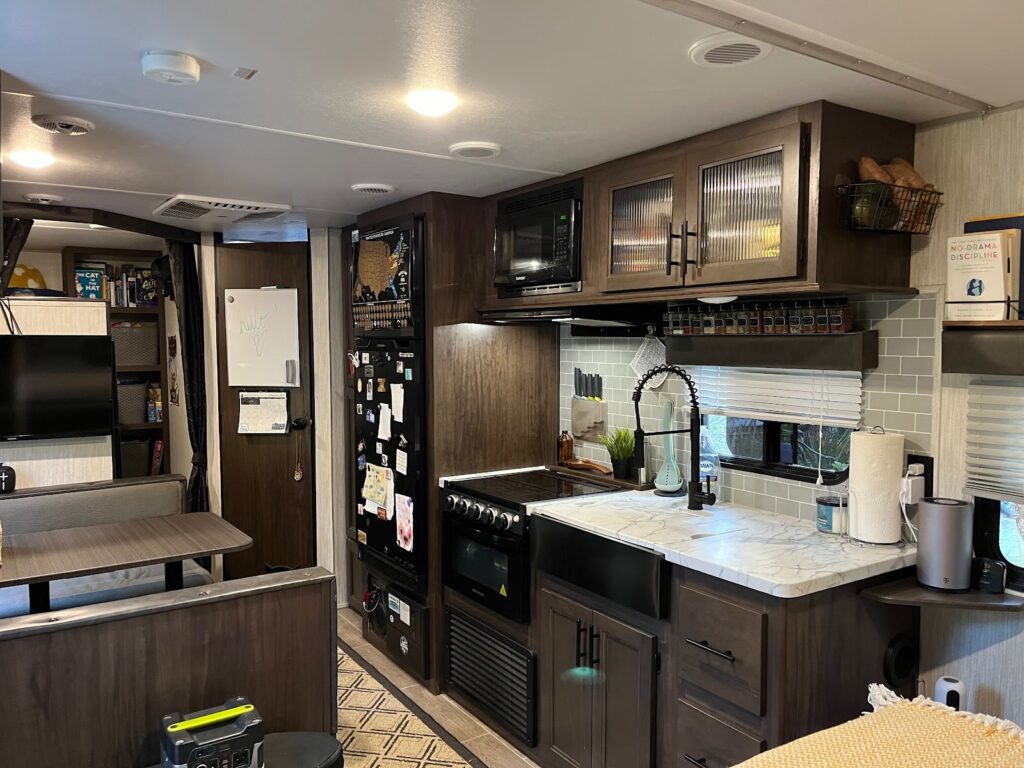
Our RV kitchen area inside our 22mkse travel trailer
When you’re on the road full time with kids, keeping food fresh becomes a challenge all on its own. Our 2021 Forest River Grey Wolf 22MKSE came with a 10 cubic foot fully electric RV fridge. This sounds spacious for an RV but does have its own challenges. Gallons of milk have to lie on its side to fit and will leak everywhere, shredded cheese gets soggy and lost in the back, and overpacking blocks the must needed airflow. After more than three years on the road, we’ve learned how to make a small fridge work for our growing family by prioritizing organization, airflow, and strategies to reduce food waste.
Fridge Organization
The most important thing for RV living is organization. RV fridges cool differently than house fridges. Airflow matters a whole lot. We’ve learned that our fridge and most likely many other RV refrigerators don’t like to be over packed and need steady air flow. If we don’t take the time to organize properly, and don’t learn from our mistakes, a lot of food will go to waste.
- Don’t shove anything against the back wall – Shredded cheese, veggies, butter have all fallen victim to the freeze thaw freeze cycle back there. We’ve unfortunately lost so many bags of shredded cheese getting all soggy and mushy by getting crammed in the back of the refrigerator.
- The crisper drawer isn’t the best for veggies – Ours holds maybe some onions, oranges, and apples. Most veggies we’ve found do better prepped and stored upfront where we can see them before they go bad and not getting squished in the bottom drawer.
- Prep right away – We like to keep our asparagus standing upright in a plastic cup with a little water in it while we are stationary (we drain it before travel days so we don’t have to deal with any spills) it keeps it from spoiling and lasts. Green beans get washed, dried, and put in a container on the middle shelf. We’ve learned that If our fruits and veggies are out of sight they’ll go bad.
- Have a plan for food that’s close to expiring – When anything is on its last day or two, we’ll turn it into a ready-to-eat meal and food prep. We have these food prep containers and they stack neatly, reduce waste, and save our sanity on nights when nobody feels like cooking or even on travel days!
- Storage Containers – Clear containers also help keep everything visible and easy to grab. Although we try not to use glass for storage in the RV, we do love our Pyrex for leftovers and food because it’s easy to clean and doesn’t hold any funky smells. Plastic containers are lighter and less worrisome, but even with the few Pyrex containers we use, we’re thankful we haven’t broken any yet!
- Secure items – Secure items in the fridge so they don’t tip or spill on travel days. Pack things securely and use bins/ tension rods to keep everything in place while the RV is moving.
- Label Everything – Future you will be grateful! Nothing is worse than having a bunch of produce or meat all ready to go and not knowing if it’s good or already expired.
Food prep lunches in containers
Shop Small, Shop Often
One of our biggest lessons we’ve learned is don’t overbuy. That’s easier said than done, especially when you’re camped in the middle of nowhere and the closest grocery store is an hour away. But shopping smaller and more intentionally has made a big difference for our traveling family. With limited space, huge grocery trips just don’t work anymore. Instead, we plan ahead and shop with the next few meals in mind. Smaller grocery runs keep our tiny fridge manageable, help our food last longer, and ensure we only bring home what we know we’ll actually use. This intentional approach means less waste, less stress, and a fridge that actually stays organized.
- Plan meals – We try to plan 5–10 meals at a time.This includes breakfast, lunch, and dinner for 4 people so although it sounds like a lot of food it does go quickly.
- Avoid buying extras – If our potato basket already has a certain type of potatoes in it then we are not going to be buying more. Guess what we’re eating until it’s empty.
- Choose ingredients that overlap – This is helpful so that nothing lingers too long in the fridge and the least amount of food goes to waste.
- Prep meals ahead of time – Like I mentioned earlier if travel days are coming or we know food is about to expire we will food prep to save money and time.
- Meat prep and storage – We like to trim, bag, label, and either refrigerate or freeze our meats ahead of time. It keeps everything ready to go, helps prevent food waste, and gets rid of all the bulky store packaging. Prepping this way also cuts down on dinner-time stress and gives us quick, ready-to-go options for whatever meal we are planning on cooking.
- Local Markets – Use this opportunity to grab fresh items from local farmers markets and try local foods from towns we are passing through.
Food prepping veggies and meat while dinner cooks in crock pot
Keeping Everything Cold on the Road
Keeping an RV fridge running smoothly can feel like a lot of work, especially when you’re living on the road with hungry kids, long travel days, and constantly changing temperatures. Over the years, we’ve learned that a few simple habits make a difference in keeping food fresh, reducing waste, and avoiding food going bad. These practical tips have helped us keep our fridge running smoothly and ready for whatever the road throws at us:
- Let leftovers cool completely – When storing hot food it can raise the overall fridge temperature and put other items at risk so it is important to let them cool completely before putting them into the fridge.
- Don’t store drinks in the fridge – Especially when it’s hot outside, opening the refrigerator door constantly can cause problems. We personally avoid storing water bottles in the fridge because it saves space, keeps the fridge temperature stable, and prevents the need to constantly open the door. We use our reusable water bottles and use this cool water dispenser for a 5-gallon water jug!
- Keep the outside vent clear – Airflow is everything in an RV. Be sure not to block refrigerator vents with chairs, bags, or other gear and make sure it’s cleaned and dust free.
- Temperature Checks – Check freezer and refrigerator thermometer often. Refrigerators should be around 38°F and 0°F in the freezer.
- Clean and defrost regularly – Keeping your fridge clean and frost-free prevents odors, improves cooling efficiency, and helps food last longer. We don’t do this as often as we should. Living full-time on the road means our fridge is almost always in use, so finding the time to empty it out for this tedious task can be a challenge.
Managing Power With a 12-Volt Fridge
When we bought our camper, we didn’t realize how much power a fully electric 12-volt fridge would draw. Without a propane backup, boondocking becomes trickier since the fridge is our biggest power user. Off grid, we rely heavily on our solar and gas generator to keep it running. Check out our blog on our solar generator setup that we use to power our camper and fridge! While having a larger electric fridge is nice compared to the smaller propane-style models, it does add extra hassle when boondocking. It’s definitely something new RVers should consider before committing to a 12-volt only setup.
After Three Years on the Road
Living full-time on the road has taught us that a small fridge is not a limitation but just an opportunity to be more creative, efficient, and intentional with our meals. With the right habits for fridge maintenance, food planning, and a little flexibility, a 10-cu.-ft. fridge can support big appetites for a full time RV family. It’s all about smart storage, being intentional, and making the most of the space you have.
Happy Trails and Happy Eating!