How do you plan an RV road trip without getting overwhelmed by options? We lean on a handful of trusted tools for each piece of the puzzle: a good guidebook for the big picture, targeted Google searches for the details, Google Maps for food and local shopping, and a rotation of camping apps for where to actually park at night. Here’s exactly what we use and how we use it.
This post contains affiliate links. RVshare may receive compensation if you make a purchase after clicking on a product or service link.
Key Takeaways
- Having your own home on wheels means the places you can go are almost limitless, which is exactly what makes planning overwhelming without a system.
- We split planning into three questions: where to go, where to eat, and where to sleep — and use different tools for each.
- Recreation.gov, iOverlander, and Good Sam cover most of our overnight planning, but each has a different strength and cost.
- iOverlander has changed a lot since we first started using it. It’s still useful, but no longer purely free the way it once was.
What Do We Use to Decide Where to Go?
Even with all the technology around us, we still love thumbing through an old-fashioned guidebook when we plan our trips. We’ve used Lonely Planet guides since our backpacking days in Europe, and we still travel with their USA guidebook. It’s a bit thick, but each geographical section gets its own chapter, which makes it easy to zero in on our region of interest.
Our tip: Check the front of the book first. Lonely Planet includes recommended itineraries right at the beginning, whether you want a tight 1–2 week trip or something that spans the whole country. If you want more, their USA guidebook is a great resource too.
Once we’ve got a rough itinerary, we turn to Google search and blogs for the details. If we’re headed to a city like Chicago, we’ll search “the best things to do in Chicago,” and within 15–20 minutes we’ve usually built a solid list of sights and activities. Same approach for national parks and national forests — a quick search for “what to do in Yosemite National Park” gives us hikes, campsites, and scenic viewpoints fast.
RVshare also has an article with tips and tricks to plan your road trip using AI as well.
And if a Mexico road trip is on your radar, we detailed our own year-long RV trip through Mexico in our Mexico road trip guide.

How Do We Decide Where to Eat and Shop?
We love cooking in our own camper, but we’re always on the lookout for good local eats too. Maine means steamed lobster with melted butter. Chicago means deep dish. Texas means BBQ, no question.
Our go-to tool for this might surprise you: Google Maps. It does far more than point-A-to-point-B navigation. Search “BBQ in Austin, TX” in Google Maps, and you’re instantly looking at dozens of top-rated spots, complete with reviews, food photos, and street view — which is genuinely useful for checking whether a restaurant’s parking lot can actually fit your rig.
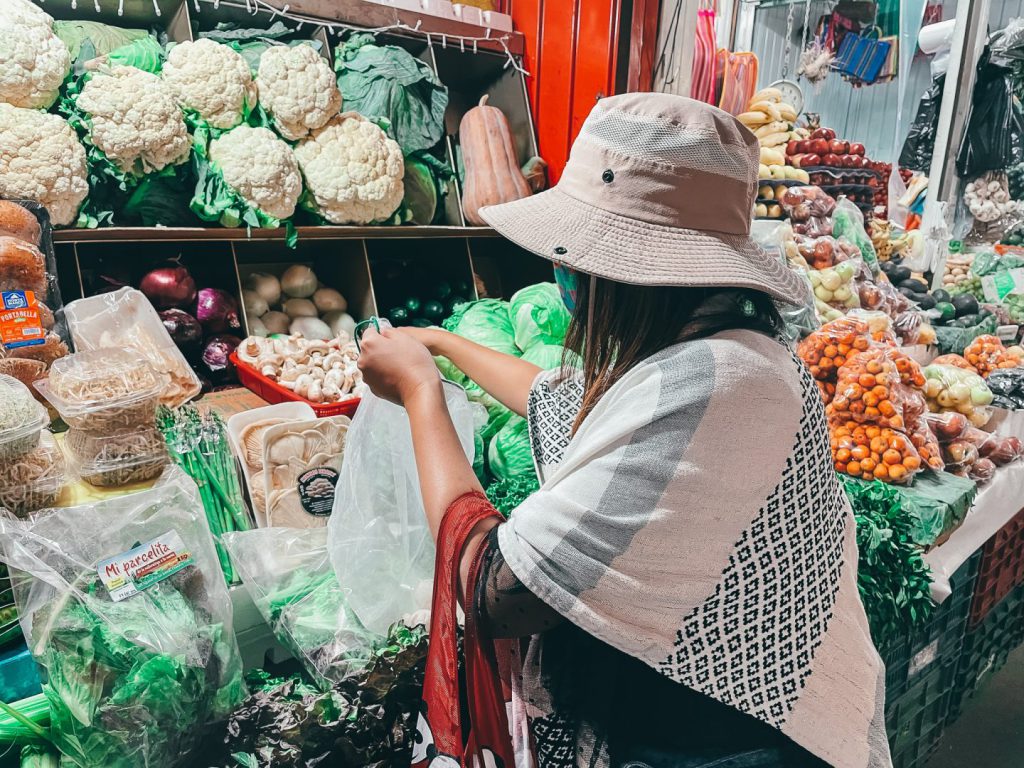
We use the same trick for grocery shopping. We love hitting farmers’ markets as we travel, and a quick Google Maps search (something like “farmers market in Portland, Maine”) tells us the location and which days it operates that season.
What Do We Use to Plan Where to Sleep?
This is the piece that matters most the bigger your rig gets. Here’s our current rotation
Trip Planning Tools Compared
| Tool | Best For | Typical Cost | Notes |
| Recreation.gov | Reserving sites in National Parks and Forests | Free to use; $80/year for the America the Beautiful pass (U.S. residents) | Official federal booking system |
| iOverlander | Boondocking and free/overnight camping spots | Free for core features; paid tiers for offline maps and advanced filters | User-generated, so verify details are current |
| Good Sam | Reserving vetted, established campgrounds | ~$30–$39/year membership | 10% discount at 2,000+ affiliated RV parks |
| Google Maps/Search | Reserving vetted, established campgrounds | Free | Not camping-specific, but great for the rest of trip planning |
Recreation.gov is our pick for booking sites within the national park and forest system — pick a park, choose dates, select a campground, and pay online. If you’re visiting more than a couple of federal sites in a year, the America the Beautiful annual pass, which is currently $80 for U.S. residents, pays for itself fast, covering entry to more than 2,000 federal recreation sites for 12 months.
One update worth knowing: As of 2026, non-U.S. residents pay $250 for the annual pass, and non-residents without a pass now face a $100-per-person surcharge at 11 of the most popular parks, including Yellowstone, Yosemite, and the Grand Canyon.
iOverlander has been our resource for boondocking and free camping for years. It’s collaborative and user-generated, so you can usually verify whether a Walmart Supercenter, truck stop, or rest area currently allows overnight parking.
One update worth knowing: The app went through a major rebuild in the past couple of years. Core features are still free, but some tools like offline maps, satellite overlays, and advanced filtering now sit behind a paid Pro or Unlimited tier. It’s still useful, but it’s not the fully free tool it was when we first started relying on it.
Good Sam is our choice for higher-confidence, established campgrounds. We locate a campground at our destination through the app, then call ahead to book. Membership currently runs somewhere in the $30–$39/year range, but you should double-check current pricing since it changes with promotions and gets you a 10% discount at participating RV parks.
Check out our other post if you’re interested to learn how to camp for free with your RV.
Common Mistakes First-Time Trip Planners Make
- Trying to plan an entire cross-country route in one sitting instead of breaking it into pieces like “where to go / eat / sleep”
- Assuming a free camping spot found in an app is still current without checking recent reviews or dates
- Not checking whether a restaurant’s lot can fit your rig before driving there
- Forgetting that boondocking apps rely on user-submitted info, which can be outdated — always have a backup plan
Frequently Asked Questions About Planning an RV Road Trip
You don’t necessarily need a special app to find free camping. iOverlander and similar apps help, but you can find a lot of dispersed camping just by searching “BLM land near [your location]” or checking the relevant national forest’s website directly. Apps make it faster, but they’re not the only option.
For federally managed campgrounds, yes recreation.gov is the official system and the only way to book campsites. Some parks also have first-come, first-served sites that don’t require a reservation, but popular parks fill those fast, especially in summer.
For national parks in peak season, sometimes you need to book campgrounds six months ahead of time or more. Established private campgrounds through Good Sam can often be booked a few weeks out. Free dispersed camping is generally first-come, first-served.
Google Maps is more useful for RV trip planning than most people realize. Beyond restaurant hunting, you can use it to check road conditions, confirm hours, scout parking lots via Street View, and find grocery stores or fuel along your route. It doesn’t replace a camping-specific app, but it fills a lot of gaps.
For U.S. residents planning to visit three or more fee-charging federal sites in a year, the America the Beautiful Pass is worth it, and it pays for itself quickly at $80. For non-U.S. residents, the $250 Non-Resident Pass is a much better deal than paying the per-park surcharges, especially if your itinerary includes any of the 11 high-traffic parks.
If you are new to RV life, learning how to effectively and efficiently plan your road trip itinerary takes time and practice.
But after a while, you’ll find out what works for you and what doesn’t. And soon you’ll be planning your future road trips and destinations with ease.
For more campervan living & building tips, check out our blog: www.asobolife.com. For any questions or comments, please send us an email at [email protected]. Or for more on our current Pan-American road trip to Argentina, visit us on Instagram: @asobolife.