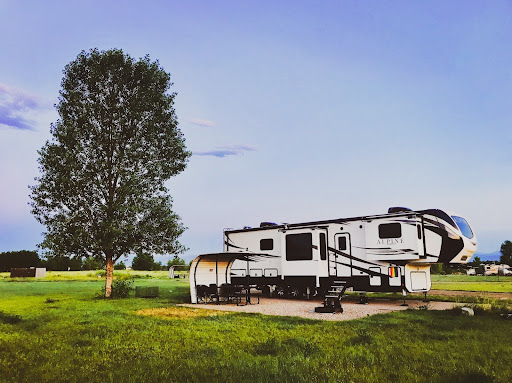
Being off-grid was the first thing we talked about when we began our RV adventures in 2018. We had little understanding of the resources we took so much for granted. Jumping in a hot shower or powering up our single-serve coffeemaker never made us think about where the water or power was coming from, let alone how much of it we were using on a daily basis. Our first few months in our RV came with the steep learning curve of how to manage our resources, becoming mindful of our personal consumption and our environmental impact. Getting familiar with what we used in terms of resources only drew us closer to why we wanted to try living a more off-grid lifestyle.
Off-Grid Camping Must-Haves
To be “off-grid” in the context of camping means disconnecting from conventional utilities and infrastructure. This isn’t just about turning off our phones and being in solitude. It is about being self-sufficient in our lifestyle. It means carrying in all of our own water, generating our own power (or doing without), and managing our waste. These were all tasks we had to learn about and navigate in order to be able to enjoy more secluded areas of wilderness. This kind of RV Life fosters a deep connection with nature and a strong sense of self-reliance, but it also demands meticulous planning and respect for the environment.
Getting more into how we could go partially or fully off-grid in our RV meant we also learned about recreating responsibly. We had no knowledge of what it meant to be a steward to the lands we were living on, so we set out to educate ourselves. Now, we adhere to Leave No Trace principles, which include planning ahead and preparing, traveling and camping on durable surfaces, disposing of waste properly, leaving what you find, minimizing campfire impacts, respecting wildlife, and being considerate of other visitors. We try to leave a place cleaner than we found it.
Power
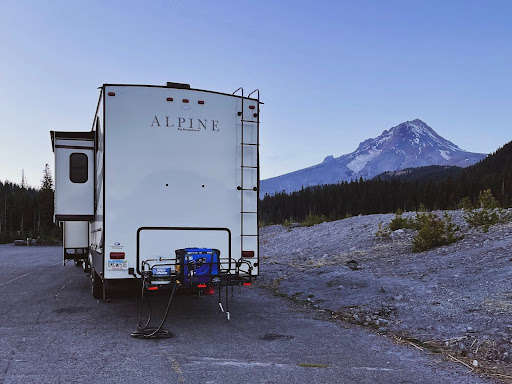
We didn’t want to be without power, but we had no clue how much power we needed to run the things we needed…and a few of the things we wanted. Before we even tried to go off-grid for real, we did a few test runs at campgrounds to see what kind of power we were looking to have when we finally unplugged.
An RV’s battery bank, which runs your lights, furnace fan, water pump, and essential electronics, has a finite capacity. After a few run-ins with dead batteries, we expanded our battery bank to include two lithium batteries, which are lighter and last longer. We decided not to get solar in our first RV because we had an onboard generator that we used, but this is the most popular step for RVers who intend to spend significant time off-grid. Even with solar, we recommend having a generator. Our first RV had a built-in generator, but when we moved into our fifth whee,l we had to buy one. It has come in handy on several occasions beyond boondocking and we are happy to have it! We have a dual-fuel inverter generator that can run up to 30AMPS. This means that it can accommodate running an air conditioner, microwave, fridge, television, etc. We always carry extra fuel and adhere to generator hours when camping.
We have power, but we also have a goal to conserve power by:
- Minimize use of high-draw appliances (microwaves, hair dryers, toasters).
- Charging items before we go off-grid.
- Consider alternative ways to heat and cool ourselves (battery-operated fans and hot water bottles).
Water
Power is important, but we can’t live without water. Many times we underestimated how much water we actually used when camping off-grid. Our trial runs frequently resulted in us emptying our tanks days before we anticipated. Over time, we learned some tricks to make our water supply last, including getting really quick at showering!
We also have to learn the fine balance between water in (fresh) and water out (gray/black). Here are a few tips to help you understand your water use that we have learned over the years.
- Know your tank size and how many days it will last. A typical person uses about 1 gallon of water per day for essentials (drinking and cooking) and another 2-3 gallons for washing/flushing.
- Install low-flow shower heads and faucet aerators. The less water that flows out, the less water ends up in your gray tank. Our Oxygenics shower head uses half as much water as the shower head that came in our RV.
- Washing Techniques: Wash dishes by wiping them clean with a paper towel first, then use a small basin of soapy water and a separate basin of rinse water.
- Monitor your water tanks closely. Our RV has sensors (that sometimes work) to help with keeping an eye on tank levels.
Climate Control
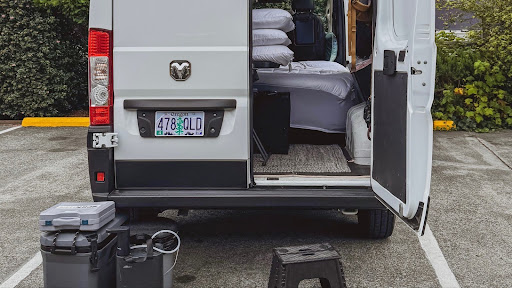
Propane fuels our furnace, hot water heater, refrigerator, and cooking range. We can also use it for our dual-fuel generator. Using propane has extended the time we can be off-grid in our RV and in our Van. We installed tank monitors (like a Tank Check sensor) and track our use closely. Running out of propane can mean no heat, no hot water, and a non-functioning fridge…all of which we have encountered.
- Heating Strategies:
- Insulation: We use Reflectix in windows, which helps in both hot and cold weather.
- Catalytic Heaters: We have been considering a small, vent-free propane heater (like a Wave or Buddy Heater) for dry camping. These heat the space without consuming battery power, but they require proper ventilation. We haven’t used these before, but have heard wonderful things about them from other RVers.
- Venting and moisture are the number one things to keep up with when using propane heating and while in damp climates. Here in the Pacific Northwest, we keep dehumidifiers running constantly.
Other Important Factors
- Going off-grid can mean spotty cell phone service and relying on maps and compasses for direction. We make sure to download our Google Map prior to going to an area so that we can still have access to that map and directions even if we are without cell phone service.
- Campground Access: We use apps like Campendium or iOverlander to find established boondocking sites with user-reported reviews, road conditions, and cell service reports. We find potential spots ahead of time and always have a backup option.
- Off-grid RV camping means tackling unpaved and rough roads. Never trust Google Maps for forest service roads. We have been lost on more than a few occasions, which is an added stress when you are hauling 42 feet of RV behind you.
- Have a safety and repair kit with you. We keep a built-out first-aid kit, as well as a road safety kit, with us at all times. When we were in our Class A, we got stuck in the mud while trying to make a narrow turn, and it cost us time and money to have emergency services come out to rescue us and our rig!
We were drawn to this lifestyle by the allure of being in untouched wilderness with vast, open night skies and not a single other person in our sight. We craved the quiet stillness of a remote camping spot and had been bombarded with idealistic images of van and RV life being just like that. Once we learned about using resources, problem-solving, common experiences, and connected with the right tools, we loved being off-grid. It isn’t always as glamorous as we had seen, but it has been worth every messy and muddy moment.