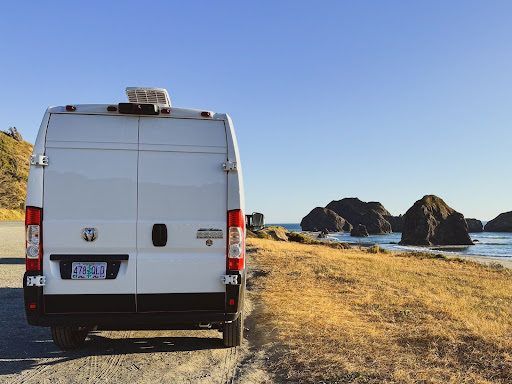
We hadn’t tried much dispersed camping before buying our van this past spring, but we had been dreaming of the freedom and opportunity that it might offer us. Although we have been traveling for over 5 years, we found ourselves often tied to pull-through, full-hook-up sites with our large fifth-wheel. Part of our draw to vanlife is the accessibility to go more off-the-beaten-path and the potential off-grid capabilities. We had a blast this past summer camping across Oregon in our RAM 2500 Promaster van, visiting places we weren’t able to get to in our 42-foot fifth wheel, but have been on our bucket list for years.
Since we knew almost nothing when we started, we want to break down what dispersed camping is all about, how it’s different from boondocking, why Oregon is such an awesome spot for it, and what it’s like camping in a van compared to a bigger RV. We know it isn’t for everyone, but we have found it’s our favorite way to travel now!
What is Dispersed Camping?
Dispersed camping means camping on public land outside of developed campgrounds, typically on National Forest or Bureau of Land Management (BLM) land. We hadn’t heard of dispersed camping when we first started out on the road, and we realized that it may have been because we started our full-time travel journey on the East Coast, where there are fewer opportunities for this kind of camping.
There are no amenities, no reservations, and often no cost. Sometimes, we got lucky with a vault toilet or even a big trash can, but we quickly realized it is important to be self-contained when considering dispersed camping. Because there are no amenities or official campsites, that means there are no reservations. It’s hit or miss on what kind of spot (if any) is going to be available. At first, this made us anxious, but then, as we got more comfortable, it became sort of like a fun quest to find a great spot!
We used to frequently overlook these options because we liked the convenience of full-hookup sites when we were traveling in our fifth wheel. We have been seeing an increase in dispersed camping on our social media channels, especially in Utah and the PNW. This is because these areas have more USFS and BLM land.
Dispersed Camping vs. Boondocking
Boondocking and dispersed camping aren’t always the same, which was something we learned when we began looking into places to camp this past summer.
- Dispersed camping: Camping on undeveloped public land, typically forests, deserts, or other natural settings.
- Boondocking: A broader term, meaning camping without hookups. It could be on public land or in places like parking lots or truck stops.
So while all dispersed camping is boondocking, not all boondocking qualifies as dispersed camping.
Why Oregon is Perfect for Dispersed Camping
We love Oregon’s diverse landscape and it is one of the reasons why we have spent so much time here since parking our home-on-wheels over four years ago. Oregon offers a huge variety of landscapes and tons of public land. We found that we could camp in the high desert outside of Bend, OR or in the lush rainforest on the wet side of Mt. Hood. We could park down by the beach on Route 101, or find ourselves in the Eastern Oregon painted hills.
Highlights:
- Mt. Hood National Forest which is accessible to Portland. We love the White River Sno-Park and the secluded forest roads.
- Deschutes National Forest has some awesome spots in and just on the outskirts that give you access to the blue-green rivers of your dreams.
- Willamette & Umpqua National Forests are areas we haven’t explored yet, but we have seen and heard that there are endless options near these areas.
Camping at Sno-Parks in Oregon During Summer Months
Most people think of Sno-Parks as winter-only areas for snowmobiling and skiing, but in the summer months they become deserted and are a legal place to camp (up to 14 nights in most cases. Sno-Parks are state-managed parking areas that require permits in winter for snow sports access. But from May through October, these permits aren’t required, and camping is often allowed.
These were our favorite spots to camp this past summer.
- White River West (Mt. Hood): Great views of the mountain, paved and has a vault toilet that was recently renovated. We love this spot because the river is right outside of your door, in the fall the trees turn gold against the white mountain and blue sky. It is our top spot for stargazing or to catch a glimpse of the Northern Lights.
- Gold Lake (Willamette NF): Close to nearby lakes and pretty flat, which made it easier to park our van.
- Thousand Springs Sno-Park (near Crater Lake): This might be our favorite from this past summer. It was paved, flat, had clean vault toilets and even had WiFi! It was only 15 minutes to the entrance of Crater Lake. We ended up staying here for an entire week!
Camping Along Highway 101 in Oregon
Oregon’s coastal Highway 101 offers some of the most scenic roadside camping in the state and we fell in love with falling asleep next to the rocks and waves of west coast beaches. We were shocked to see that there are several pullouts, forest roads, and a few more developed areas where overnight parking is allowed. Our words of warning here are to look for signs that indicate no parking. Online resources and word-of-mouth become quickly outdated as rules and regulations around overnight parking shift and change.
Dispersed Camping in a Van vs. a Big Rig
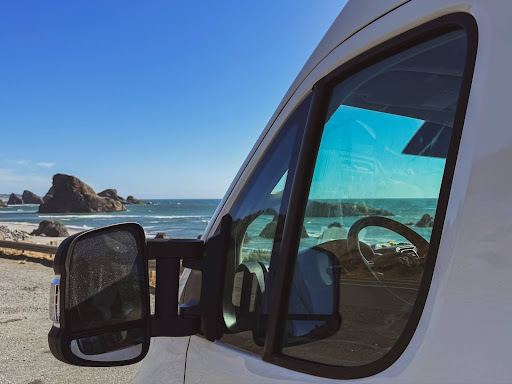
We have learned over our years of traveling that setup and rig size dramatically affect how we travel. Camping in our van is more flexible, it’s simpler and offers an ease of access to more places, but it means that we don’t often have all of the luxuries we have in our fifth-wheel. Our big rig takes more preparation to travel with. We consider our route more mindfully, but we also have more amenities, like our washer and dryer.
Rules, Etiquette & Safety
We want to acknowledge that dispersed camping and boondocking regulations are changing with the increase of travelers on the road. We feel strongly that it is our responsibility to take care of each other and the areas we travel to, which means we follow the laws in each city and state we visit, we practice leave no trace principles, and we are respectful of the people and places we visit.
Final Thoughts
We found that dispersed camping was our favorite way to explore in our van this past summer. We loved the calm and quiet of the sno-parks, the easy access on the coast, and the general spontaneity of landing when and where we wanted during our travels, which Oregon offers in abundance!
Helpful Resources